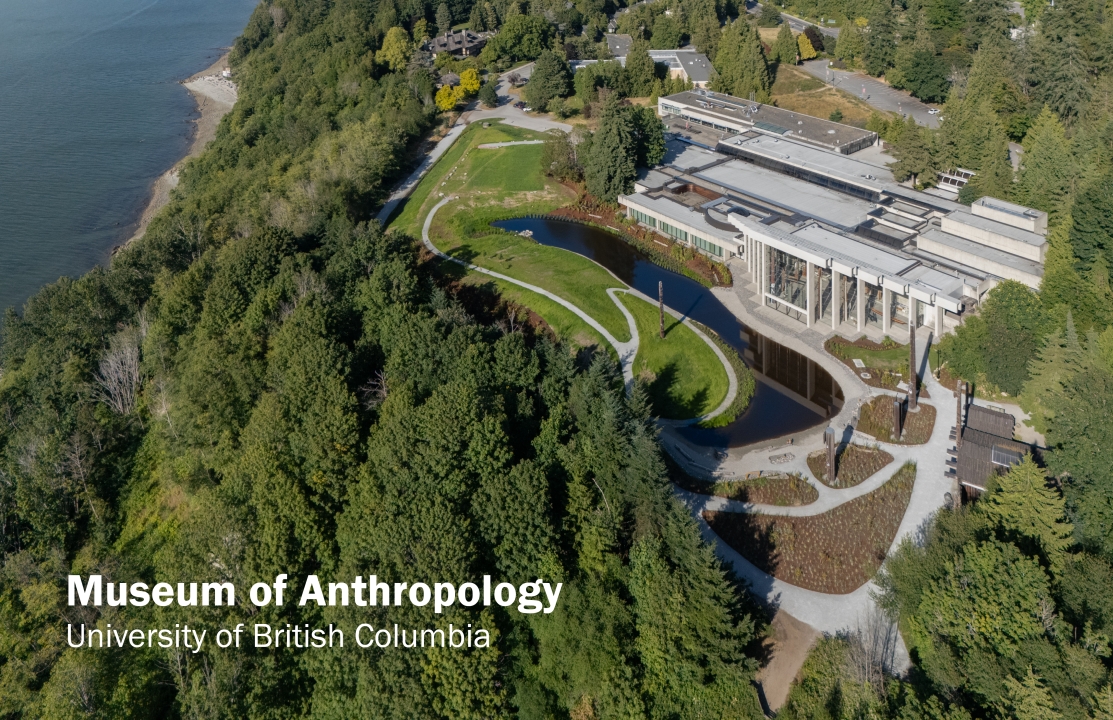
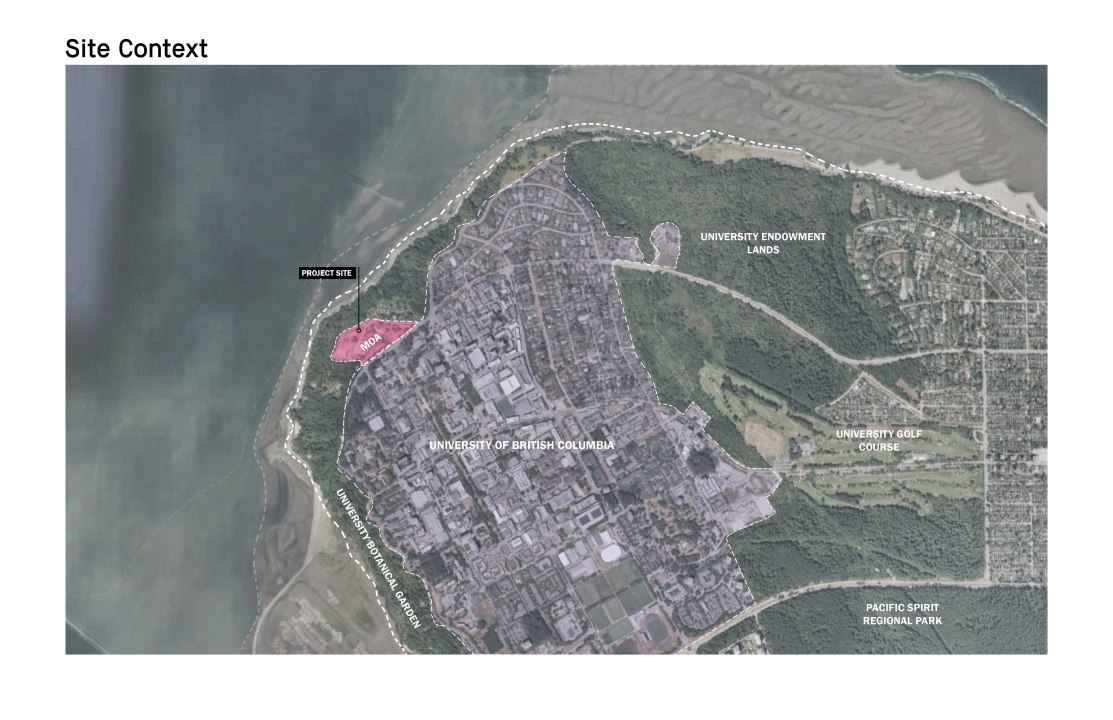
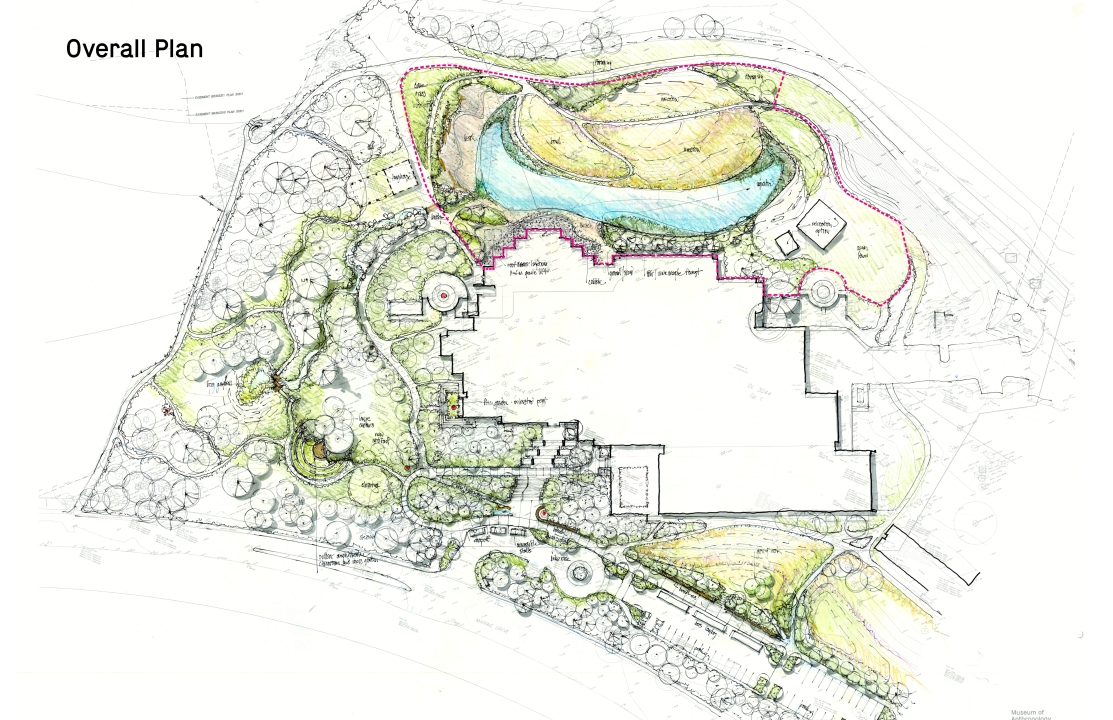
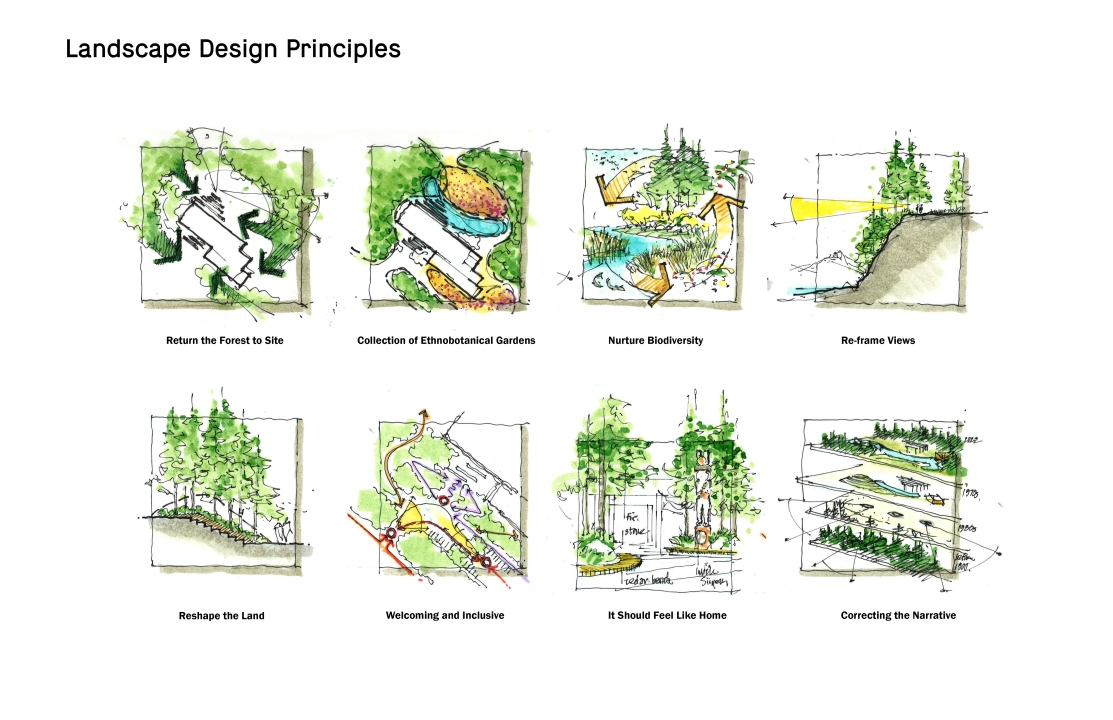
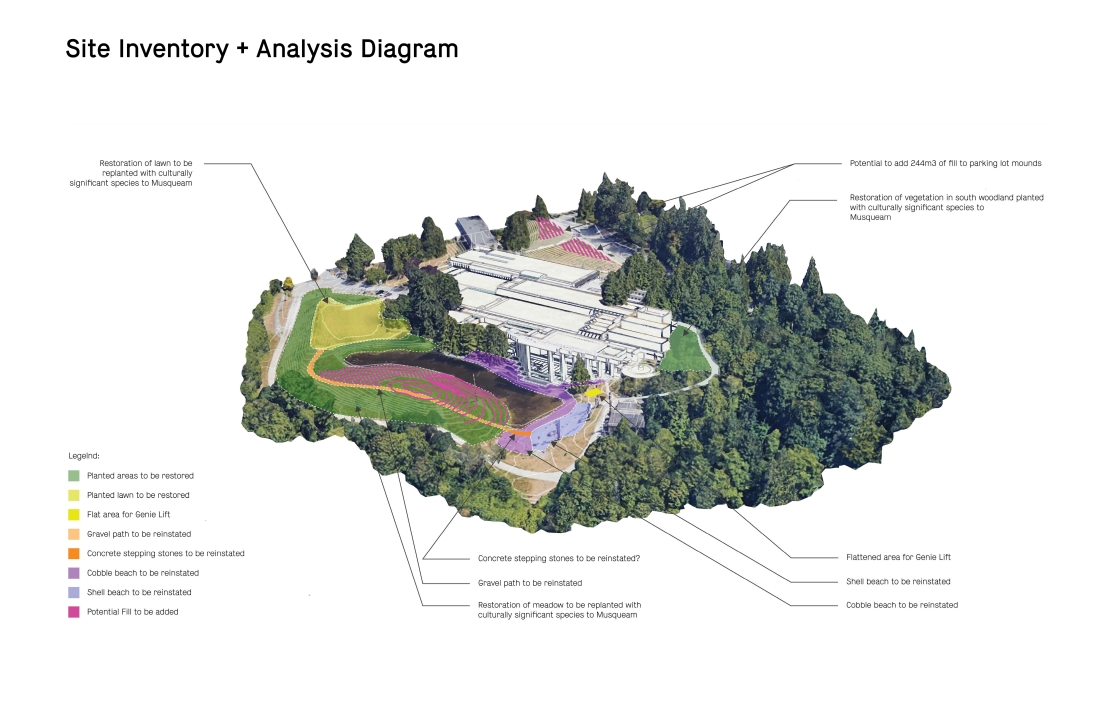
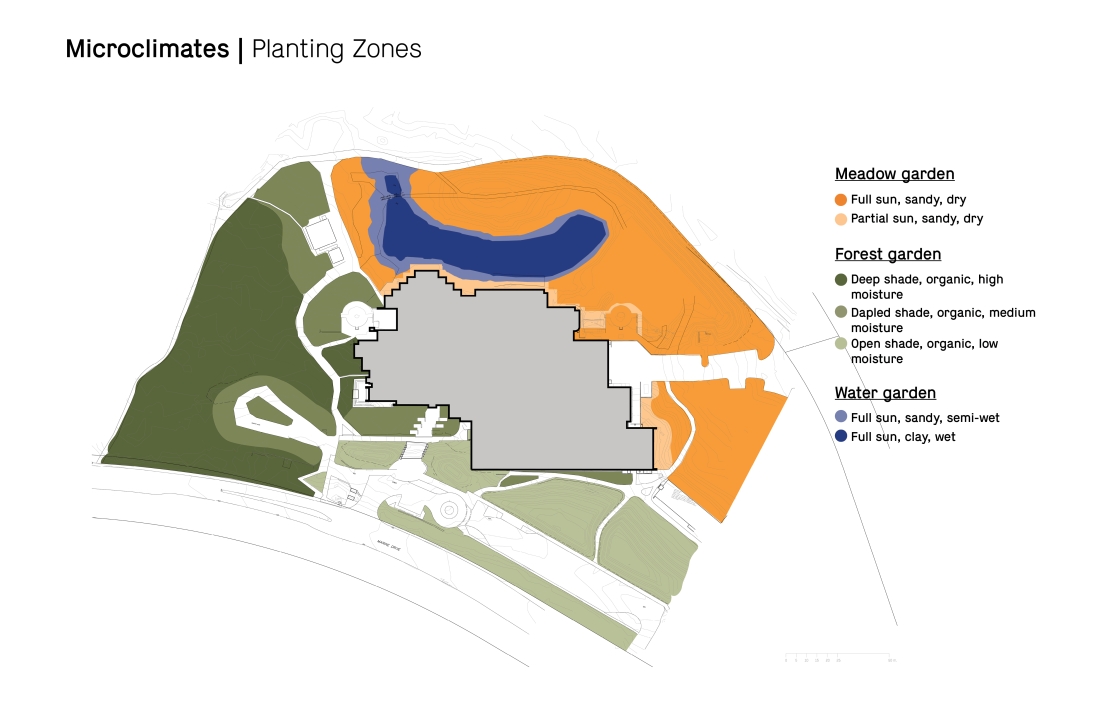
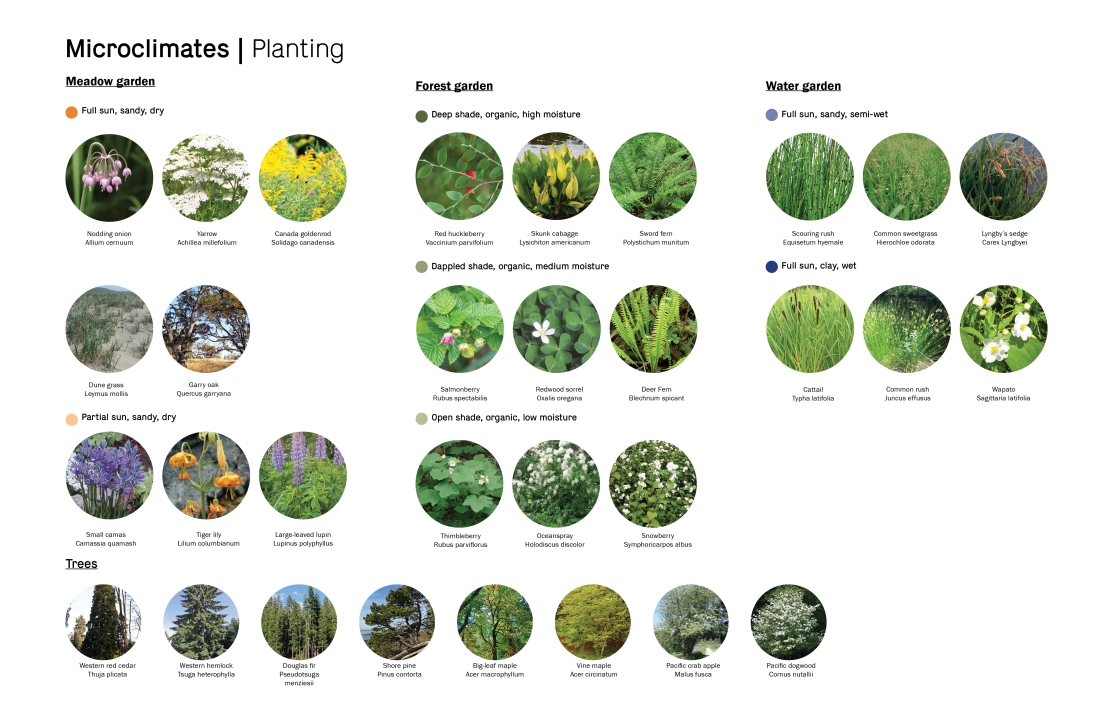
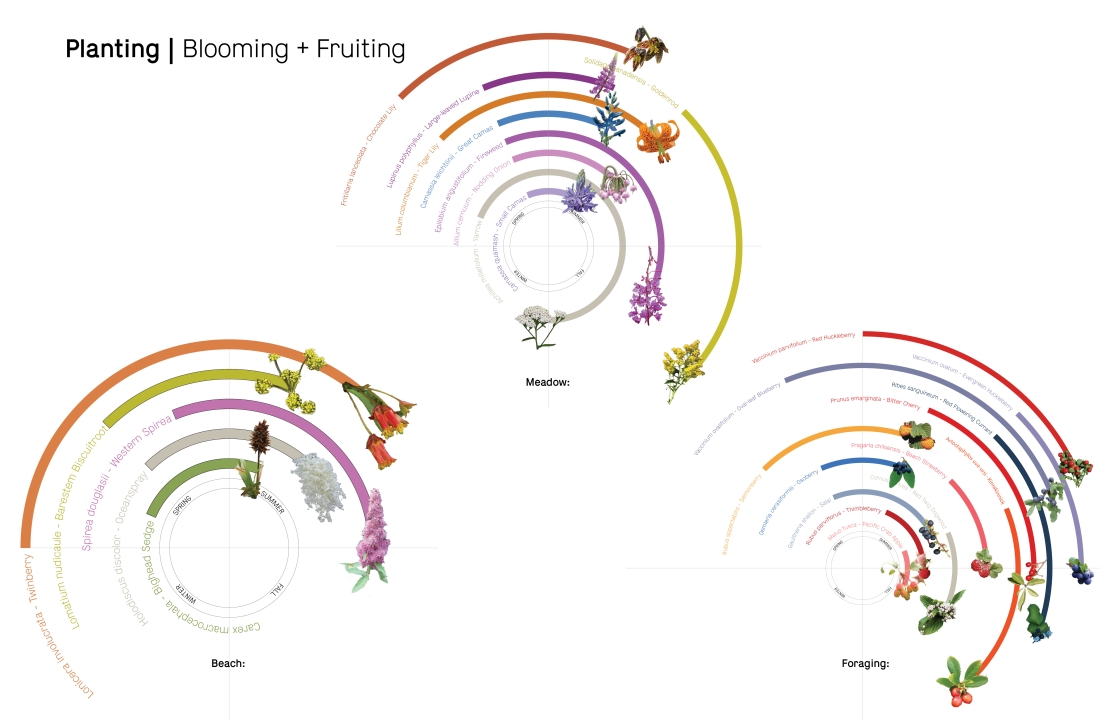
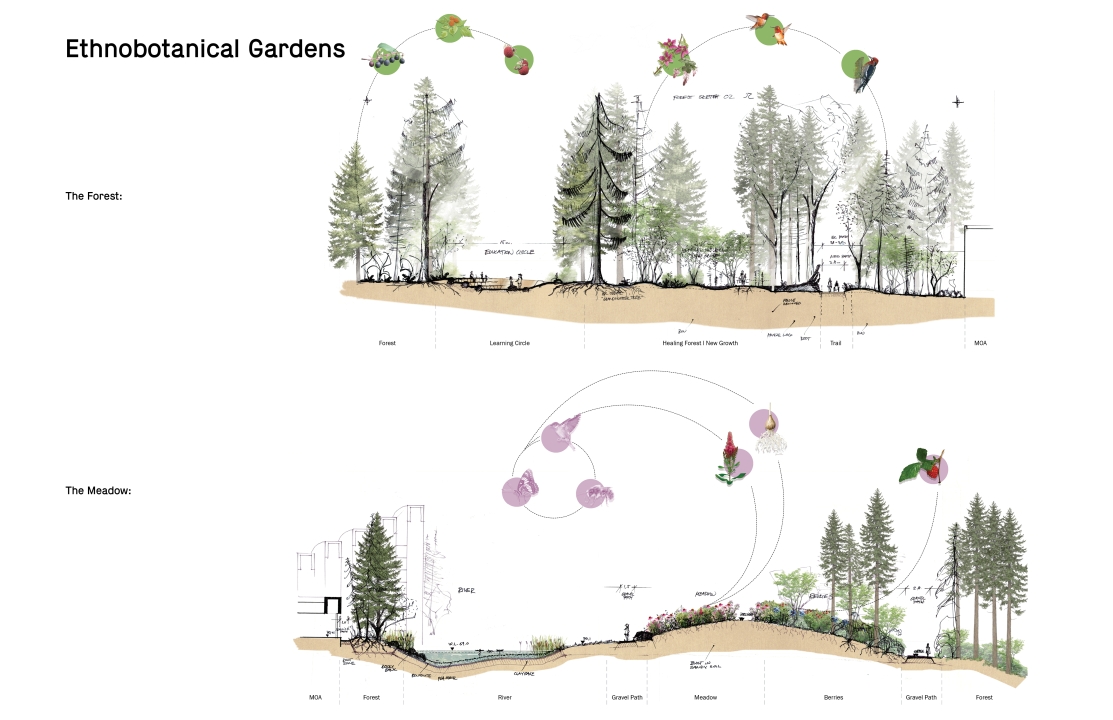
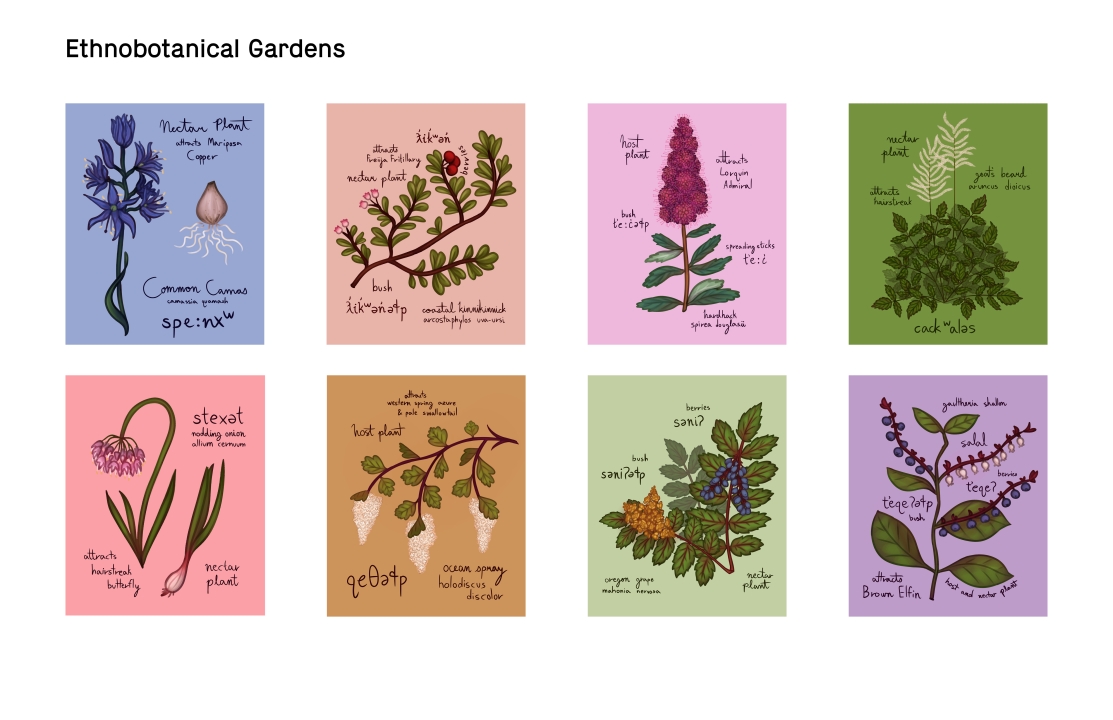
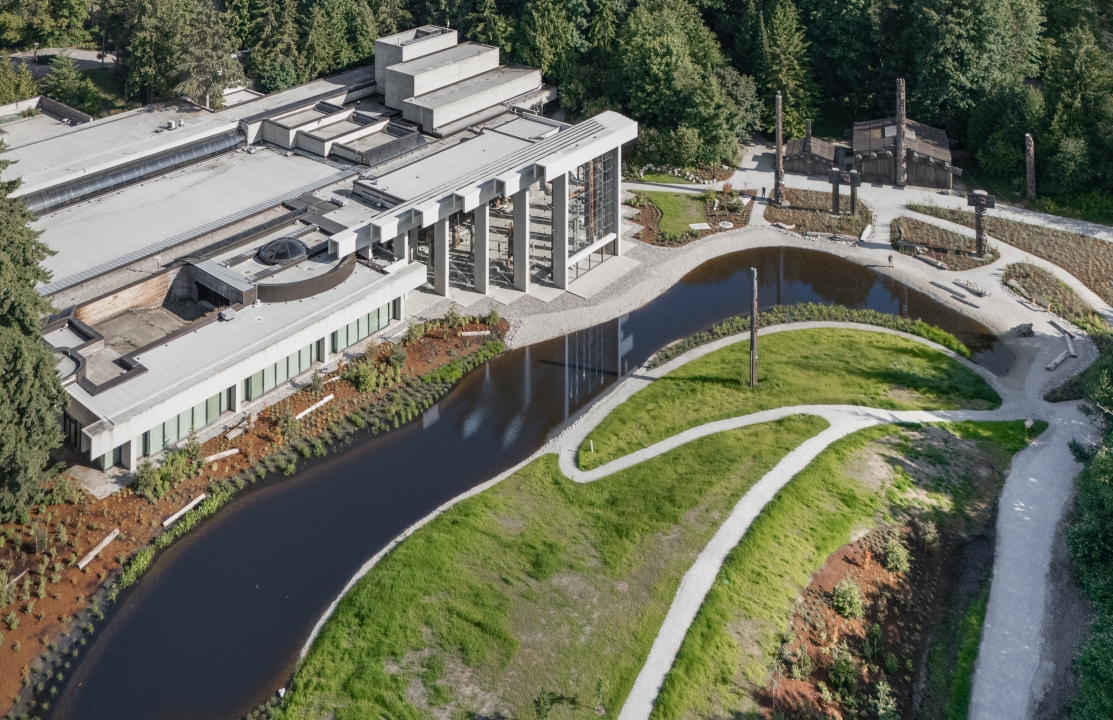
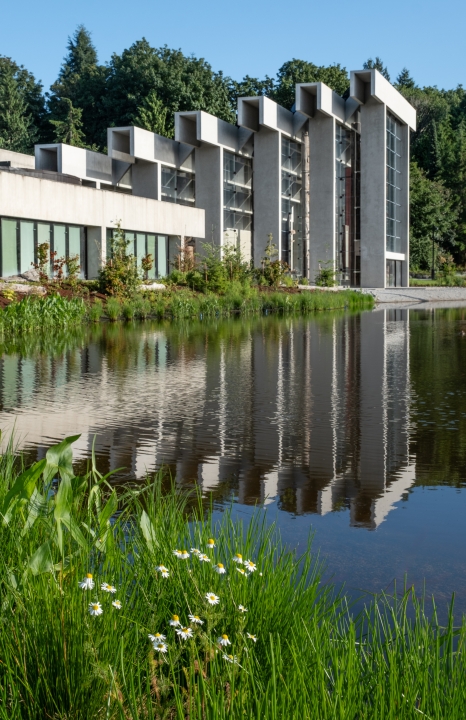
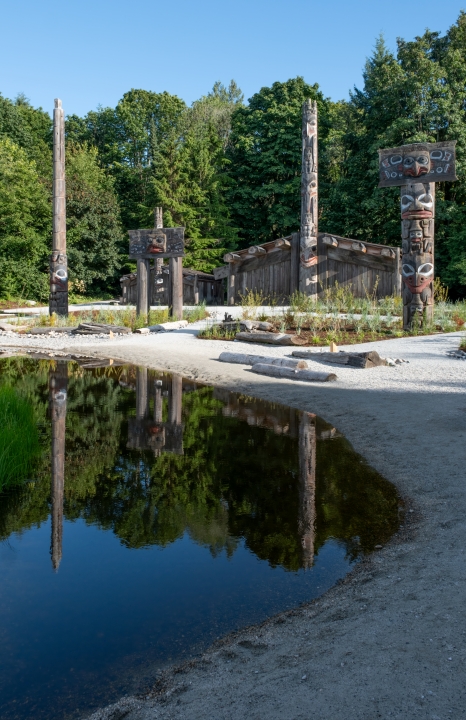
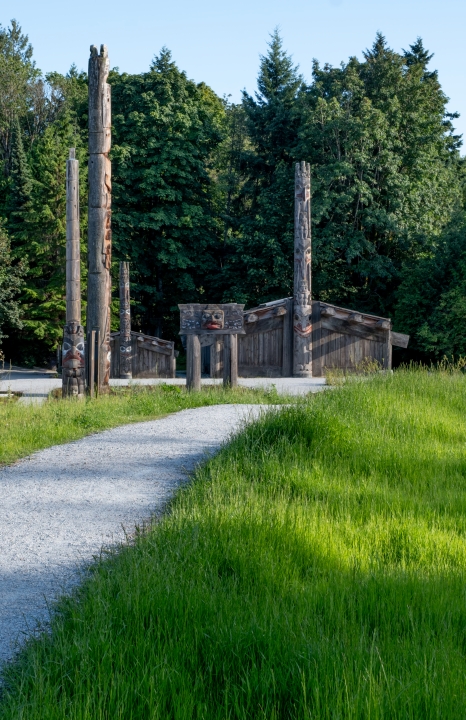
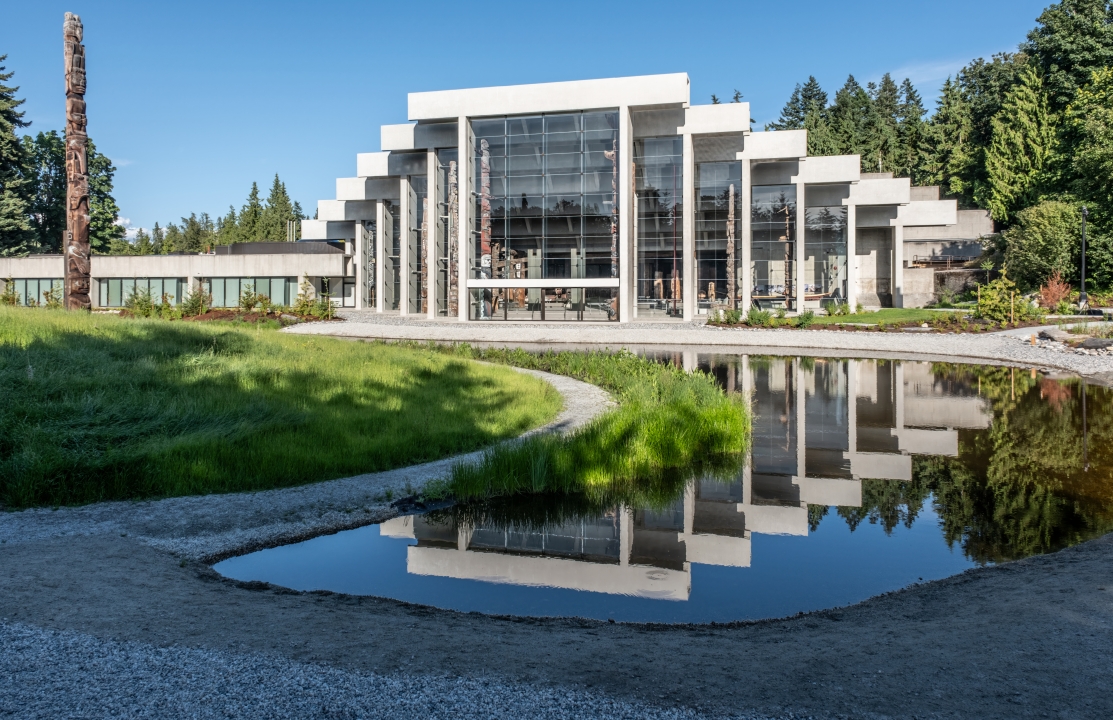
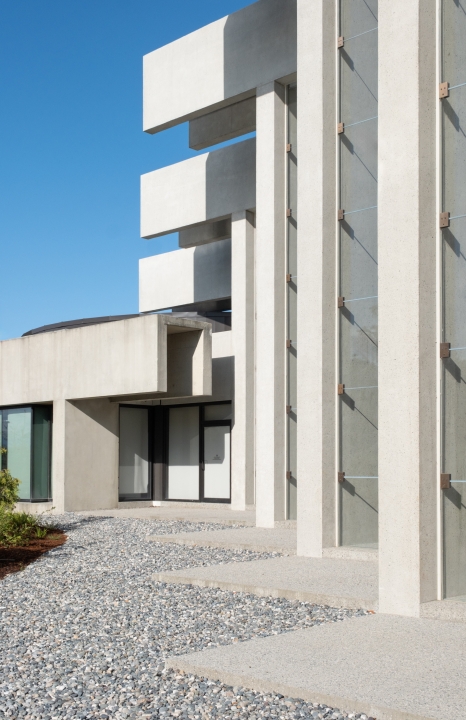
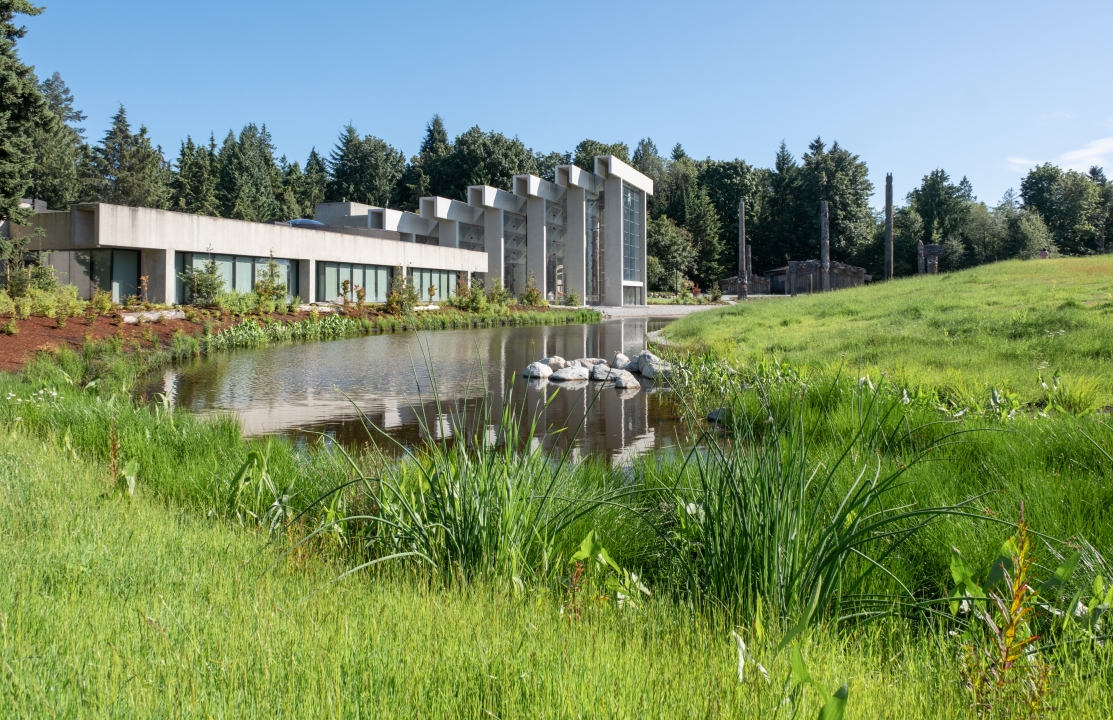
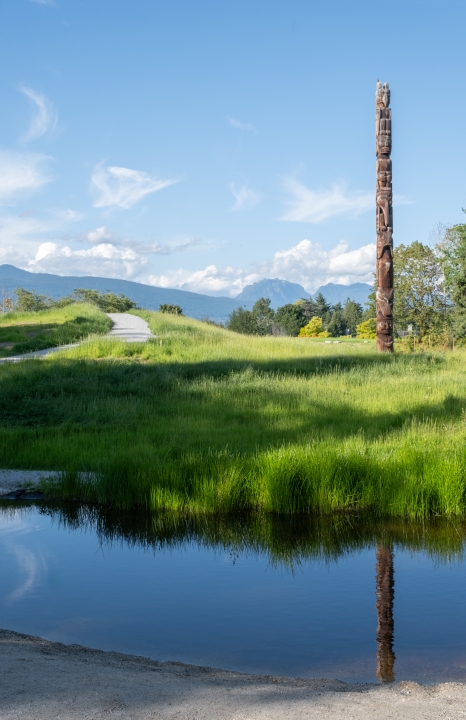
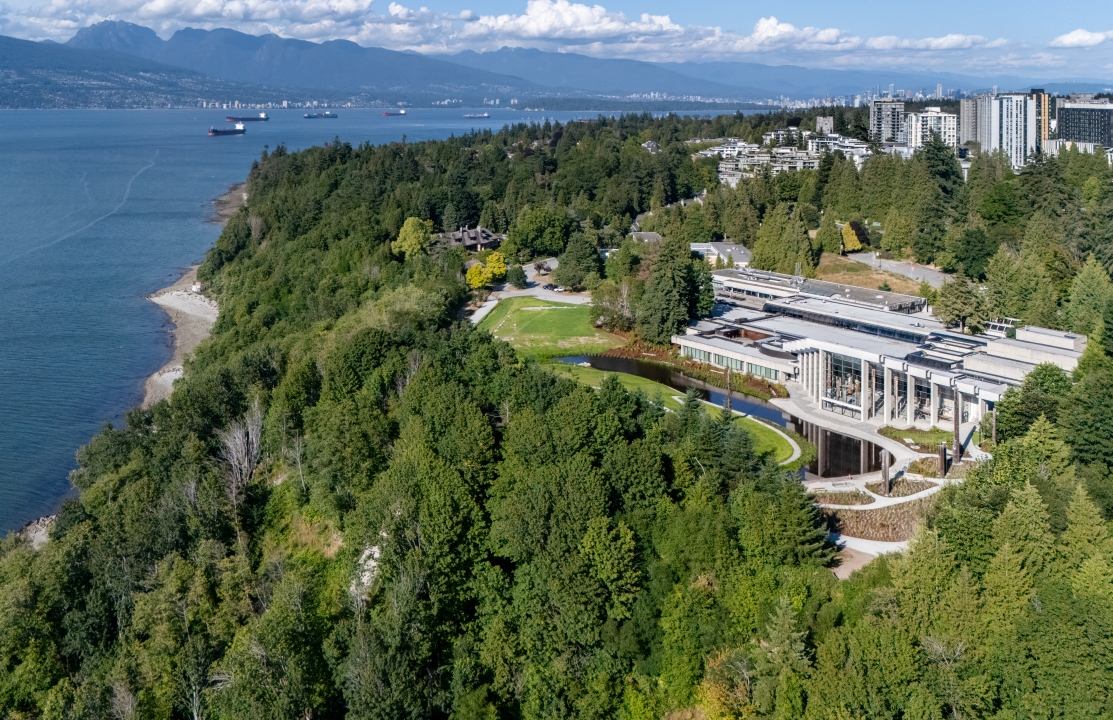
The reconstruction of the Museum of Anthropology at the University of British Columbia created an opportunity to reimagine the site through a contemporary Indigenous lens. While the 1977 design by Cornelia Oberlander envisioned an outdoor museum, the design was inspired by the landscapes and inlets of Haida Gwaii. As the museum resides on the traditional territory of the Musqueam (xʷməθkʷəy̓əm), this metaphor was considered an inaccurate representation of the cultural specificity of place. While acknowledging elements of Oberlander’s original design, the team worked directly with UBC, museum and Musqueam representatives to “correct the narrative” of the site, allowing the landscape to be an authentic, living representation of Musqueam culture. The landscape design borrowed from the anthropological concept of “forest garden,” highlighting the shaping and cultivation of forests by humans over millennia, rather than assuming an untouched landscape. The design extends this concept into meadow and aquatic gardens, using a totally native plant palette. The gardens are reframed as spaces for craft, food, medicine and ceremonial use, opening opportunities for cultural work while honouring the Nation’s continued presence.