

CLIMATE ISSUE: Natural estuary process disruption; Climate change-induced sea level rise; Coastal flood risk; Habitat degradation | SECTOR: Landscape architecture; Infrastructure; Ecology | STAGE: Early construction (WWTP); Design iteration (IBRP) | TYPE OF ACTION: Built infrastructure (waste water treatment); Ecological restoration; Biodiversity protection | TYPE OF SETTING: Pacific north-west; Coastal
Project Overview

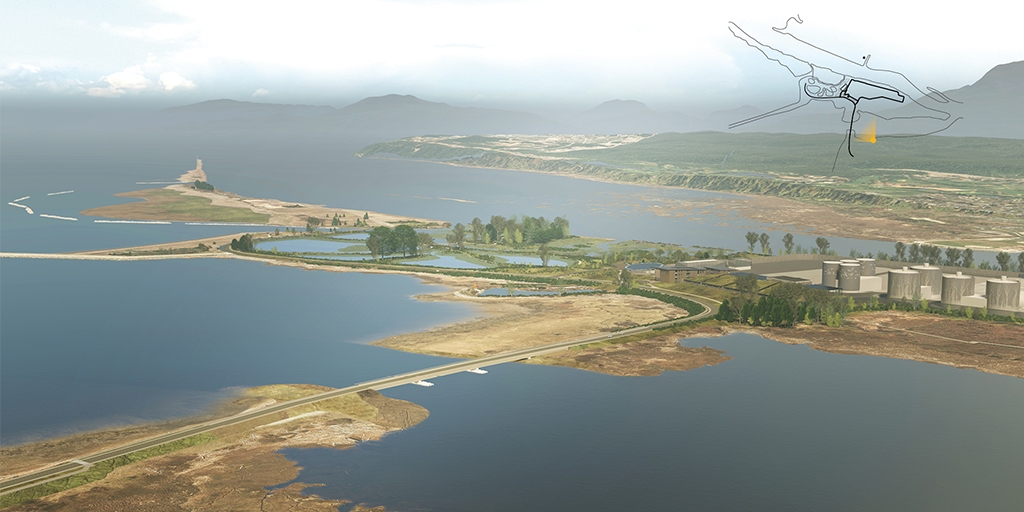
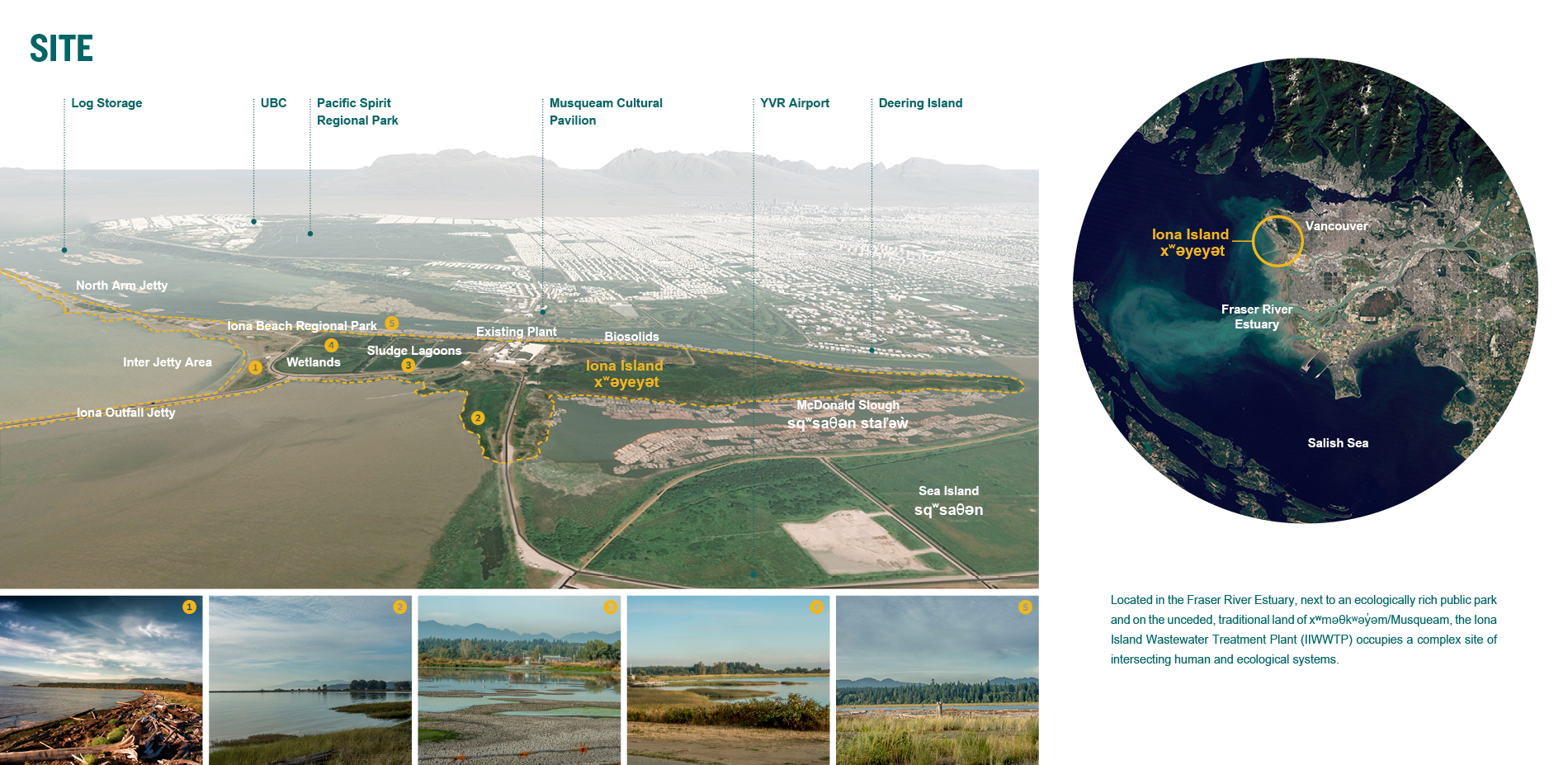
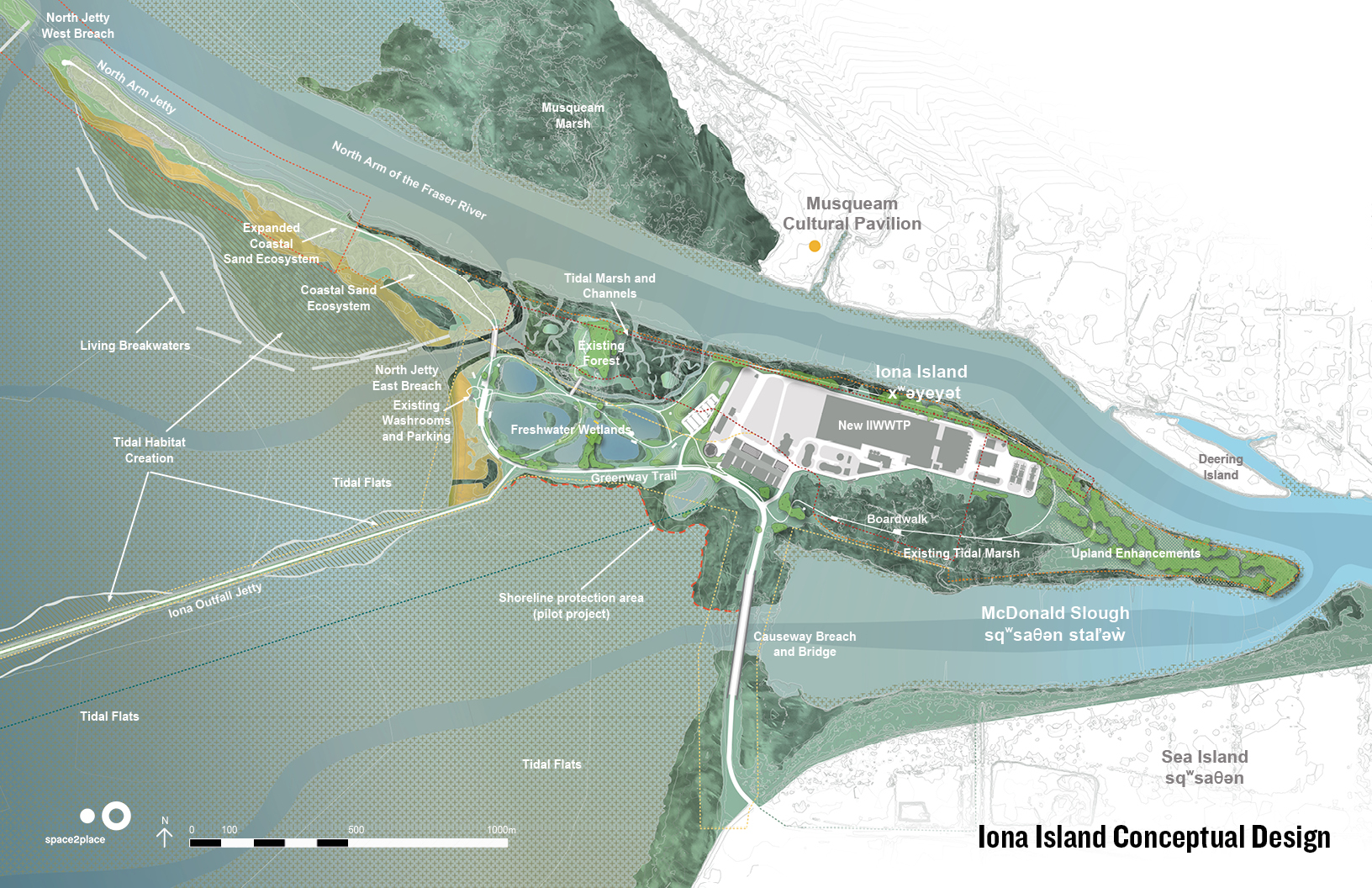
Located in Richmond BC, directly across from xʷməθkʷəy̓əm/Musqueam, in the Fraser River Estuary, the Iona Island Wastewater Treatment Plant (IIWWTP) and associated Iona Beach Regional Park (IBRP) Projects will see the critical upgrade of the existing wastewater treatment plant, paired with the transformation of the surrounding 114-hectare regional park. Led by Space2Place for Metro Vancouver, the IIWWTP Projects will restore the ecological processes of the north Sturgeon Bank, by reconnecting the river and sea, creating off-channel habitats, regenerating freshwater wetlands, and restoring upland terrestrial habitats, using ecosystem-based, flood-protection and climate-adaptive strategies.
Location: Richmond, British Columbia
Actors: Space2Place (landscape architects), Miller Hull (prime consultant architecture team), Local Practice (architects), AECOM + Jacobs (prime consultant engineering), Compass Resource Management, Aldrich Pears (interpretive), Kleanza (archaeology), Raincoast Applied Ecology // Metro Vancouver (client)
Issue: Natural estuary process disruption; Climate change-induced sea level rise; Flood risk; Critical habitat degradation and biodiversity loss; Wastewater treatment; Seismic risk
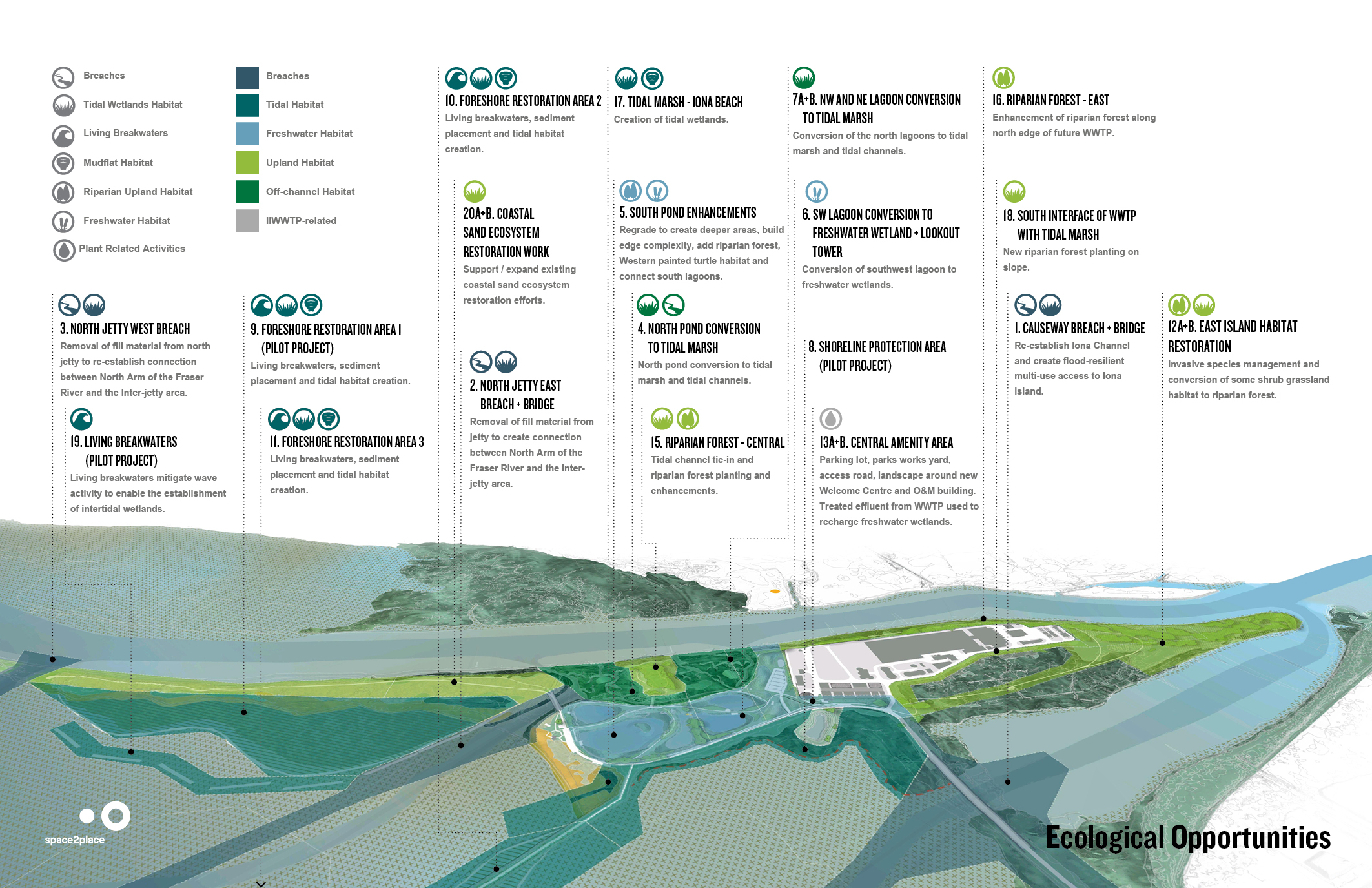
Action: A series of large-scale ecological restoration efforts aimed at improving Iona’s climate resilience and aquatic and terrestrial biodiversity, including: reconnecting the river and sea, creating off-channel habitat, regenerating freshwater wetlands, and restoring upland ecosystems.
Results: Ecological regeneration; Ecosystem-based flood protection; Restoration of the estuarine processes; Creation of habitat; Biodiversity protection
Case Study Lead: Space2Place
Project Background
The IIWWTP Projects were initiated in response to the 2012 Wastewater Systems Effluent Regulations legislation of Canadian federal policy, which aimed at improving water quality. As one of the last plants along North America’s west coast with only primary-level wastewater treatment, the intention of the IIWWTP Projects is to upgrade the existing plant to tertiary-level treatment to meet the new standards using a complementary range of ecological restoration efforts.
In response to the federal regulations, Metro Vancouver adopted a proactive and comprehensive approach to the development of the new wastewater treatment facility. This approach went beyond mere compliance with the effluent standards, and encompassed a broader vision, considering critical factors such as climate adaptation, biodiversity enhancement, ecological regeneration, and community integration. By incorporating these holistic elements, Metro Vancouver hopes to create a facility that is not only regulatory compliant, but also environmentally sustainable and community-oriented.
Understanding and Assessing Impacts
A comprehensive assessment of climate-related risks was undertaken for the projects to identify potential impacts on infrastructure, ecosystems, and buildings. The analysis of climate impacts was conducted by the consultant team, which includes engineering and environmental specialists from AECOM and Jacobs, who utilized data and frameworks from provincial authorities and organizations like the CSA Group to structure their assessment.
- Impacts on infrastructure: The primary risks identified for infrastructure were flooding and sea level rise. An increase in sea level will impact the effluent pumping systems of the WWTP increasing the static head required to discharge treated water, thereby increasing energy consumption. More frequent and extreme rainfall events in the future will further affect pumping requirements. The assessment concluded that without mitigation, these hazards pose a significant threat to the plant's long-term viability.
- Impacts on ecosystems: The assessment identified that sea level rise threatens to submerge tidal areas, while warmer temperatures, drier summers, and wetter winters will place stress on terrestrial habitat. The coastal wetlands are highly vulnerable due to low accretion rates and lack of space for upland migration.
- Impacts on buildings: For buildings on the site, the assessment considered stressors such as flood vulnerability, warmer temperatures (increasing cooling demand by up to six times), higher wind speeds, and decreased air quality from wildfire smoke, which complicates ventilation strategies.
Use of Climate Information in Decision-Making
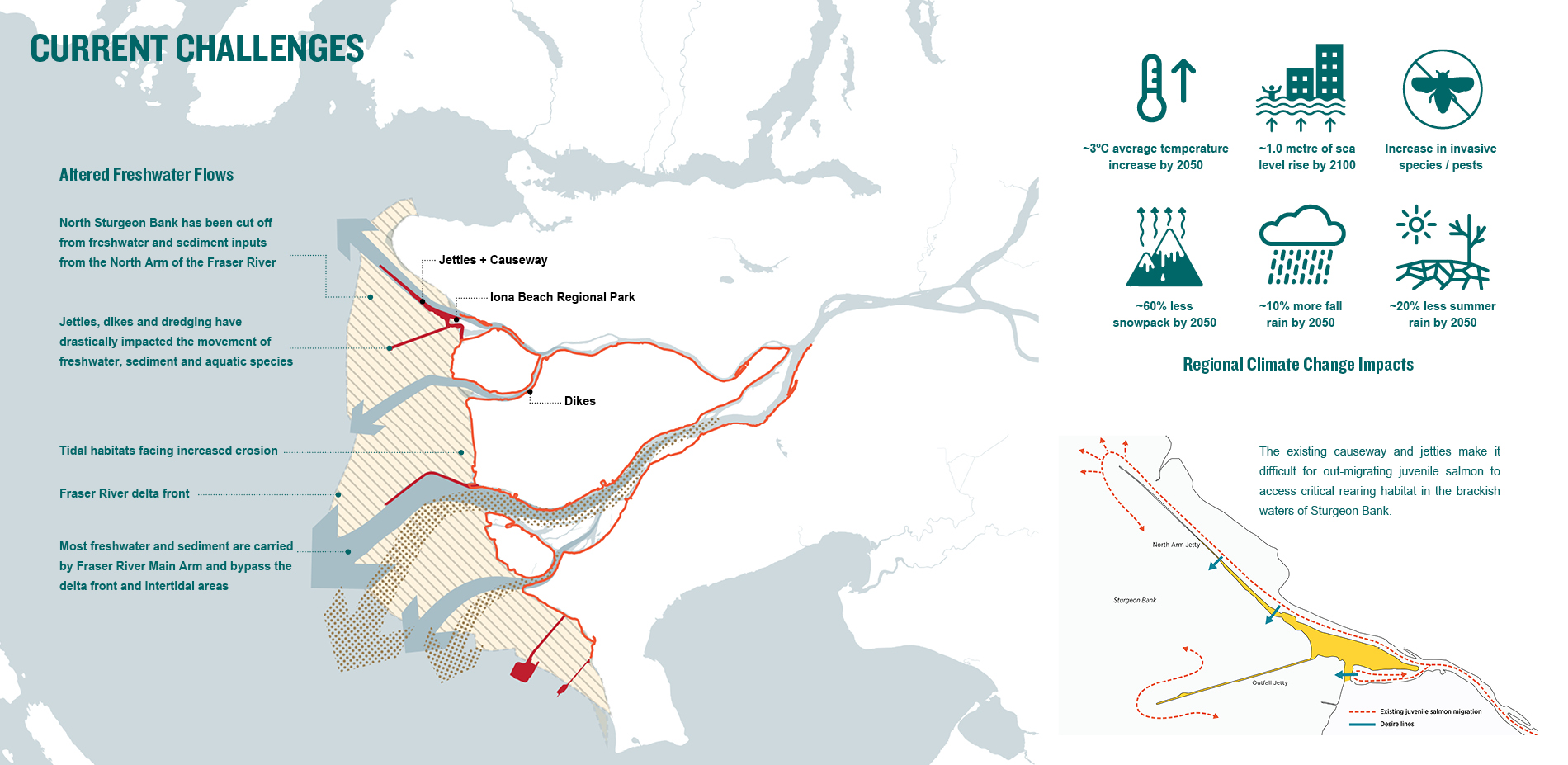
Climate change poses a significant threat to Iona Island, with projections estimating 1.0 metre of sea level rise by 2100. Earlier stages of the project were developed with fewer climate datasets. As new studies and climate data become available, the design continues to be revisited accordingly. As a foundational element in the project's decision-making process, climate information continues to directly influence the proposed long-term resilience strategies. The design for the projects is informed by regional climate projections for Metro Vancouver to prepare for future conditions, ensuring the plant remains viable throughout the 21st century.
The primary climate data variables used, include:
- Warmer average temperatures
- Wetter autumns and winters with more extreme precipitation
- Longer, drier summers
- Decreased snowpack
- Sea-level rise (SLR)
The project considers multiple time horizons and thresholds to align with its staged implementation and long service life, which include:
- By 2050: An SLR of +0.5 meters (m). Temperatures are projected to increase by 3°C, with summer precipitation decreasing by 20% and winter precipitation increasing.
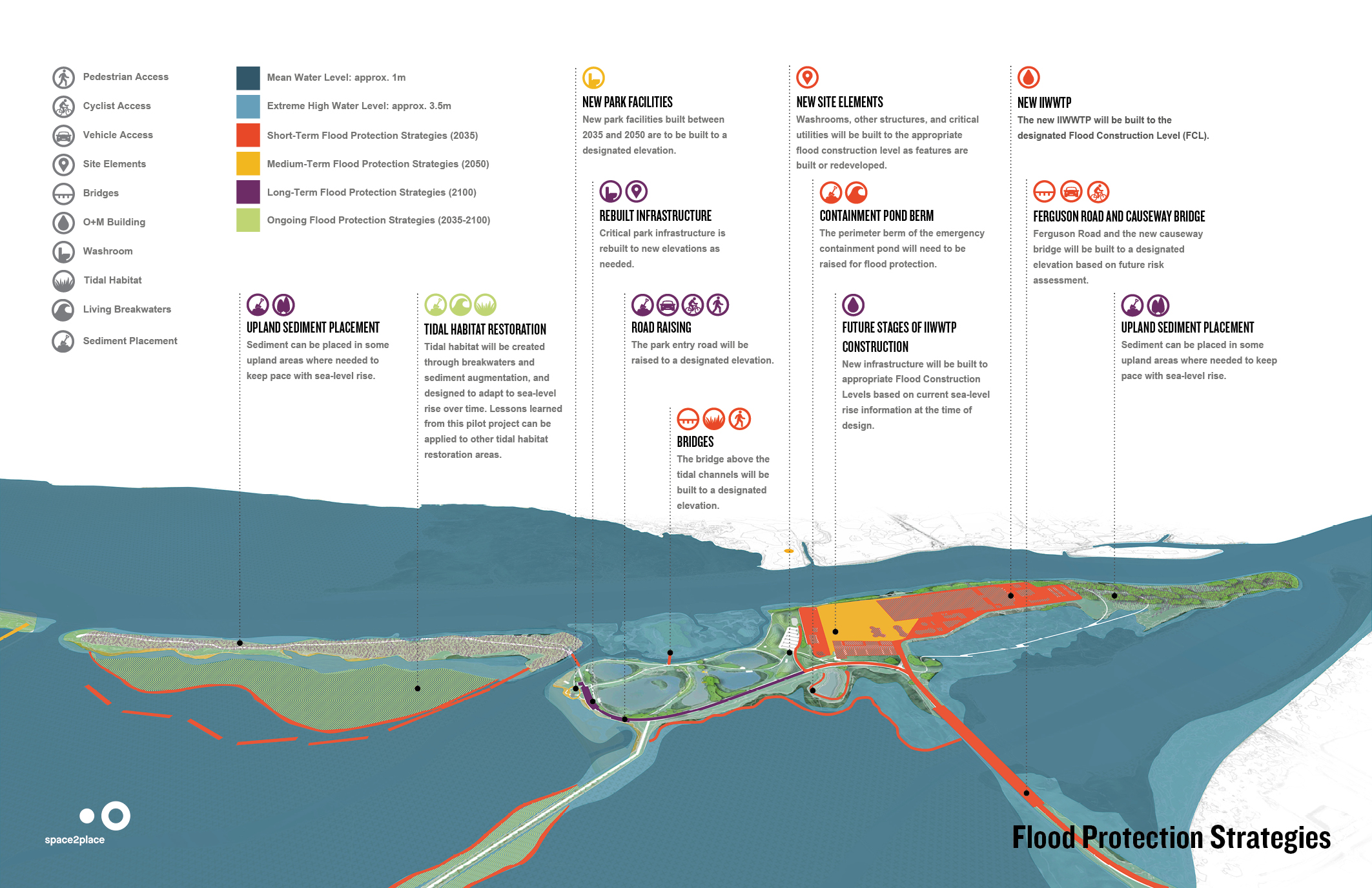
- By 2100: An SLR of +1.0 m, considered for establishing the Flood Construction Level (FCL).
- By 2200: An SLR of +2.0 m, considered for long-term planning beyond the primary design horizon.
The climate information was accessed from several key reports and guidelines:
- Metro Vancouver's Climate Projections for Metro Vancouver, 2016 report as a primary source for temperature and precipitation projections.
- Provincial guidelines, specifically the Climate Change Adaptation Guidelines for Sea Dikes and Coastal Flood Hazard Land Use, for the basis of SLR allowances.
- Various U.S. National Oceanic and Atmospheric Administration (NOAA) reports for data on local SLR trends.
- The CSA S900.1:18 Climate change adaptation for wastewater treatment plants, standard for a risk assessment framework.
Climate data continues to directly shape the project's design. For instance, the FCL for new buildings and structures was set at 7.0 m geodetic, a decision based on projections for SLR, storm surge, land settlement, wave effect, and a freeboard safety factor. Critical infrastructure is placed at or above this level, with watertight protection for lower-level non-critical spaces to account for factors such as land settlement, high tide, storm surge, and wave effects. The design also proposes ecosystem-based flood protection strategies, such as living breakwaters and sediment augmentation, to restore the foreshore and help natural habitats adapt to rising sea levels.

Identifying Actions
As the lead on the Iona Beach Regional Park (IBRP) design, Space2Place developed a compelling vision that complements the treatment plant upgrades to restore ecological processes of the North Sturgeon Bank and protect the diversity of ecosystems on Iona Island. The vision created by Space2place was defined by two core objectives: ecological restoration and climate adaptation.
Existing infrastructure in the Fraser Estuary has disrupted natural estuary processes and disrupted crucial ecological systems, directly impacting a number of wildlife species, most significantly juvenile salmon and other aquatic species, as well as migratory birds. The site is uniquely positioned along the Pacific Flyway, hosting over 300 bird species in close proximity to Vancouver International Airport - adding an additional layer of complexity.
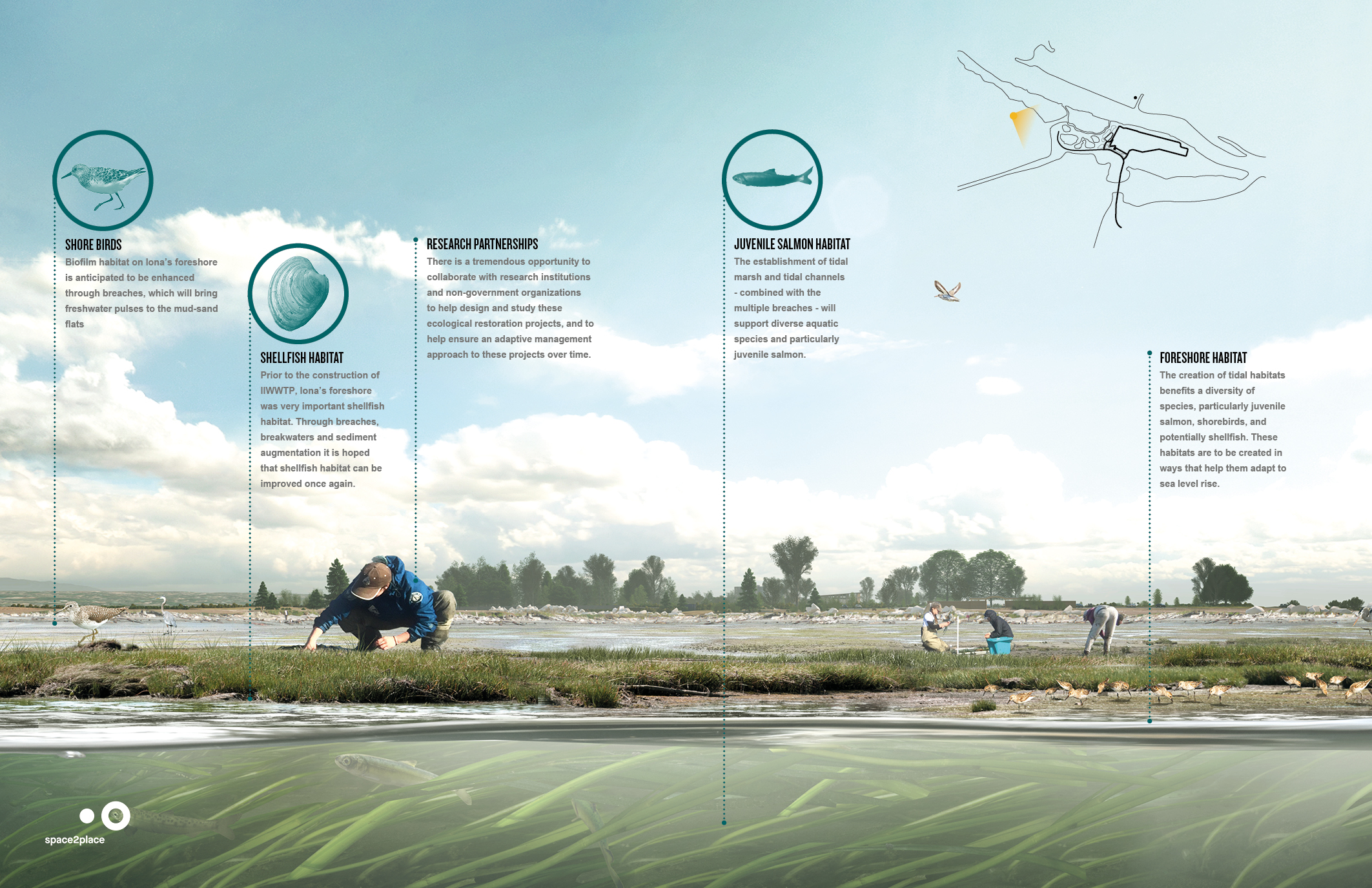
The design team continues to examine the site at multiple scales, recognizing its global connections through migratory bird routes and the salmon cycle, and considering how these ecological relationships shape human experiences along the Fraser River. In response, the conceptual design proposed by Space2Place seeks to reconnect critical natural systems between the river and sea by reopening the causeway, providing access to off-channel habitats for juvenile salmon, and restoring the intertidal wetland ecosystem. These actions will be carried through over a planned series of ecological projects: a barge berth; causeway improvements; lagoon clean out (to be later transitioned to wetlands, terrestrial habitat, and park amenities); biophysical studies; and outfall rehabilitation. Later phases of the project will investigate the potential for elevated roadways and bridges, as well as additional tidal habitat restoration projects.
Summary of design intentions:
- Meet provincial and federal regulatory requirements and ensure continued protection of public health and the environment.
- Tertiary wastewater treatment to improve the quality of treated wastewater being discharged to the Salish Sea.
- Ecological regeneration to restore and protect Iona Beach Regional Park’s diverse and sensitive ecosystems and build climate resilience.
- Increase park visitor connection to nature, and create integration between the wastewater treatment plant and the park.
- Extensive ground improvements to protect the plant from extreme weather and earthquake events and account for future sea level rise.
Implementation
The IIWWTP Projects adopt an Integrated Design Process, bringing together multidisciplinary expertise including engineering, architecture, landscape architecture, ecology, and archaeology. Working closely with Metro Vancouver, the participation of Space2Place along with the diverse array of experts, ensured that ecological, social, and cultural conditions were considered from the earliest stages of design development.
Through active multi-disciplinary collaboration, ecological regeneration and nature-based climate adaptative strategies were effectively integrated into the design concept, engaging a diversity of perspectives principally using an integrated design workshop model. The initial design development phase occurred from 2018 to 2021 and comprised eight two and a half day workshops to engage practitioners across related disciplines, including engineers, hydrologists, ecologists, landscape architects, architects, construction advisors and others, to develop innovative and inclusive strategies.
A baseline schedule to manage critical activities and meet identified goals was developed and is divided into three phases from 2021 to 2038. At present, one of the main challenges resulting in significant project delays in implementation is the complexity of land tenure on Iona Island - a consequence of the construction of the treatment plant which has altered the island’s shape from its original form in the 1960s. This uncertainty has raised questions about the future of the planned ecological projects on the site.
Outcomes and Monitoring
The complexities of the IIWWTP Projects combine ecological significance, infrastructure needs, jurisdictional complexities, and cultural considerations; as such, the lessons learned from this project and its outcomes have the potential to serve as a significant precedent in landscape architecture design for future large-scale, multi-stakeholder, restoration and climate adaptation initiatives.
Although the preliminary design report prepared by Space2Place was approved in 2022, currently the IIWWTP Projects are being revisited with iterations being made to the design concept that reflect the evolving challenges. Construction of the treatment plant is proceeding as planned within the fenced municipal lands, and is expected to be operational by 2035. However, the ecological initiatives located outside the treatment plant boundary have experienced significant delays due to unresolved land tenure issues and the associated redesign work.
Given the diversity of habitat conditions located on Iona Island, discussions are currently exploring the feasibility of conducting pilot studies to test potential approaches and strategies in smaller areas before full-scale implementation, as a mechanism for monitoring ongoing climate adaptation. One of the most significant outcomes of the project will be protection of sensitive ecologies and restoration of natural systems that have been interrupted by anthropogenic interventions to the island over the last 100 years.
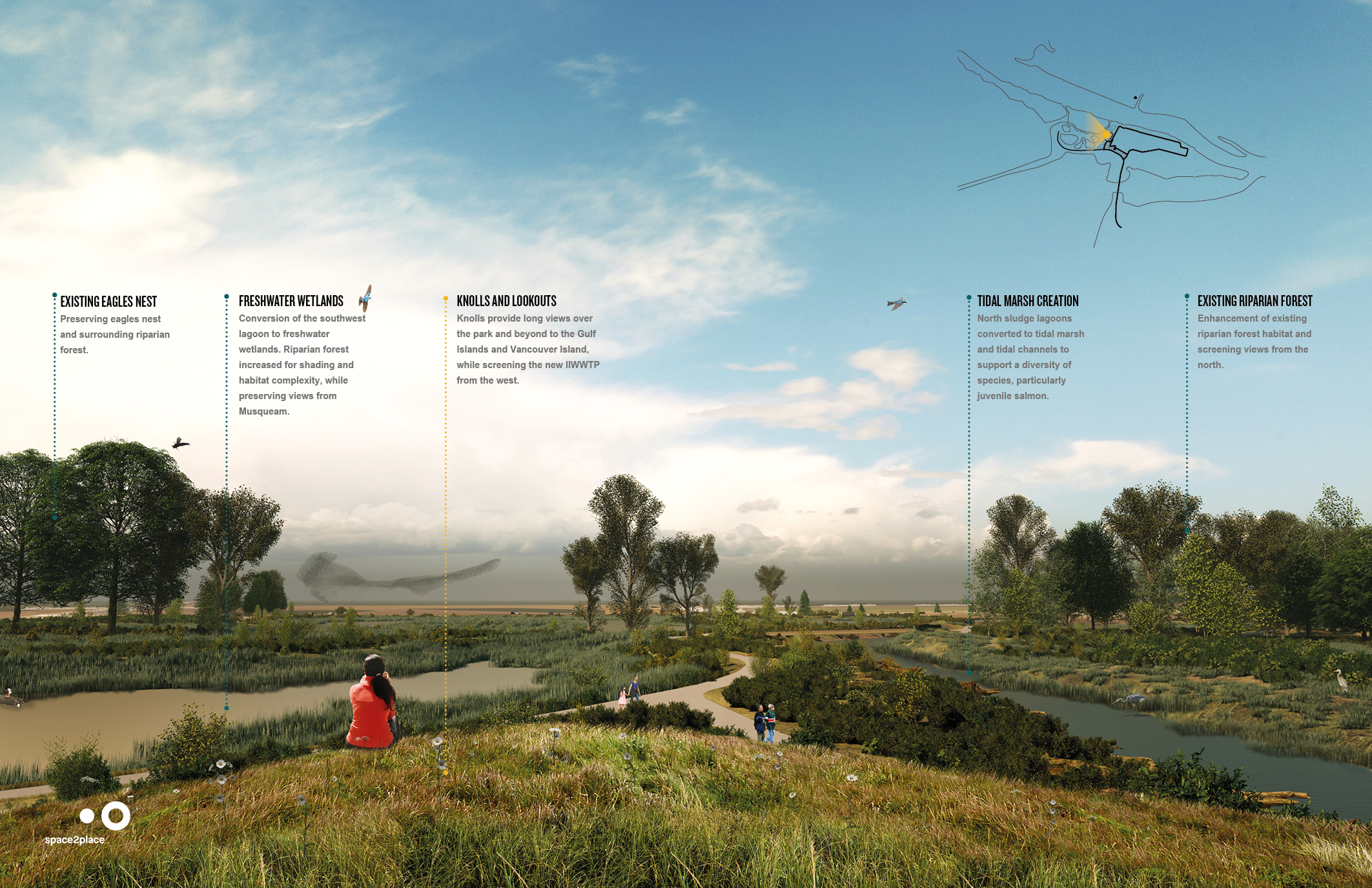
When completed, the implementation of breaches in the causeway and jetties, will create a nurturing environment for juvenile salmon transitioning from freshwater to saltwater, and help future out-migrating juvenile salmon access critical rearing habitat. In combination with regenerating and expanding the freshwater wetlands upland areas, biodiversity recovery of species within critical aquatic and terrestrial species, including that of many migrating birds, will be enhanced.
The Integrated Design Process and multidisciplinary design approach from the project's inception directly influenced the successes of both the infrastructural project delivery as well as the preliminary vision. In addition to multidisciplinary collaboration, proactive engagement with First Nations during the integrated design workshops provided valuable insights, and helped identify potential areas for integration.
Highlights of the Landscape Architect
Unlike traditional practice for similar large-scale engineering-centric infrastructure projects, the landscape architects at Space2Place were involved early in the project development, contributing significantly to site understanding, directly influencing design actions (such as the plant’s location and the suitable construction areas), and effectively integrating a broad set of environmental and contextual criteria into the decision-making process. The landscape architects also led the development of the visualizations and materials that continue to be used in communicating the significance and potential of the projects to the public and to the evolving range of stakeholders.
Next Steps
The IIWWTP projects represent a unique opportunity to implement transformative models which integrate urban infrastructure with ecological restoration, climate change adaptation, and Indigenous reconciliation, and will undoubtedly create a significant and ongoing legacy for ecological restoration and resilience initiatives in Canada. As a blueprint for coexistence between human progress and ecological recovery, this project will set a new standard for infrastructure development, demonstrating how landscape architecture can integrate urban infrastructural development and growth concurrent to habitat creation and restoration to achieve mutually beneficial economic, social and ecological outcomes.
Currently, Metro Vancouver is responding to concerns about the cost of the IIWWTP Projects by exploring how to deliver the projects to ensure cost sustainability for ratepayers in the region by looking at the conceptual vision for the projects and considering other ways that it may be delivered.
Further engagement with the Musqueam Nation is needed to foster greater collaboration, secure early project wins, and advance habitat improvements concurrent with the development of the treatment plant. The IIWWTP Projects illustrate the challenges that surround project timelines where land tenure issues for instance are slowing climate action progress.
The projects adopt a long-term vision spanning 50 years. While such a long-term scope can appear distant, present-day decisions will shape the outcomes and sustained commitment essential to ensure that critical adaptation actions are not delayed further into implementation.
Resources
- MetroVancouver (2025) - Iona Island Wastewater Treatment Plant Projects - Overview
- MetroVancouver (2025) - Iona Island Wastewater Treatment Plant Projects - Outfall Rehabilitation Fact Sheet
- MetroVancouver (2025) - Iona Island Wastewater Treatment Plant Projects - Causeway Improvements Fact Sheet
- MetroVancouver (2023) - Iona Island Wastewater Treatment Plant Projects - Preliminary Design Fact Sheet
- MetroVancouver (2024) - Iona Island Wastewater Treatment Plant Projects - Barge Berth Fact Sheet
- MetroVancouver (2023) - Iona Island Wastewater Treatment Plant Projects - City of Vancouver Standing Committee on Policy & Strategic Priorities
- MetroVancouver (2022) - Iona Island Wastewater Treatment Plan Projects - Conceptual Design Backgrounder Paper
- Space2place. Iona Island Wastewater Treatment Plant Project Portfolio

This case study was prepared and authored by Sabrina Careri (Design Communications) on behalf of the CSLA.
It forms part of the landADAPT Case Study Series, an educational resource and advocacy tool developed by the CSLA with the support of Natural Resources Canada’s Climate Change Adaptation Program.