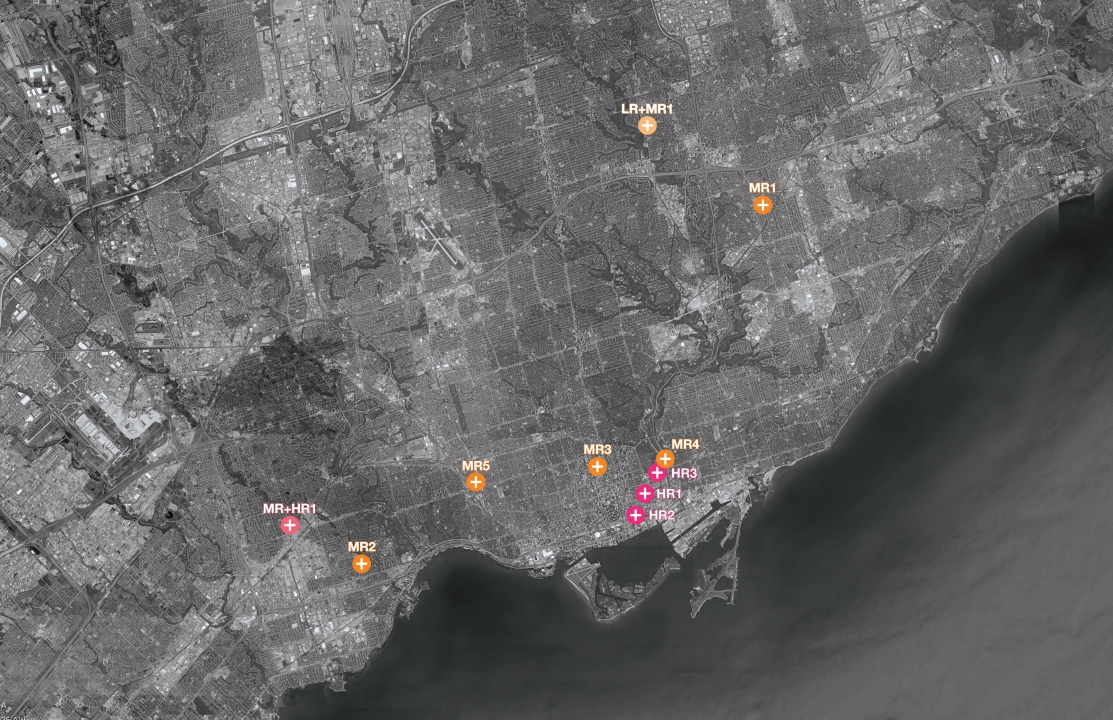
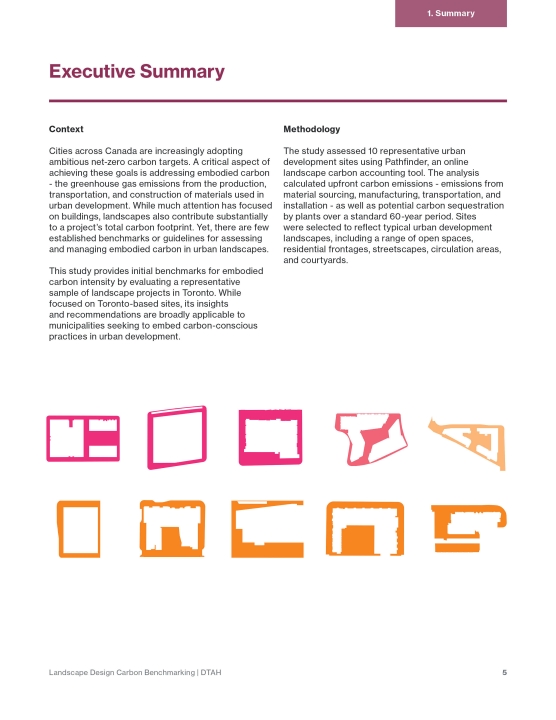
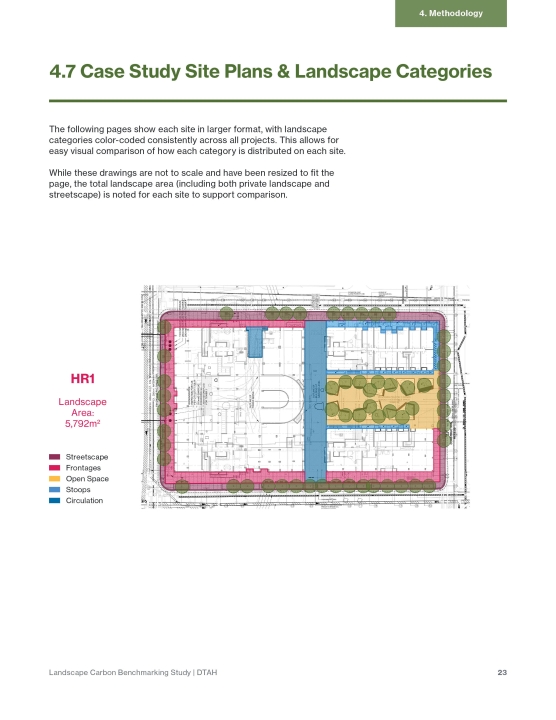
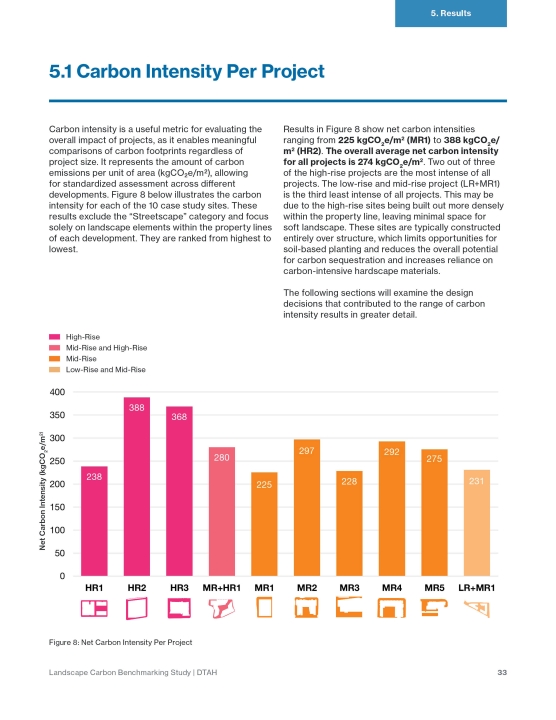
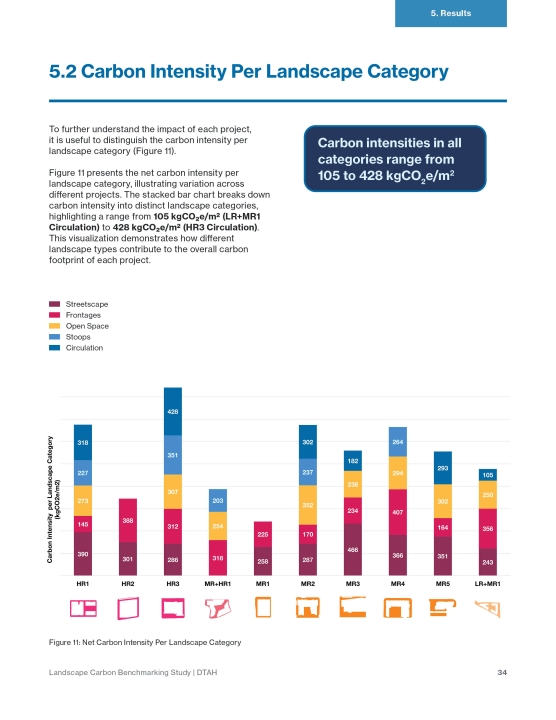
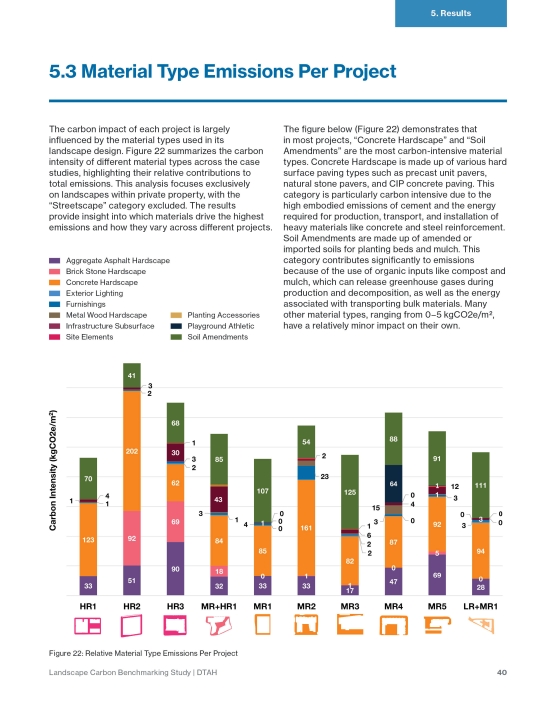
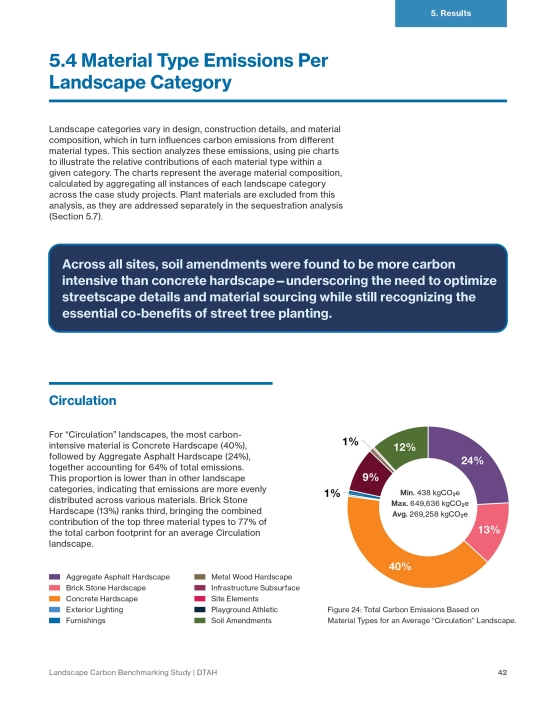
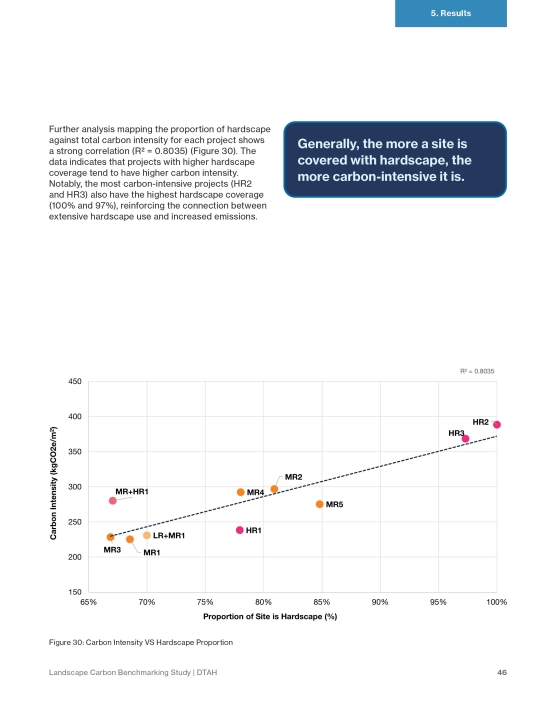
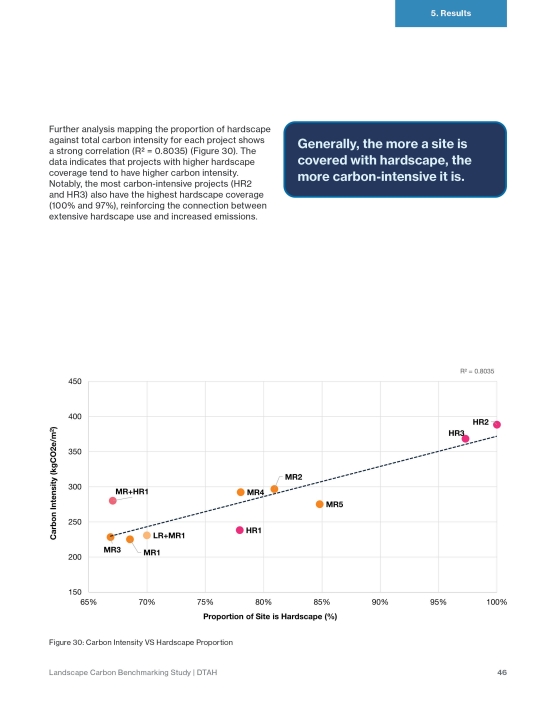
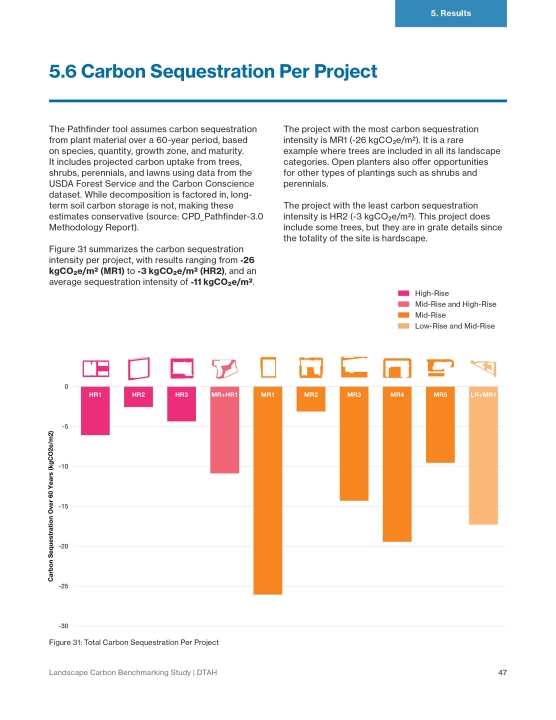
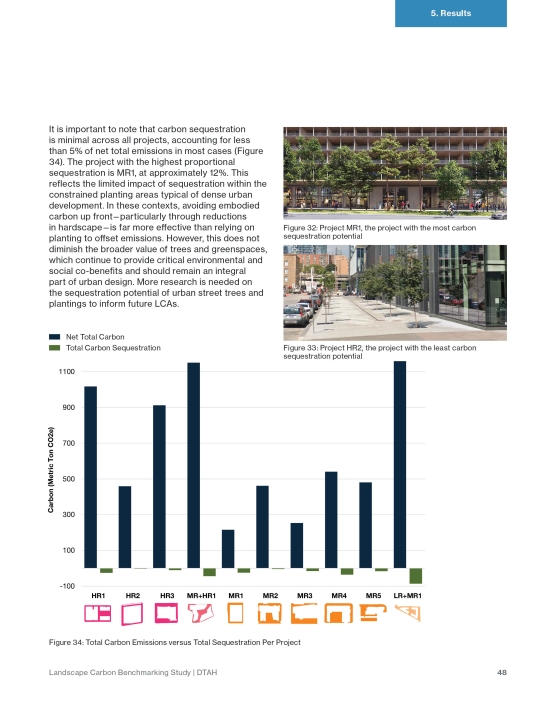
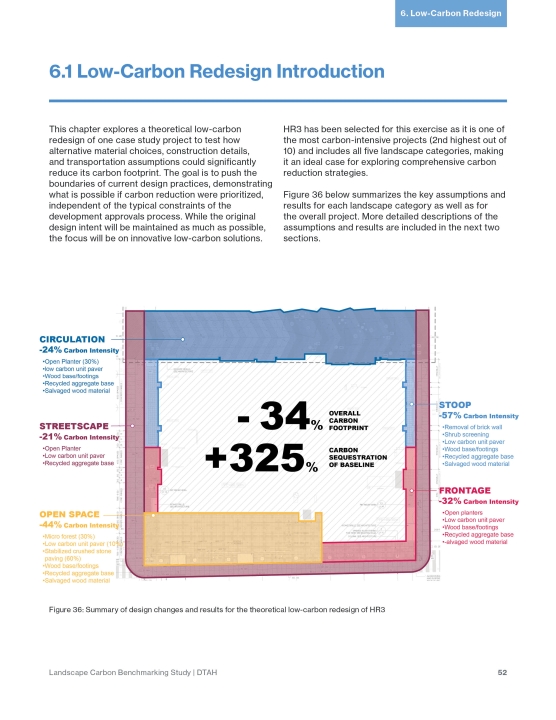
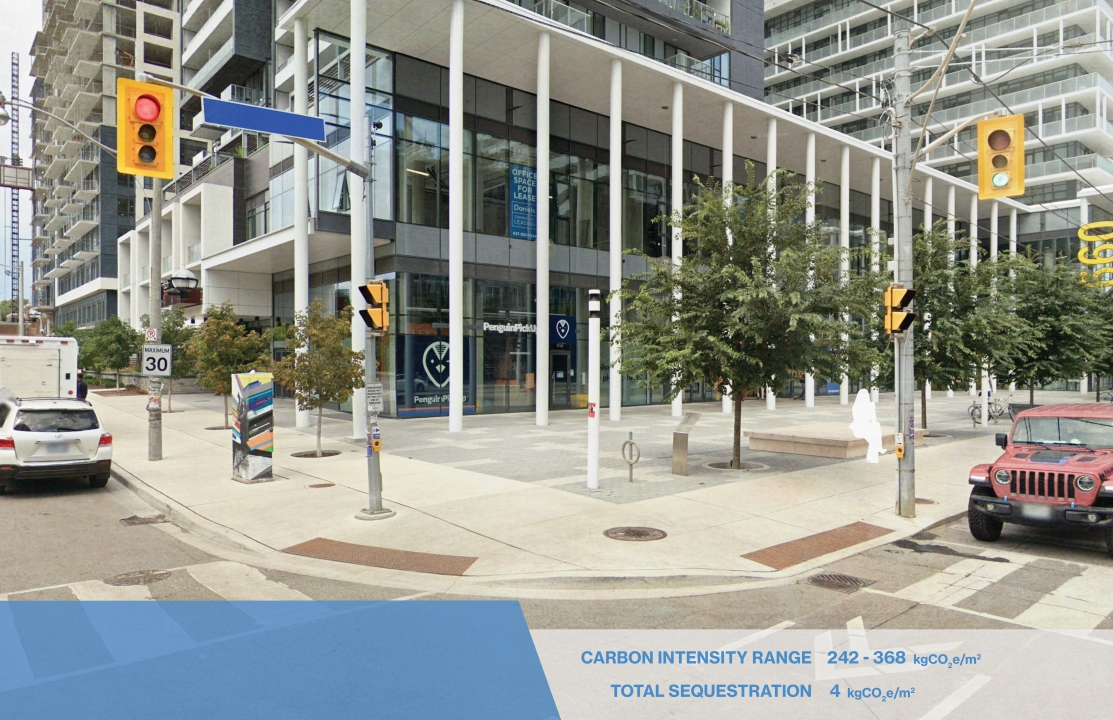
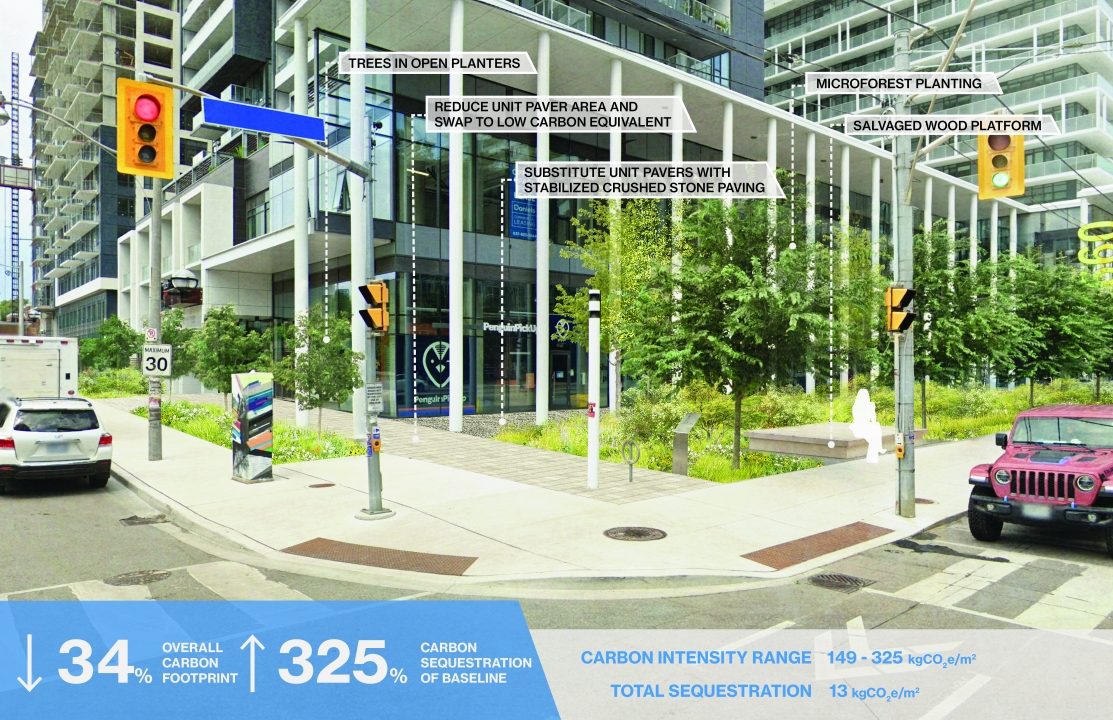
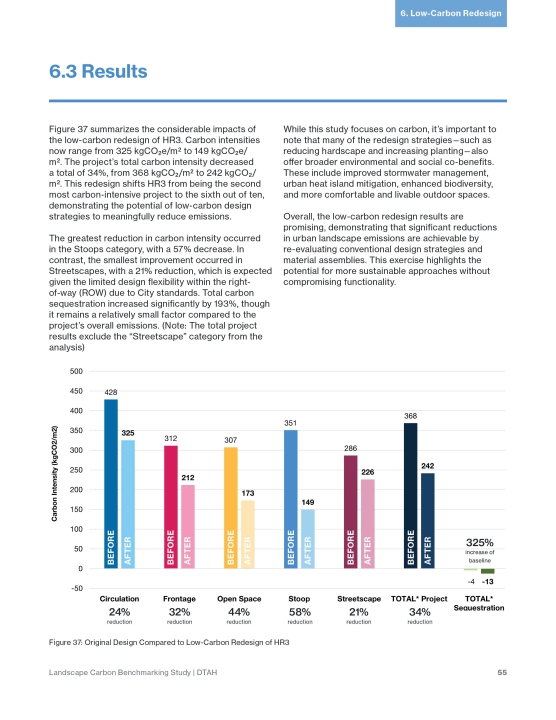
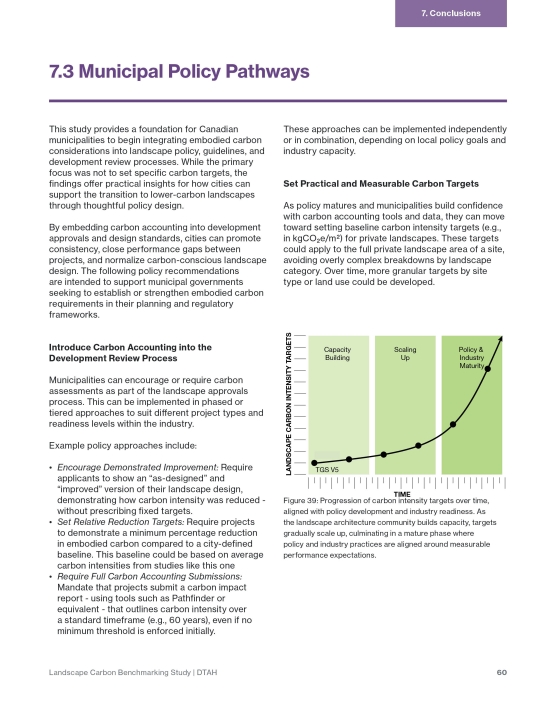
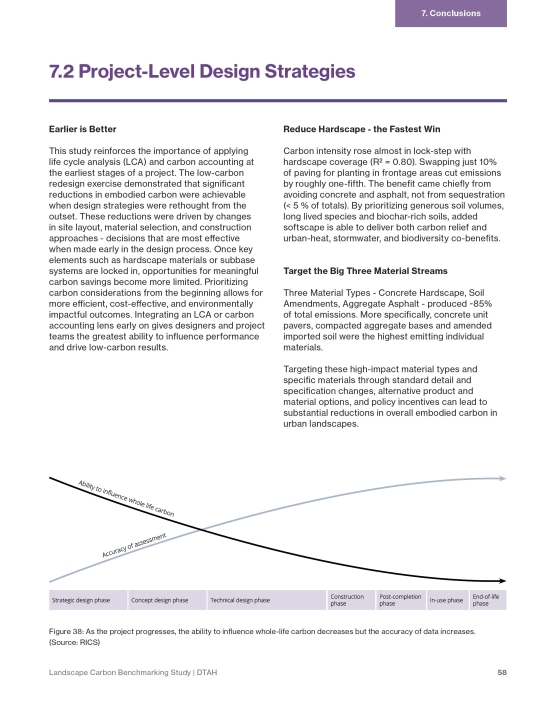
The built environment is responsible for roughly 75% of global carbon emissions, yet the carbon impact of urban landscapes has remained largely unmeasured. Commissioned by the City of Toronto, DTAH’s Landscape Carbon Benchmarking Study is one of the first efforts in Canada to quantify embodied carbon and sequestration in landscape design at the scale of typical urban development. Analyzing 10 representative development sites across Toronto, the study identifies where carbon is concentrated in landscape construction, highlights the material assemblies that matter most and demonstrates how alternative design decisions can dramatically reduce emissions without compromising design intent. Using the Pathfinder tool, the work translates complex lifecycle data into clear, actionable insights for designers and policymakers. The study elevates landscape architecture as a critical climate actor. It provides a practical framework for carbon-conscious design, supports the evolution of the Toronto Green Standard and establishes defensible benchmarks municipalities can adopt and refine.
Check out the CSLA's landADAPT webinar on this subject here.