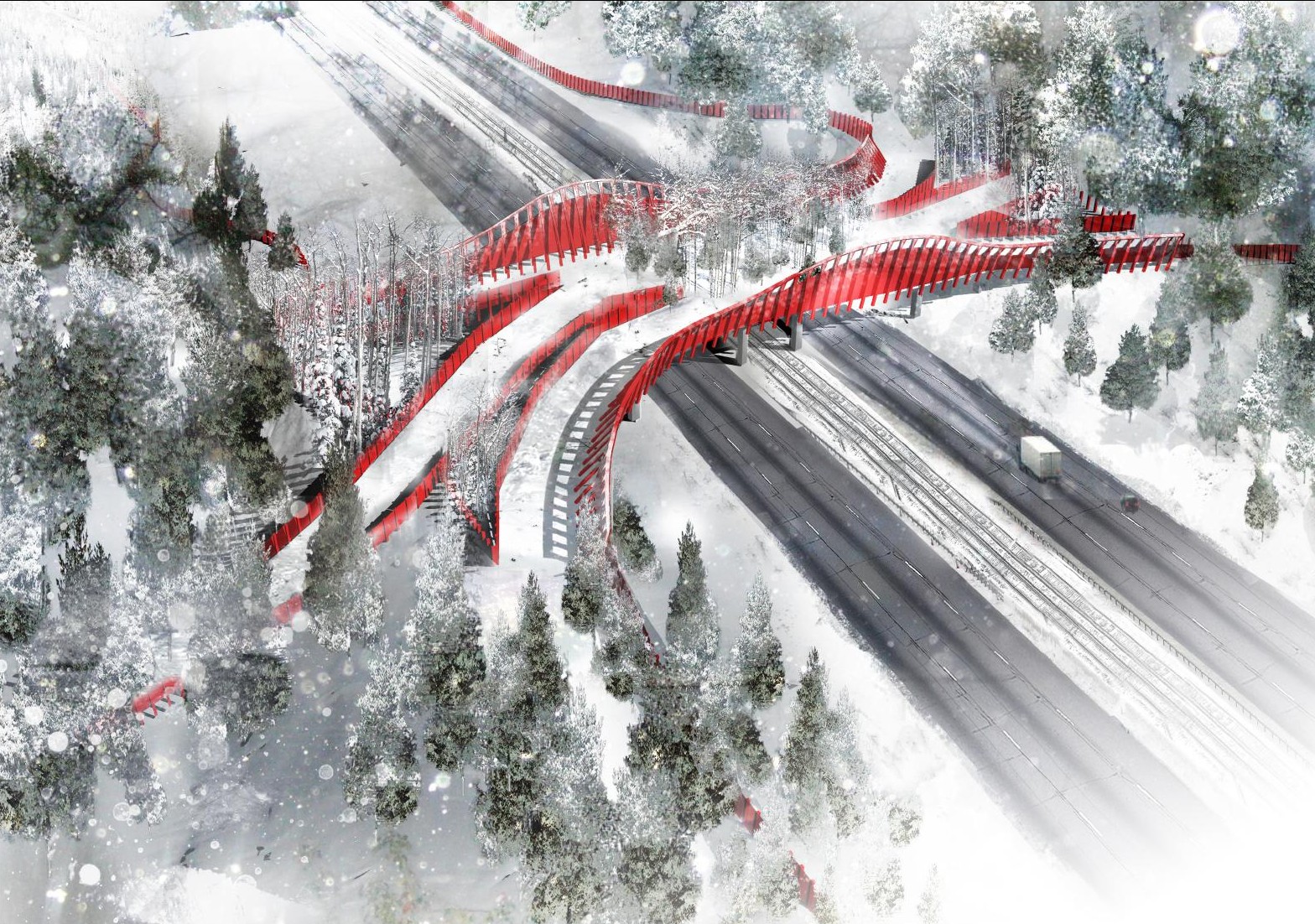
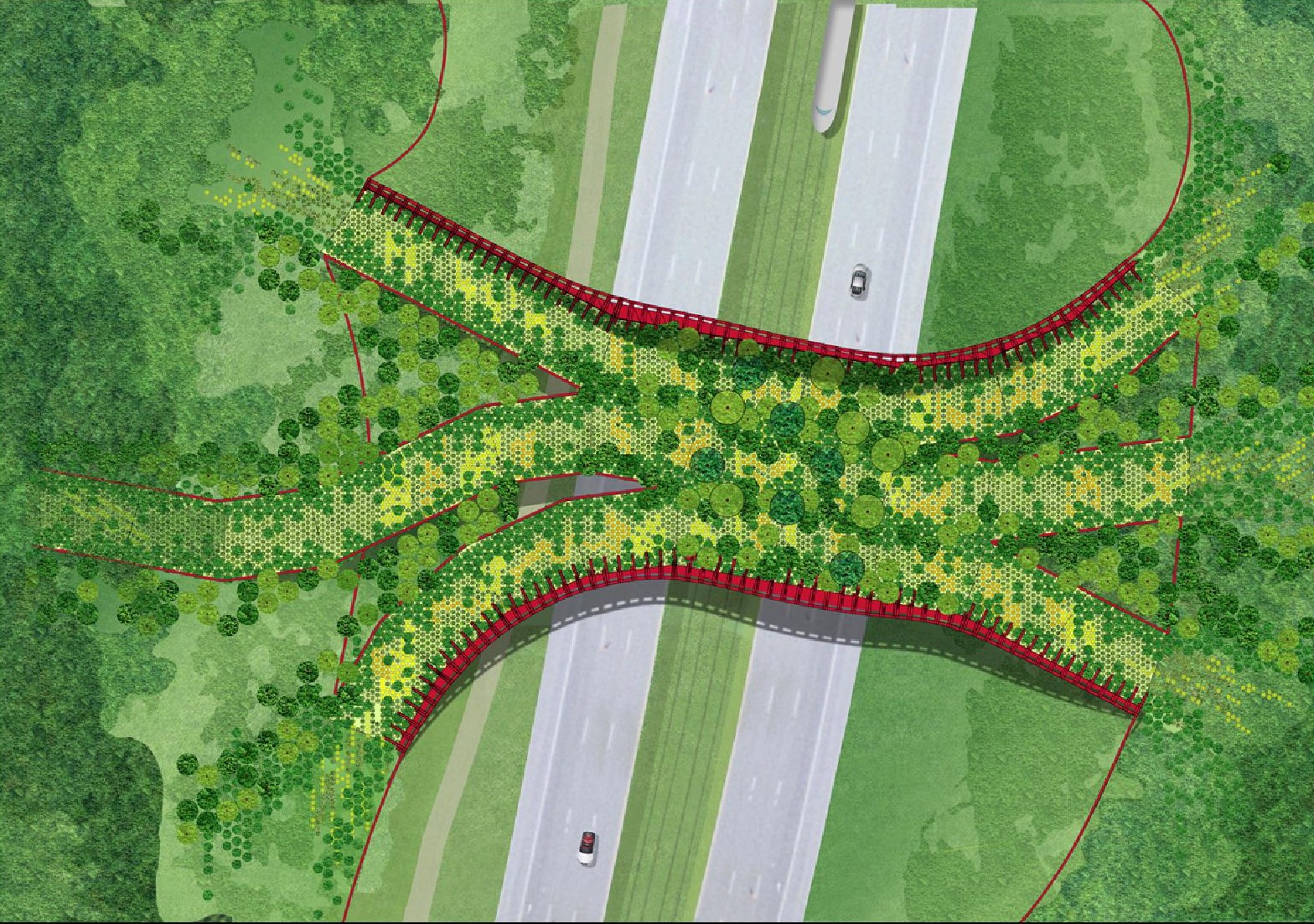
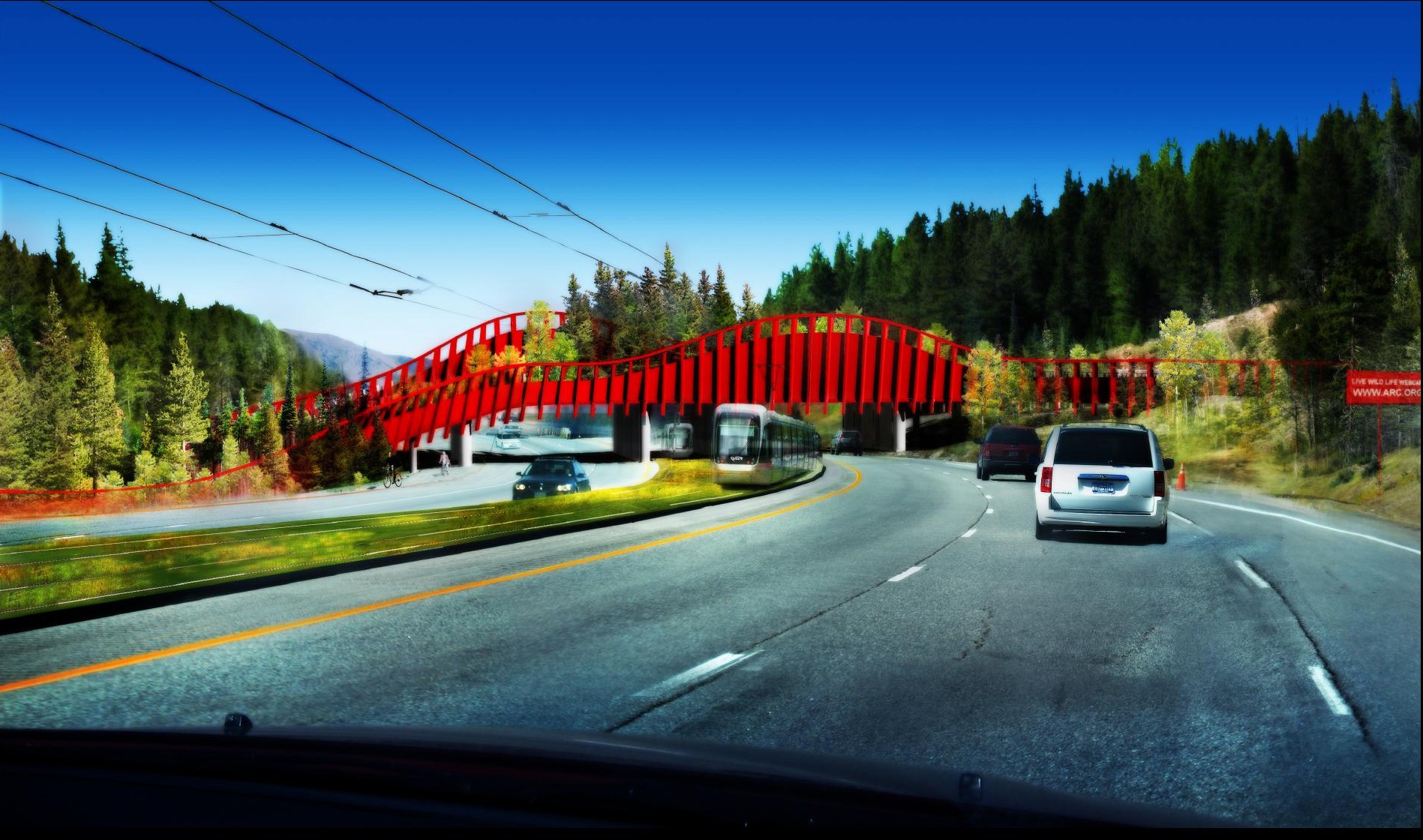
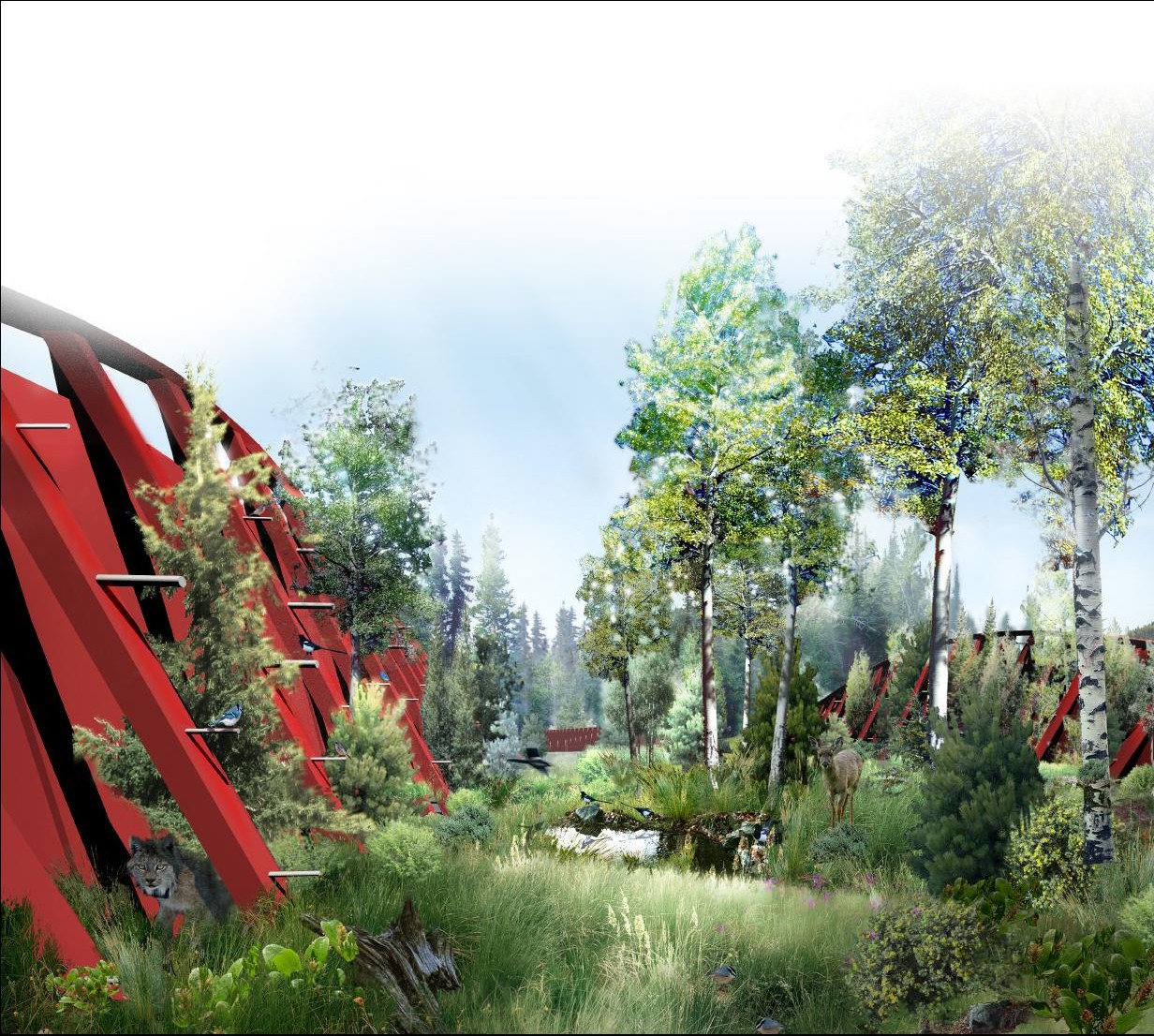
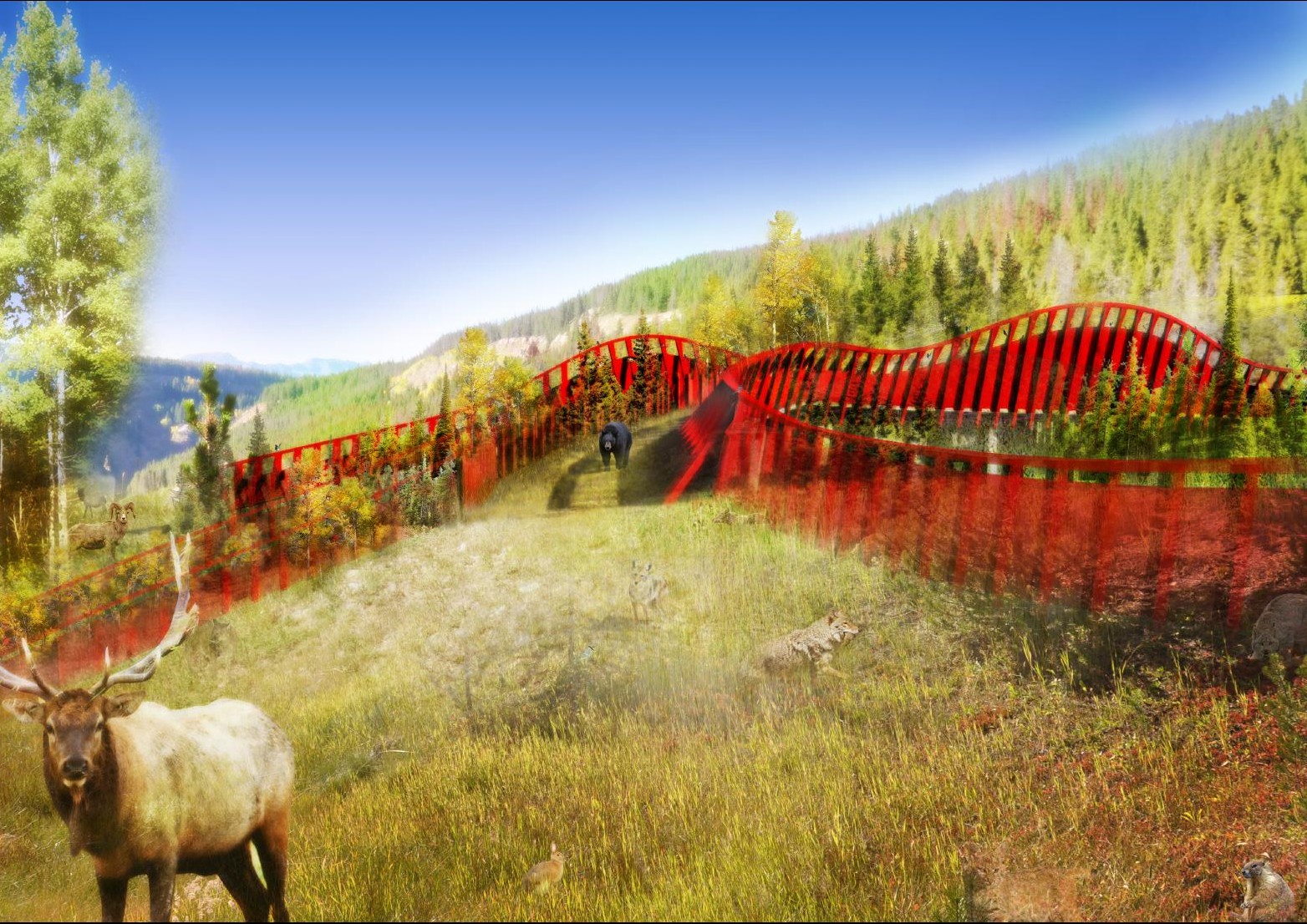
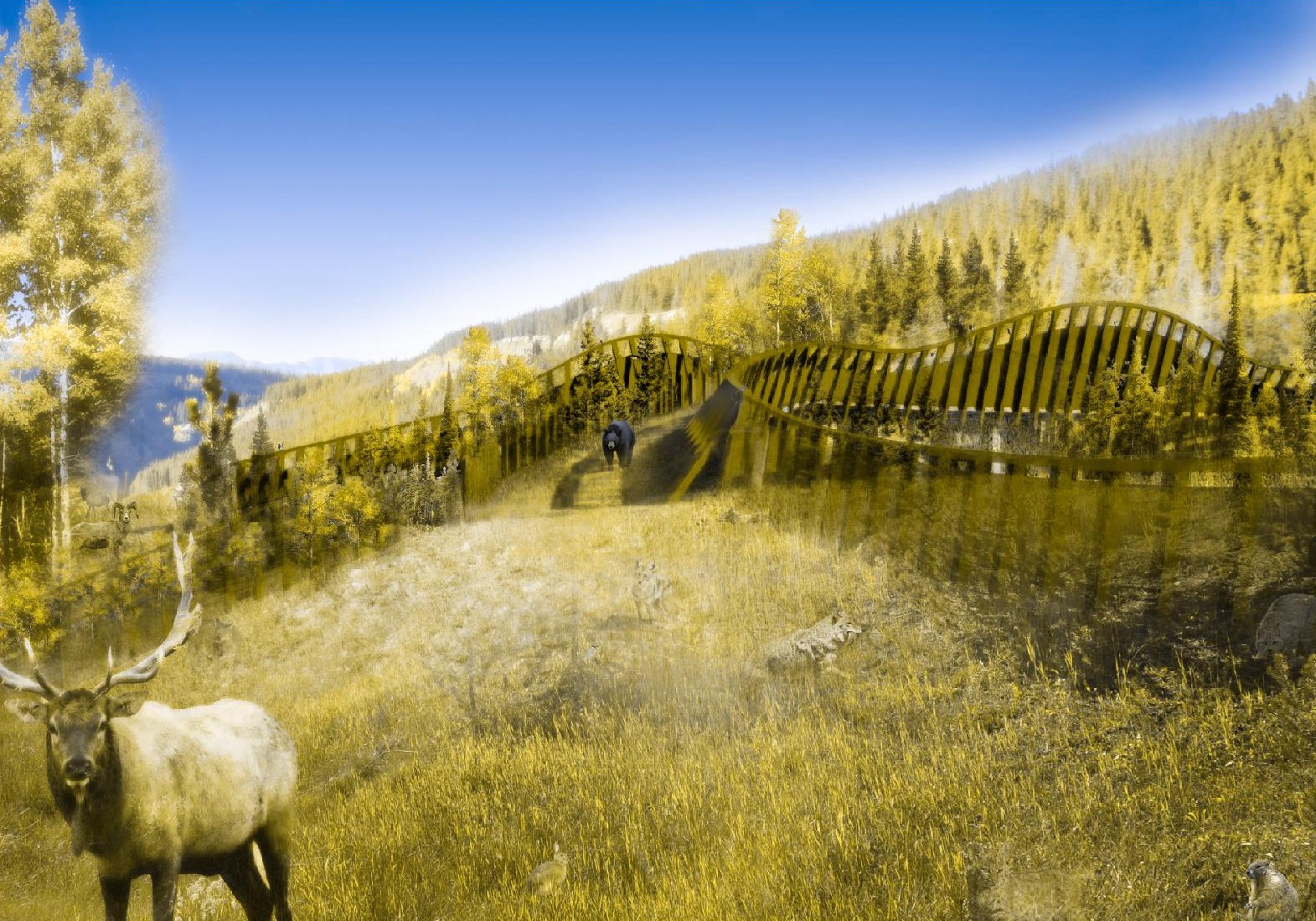
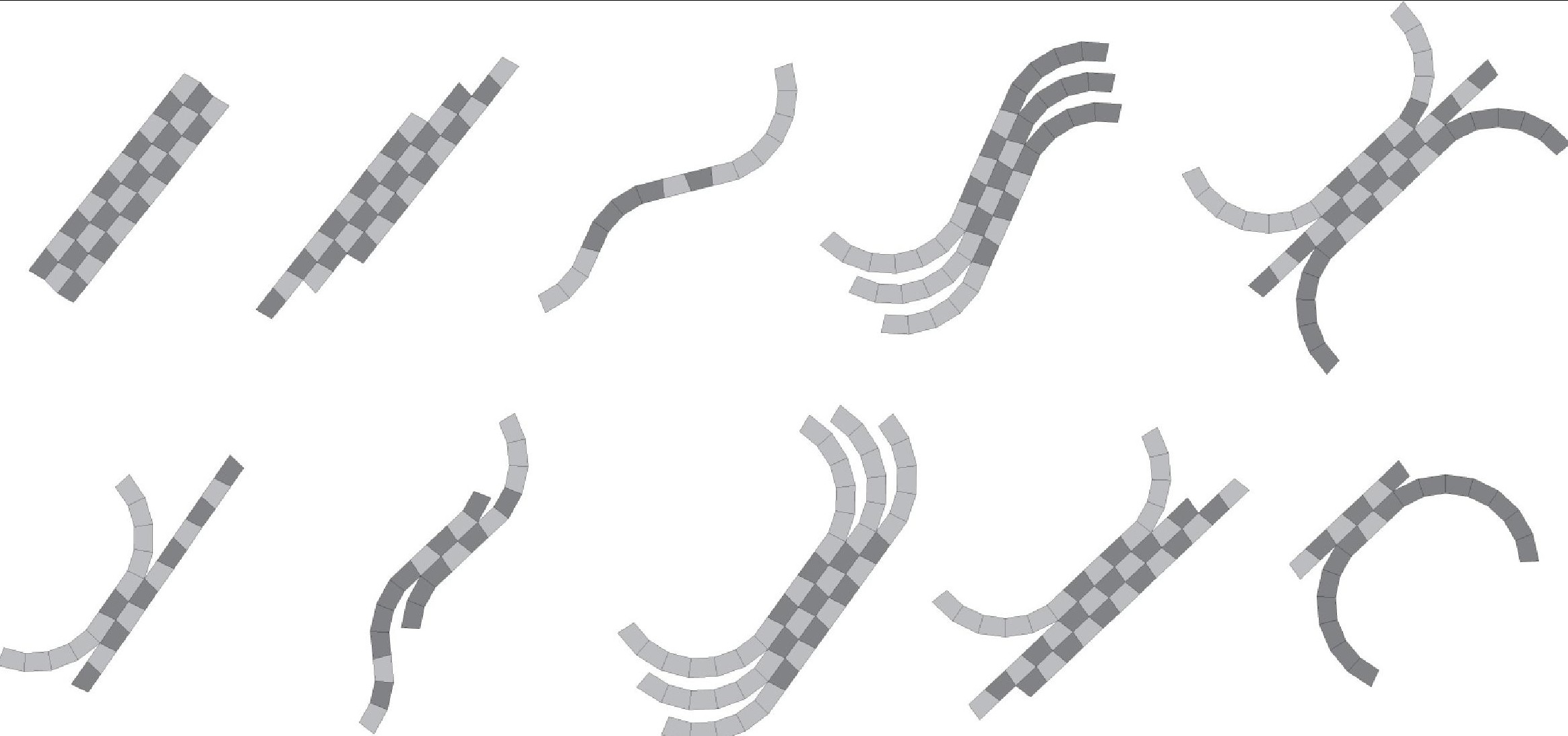
This project involved good analysis and responded well to a contextual situation. The modularity of the components offered flexibility and variability to the overpasses and this was well demonstrated in the slides. This was considered a typology for overpasses and shows excellence in environmental awareness and innovation. The instrumental role of the landscape architect for this unique project highlights the diversity of work and the collaborative relationships that can be led by our profession.
The concept for a wildlife crossing structure is revolutionary by going beyond the conventional model for a wildlife overpass. It uses a new, more resilient and cost-effective material, proposes a modular configuration that can be applied to any site anywhere in the world, and offers a wider catchment area for animals by splaying into locations in the landscape where animals have a tendency to pause and collect. Landscape architects have not traditionally been involved in the design of wildlife crossing structures: our concept and our ideas place landscape architects at the forefront of this important discussion, creating a new role for us. This project shows a collaborative effort between landscape architects, engineers, and ecologists, a partnership that has the potential to open new doors for landscape architects. The design for a wildlife crossing structure was conceptualized by first learning about the animal world, about their behaviour and their preferences, leading to a unique approach that is rooted in animal psychology.