


The guide is designed to help landscape architecture firms of all sizes navigate the transition to zero emission offices more easily. It outlines more than 110 strategies landscape architecture firms can implement to reduce their business and project greenhouse gas (GHG) emissions by 50-65% by 2030 and achieve zero emissions by 2040. The guide provides best practice strategies relevant for firms that rent or own their offices. It offers firms ways to: Measure their carbon footprint, Develop a climate action plan to reduce emissions, and Take actions to reduce Scope 1, 2, and 3 emissions.
CSLA Resource Library
Welcome to the CSLA Resource Library! Explore a wide range of landscape architecture-related research, reports, tools, videos and more—searchable by keyword, topic or type.
Have a resource you'd like to see included? Contact our team to share your suggestion.
Towards Zero Emission Business Operations: A Landscape Architect’s Guide to Reducing the Climate Impacts of Offices
2023 – Tool

ASLA
Collaborating with Industry Partners on Climate Action and Biodiversity: A Guide to Conversations Among Landscape Architects, Vendors and Product Manufacturers
2023 – Tool

ASLA
"The ASLA Climate Action Committee and Corporate Member Committee curated more than 70 questions landscape architects can ask vendors and product manufacturers about:
Product: Carbon data, Low-carbon material content, Recycled material content, Hazardous material content, Biodiversity protections; Use of products in landscapes; Location of product manufacturing; Manufacturing facilities;
Company operations; Equity programs; Advocacy efforts. There are also additional questions for plant and tree nurseries."
Climate Action Now: A Landscape Architect's Guide to Climate Advocacy
2023 – Paper

ASLA
Landscape architects can advance climate action on multiple fronts at once. Local climate advocacy, rooted in local climate issues, can plant the seeds for broader change. Climate action starts with making an individual commitment. You‚ as a landscape architect, designer, researcher, and educator‚ have a large sphere of inf luence. You can take action through your workplace, at your children’s school, at your local town hall or city council meeting, with non-profit organizations, and at the state and federal levels. The purpose of this guide is to help landscape architecture professionals become better climate advocates individually, as well as through firms, public institutions, non-profit organizations and community groups, and ASLA’s chapters and national organization.
Carbon Conscience Paper and Guidelines
2023 – Paper

Sasaki
Designing with a Carbon Conscience v2: A web-based application to informplanning and urban design projects on potential carbon impacts. Sasaki Associates.
Scaling Up Our Carbon Conscience
2023 – Webinar

LAF
To help address the climate crisis, Christopher developed the Carbon Conscience tool, which can be used by designers, planners, municipalities, and others to create spaces with reduced carbon impacts in mind. The tool builds on previous research as part of an effort to produce verifiable information that can be used in project planning and design phases to show how landscapes, architecture, and planning can work together toward a sustainable future. Presented at the Landscape Architecture Foundation's Innovation + Leadership Symposium on June 15, 2023.
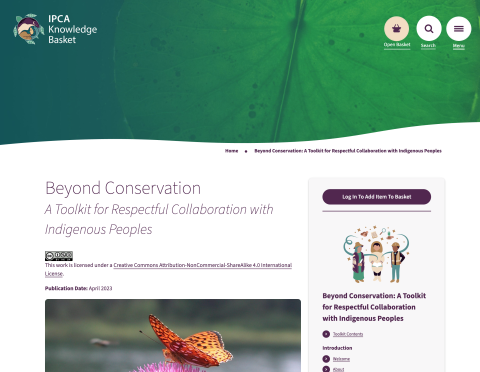
Beyond Conservation :A Toolkit for Respectful Collaboration with Indigenous Peoples
2023 – Tool
IPCA Knowledge Basket
This toolkit was created by the Indigenous Knowledge Circle of the NBCKC to support individuals and organizations seeking to learn how to do things differently, how to avoid repeating the mistakes of the past, and how to embed reconciliation into our conservation and stewardship work. We hope it helps you to advance genuine, respectful, and productive collaborations between Indigenous and non-Indigenous people and organizations working to protect and restore lands, waters, and all living beings.
The Power of Nature for Mental Health and Well-Being
2023 – Paper

CSLA/AAPC
Growing evidence supports the benefits of nature on mental health, highlighting the need for landscape architects' involvement. The diversity in the practice enables landscape architects to actively contribute to improving the health and well-being of Canadians by making natural spaces more accessible.
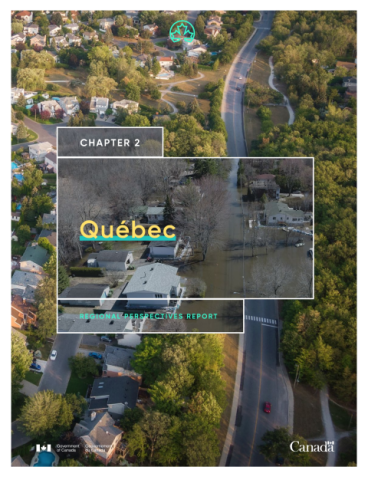
Canada in a Changing Climate: Regional Perspectives Report - Quebec
2022 – Paper
Canada in a Changing Climate
Chapter 2 of the Regional Perspectives Report focuses on Québec's vulnerability to climate change and its strategies for adaptation. The province is experiencing increased risks from heatwaves, extreme weather events, and coastal erosion, particularly in urban and northern regions. Indigenous communities are notably affected, facing threats to traditional practices, cultural heritage, and well-being. In response, Québec is implementing adaptation measures across various sectors, including urban planning, water management, and ecosystem conservation, to enhance resilience and safeguard communities.
Biodiversity Net Gain Regulations and Implementation
2022 – Paper
The Landscape Institute
This resource provides a professional and policy-focused response to the implementation of Biodiversity Net Gain (BNG) in development planning, highlighting its potential to significantly contribute to nature recovery and climate adaptation, and in delivering broader ecosystem benefits. It reflects strong support for the principles of BNG as set out in the Environment Act and emphasizes its role in embedding greener outcomes across development. It also addresses practical considerations for implementation, including the need for professional standards, training, and guidance for landscape and environmental practitioners to support equitable and effective delivery of BNG.
Co-Design Now! Webinar
2022 – Webinar

Common Space Coalition
By changing the way we practice by incorporating community-driven and participatory design principles into our work, we have the incredible opportunity to address social justice issues through landscape architecture and bridge the divide between what our profession has become and the communities we wish to serve. This webinar is follows up on the work and research of an LACF 2021 grant project, Co-Design Now!
Canadian Centre for Diversity and Inclusion: Glossary of Terms, A reference Tool
2022 – Tool
CCDI
CCDI has developed a one-of-a-kind glossary of terms. This comprehensive glossary aims to provide a reference for anyone interested in terminology used within inclusion, diversity, equity, and accessibility (IDEA). It is our goal to create a comprehensive and accurate glossary, however there can be definitions that have evolved or have nuances that are missing. The nature of language is such that the meanings of words are often very subjective and based off context. If you notice something that should be added, updated, or removed while engaging with this glossary, please reach out to us at research@ccdi.ca.
A Guidebook for Local Governments: Developing Levels of Service (LOS) for Natural Asset
2022 – Paper
Natural Assets Initiative
This guide by the Natural Assets Initiative describes how different natural asset types contribute to a range of local government service objectives.