


About the Webinar
Two expert perspectives—one rooted in ecological relationships, the other in professional practice—come together to examine how native plants can support biodiversity, pollinators, and resilient landscapes. From co-evolved plant–pollinator relationships to the realities of sourcing, design, and public acceptance, the session will examine how plant choices shape ecosystem function and long-term landscape performance, and connect theory, design intent, and implementation challenges.
The session will begin with a presentation by Lorraine Johnson, who will explore the networks of relationships between and among species that are the foundation of resilient ecological systems. In the context of climate change and biodiversity loss, how can the plant choices we make when designing places and spaces, and/or when formulating policies and practices, support the healthy functioning of food webs, particularly as they relate to the co-evolved dependencies and mutualisms of native plants and pollinators? With illustrative examples of specialist co-evolved relationships and their (often surprising) unique specificities and adaptations, this presentation encourages us to consider multi-species support as integral to designing and/or engaging with landscapes and communities.
For more than 30 years, Isabelle Dupras has observed and helped improve the use of indigenous plant species in landscape architecture. During that time she has documented the transformation of several issues surrounding indigenous species, including their use, their impact and the values associated with them. In this presentation, she will provide an overview of the role of indigenous species in landscape architecture, emphasizing the importance of an ecosystemic design approach focused on the services provided by different plants and approaches to combining them. Drawing on her experience as a nursery owner, she will highlight the challenges involved in securing supplies of native plants for projects, as well as the need to strike a strategic balance between biodiversity and social acceptance.
Thursday, February 26, 2:00-3:30 ET
Recommended Resources
Click here for a complete list of recommended reading
About the Presenters
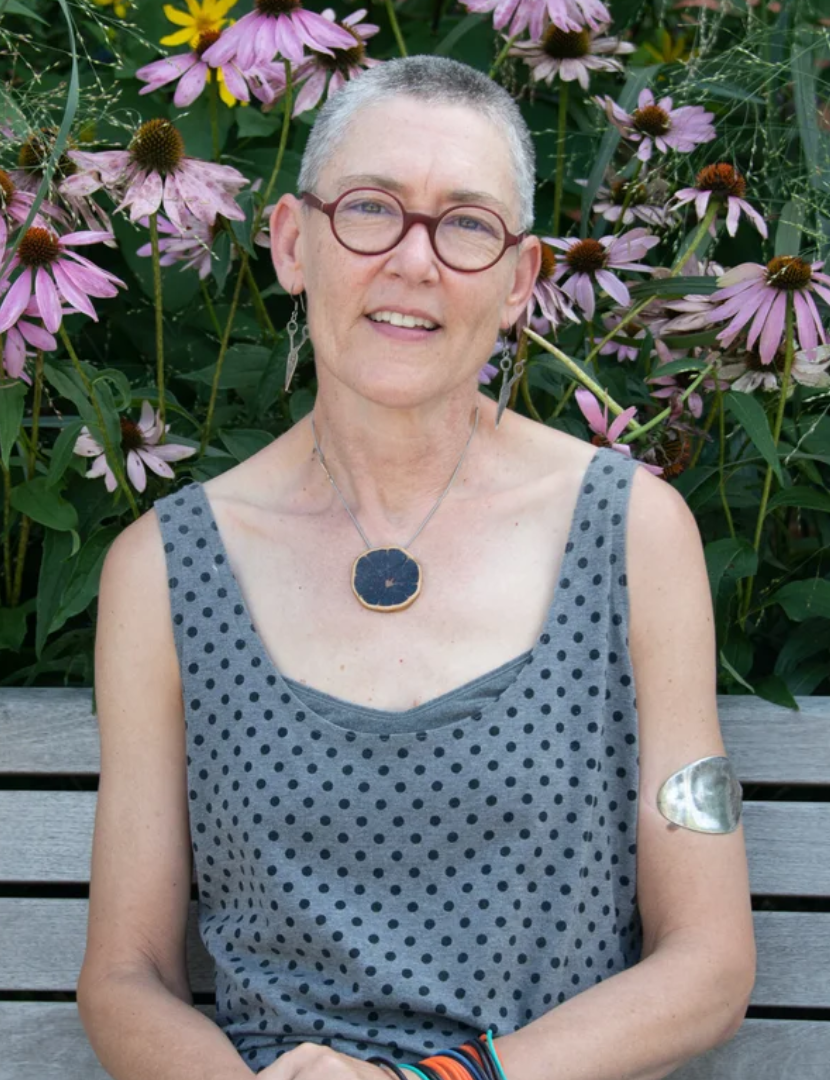
Lorraine Johnson is the founding and long-time editor (2007-2019) of Ground: Landscape Architect Quarterly, the journal of the OALA. Lorraine served on OALA Council as Lay Councillor for many years, and received the OALA Certificate of Merit for Service to the Environment in 2015. The author of more than 10 books, Lorraine is recognized for her work of more than 30 years to protect and enhance habitat. Her books include the bestselling Canadian Gardener's Guide, along with 100 Easy-to-Grow Native Plants for Canadian Gardens; Grow Wild!; Tending the Earth; The Ontario Naturalized Garden, among others. Her most recent book is A Garden for the Rusty-Patched Bumblebee: Creating Habitat for Native Pollinators. Learn more about Lorraine's work on her website.
 Isabelle Dupras earned her bachelor’s degree in landscape architecture at the Université de Montréal in the early 1990s. She then completed her master’s, on the use of native plants in landscape architecture, under the supervision of professor Ron Williams. During that period she co-founded a nursery called Indigo, dedicated to propagating indigenous plants and creating biodiverse seed blends. She ran Indigo for 23 years until she sold the company, now named Aiglon Indigo. In 2013, she received the Henry Teuscher award, presented by the Montreal Botanical Garden, for her exceptional contributions to the advancement of horticulture in Quebec. Since 2021, she has been a senior landscape architect with the firm of Rousseau Lefebvre, where she develops vegetation strategies adapted for the Anthropocene. She is also in charge of R&D and oversees efforts to enhance and protect biodiversity in the firm’s projects.
This webinar is offered through landADAPT:
A continuing education program to promote building capacity through professional development opportunities for Canadian landscape architects, supported by Natural Resources Canada’s Climate Change Adaptation Program.