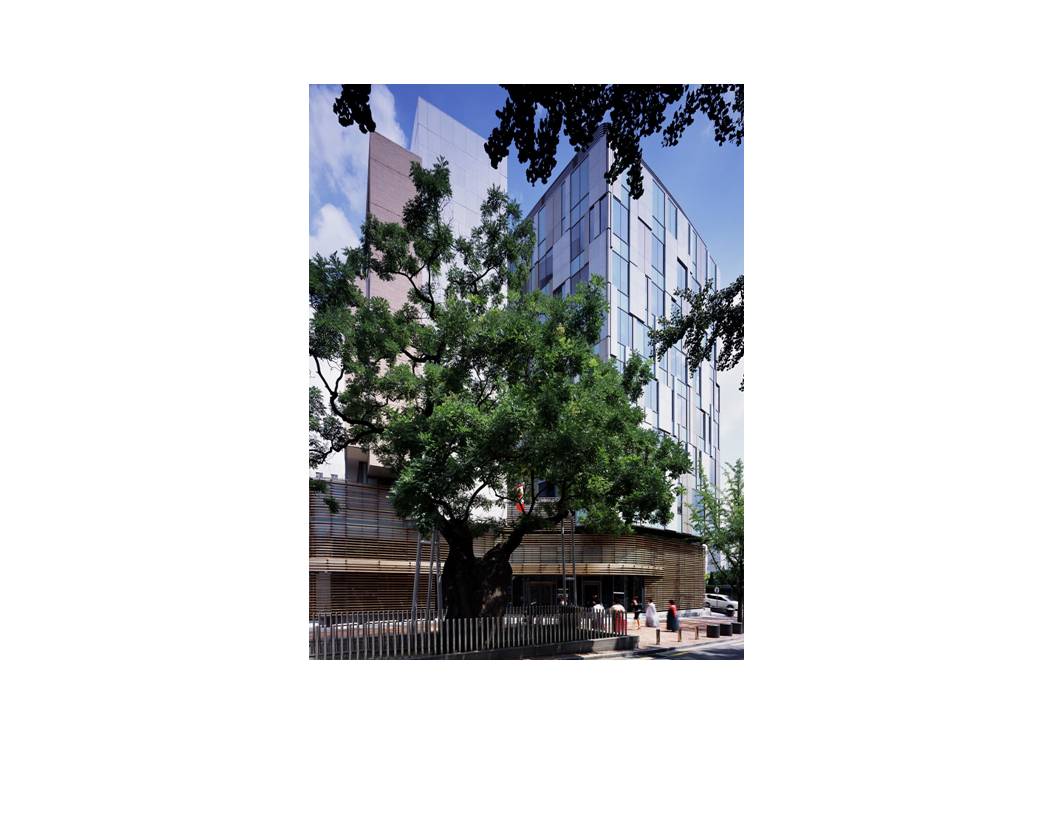
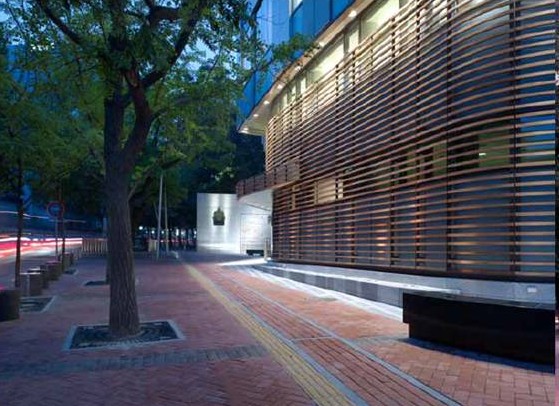
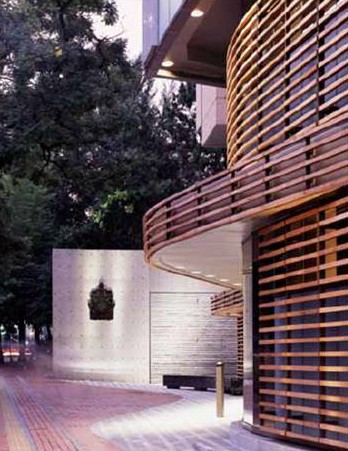
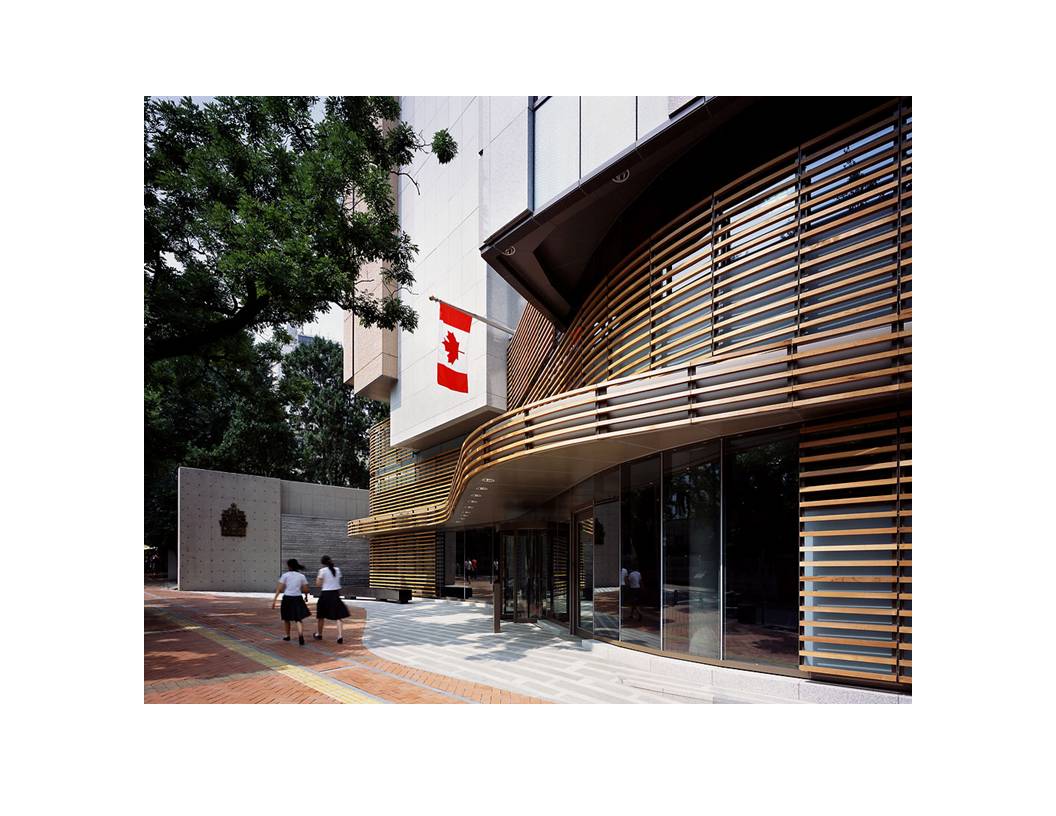
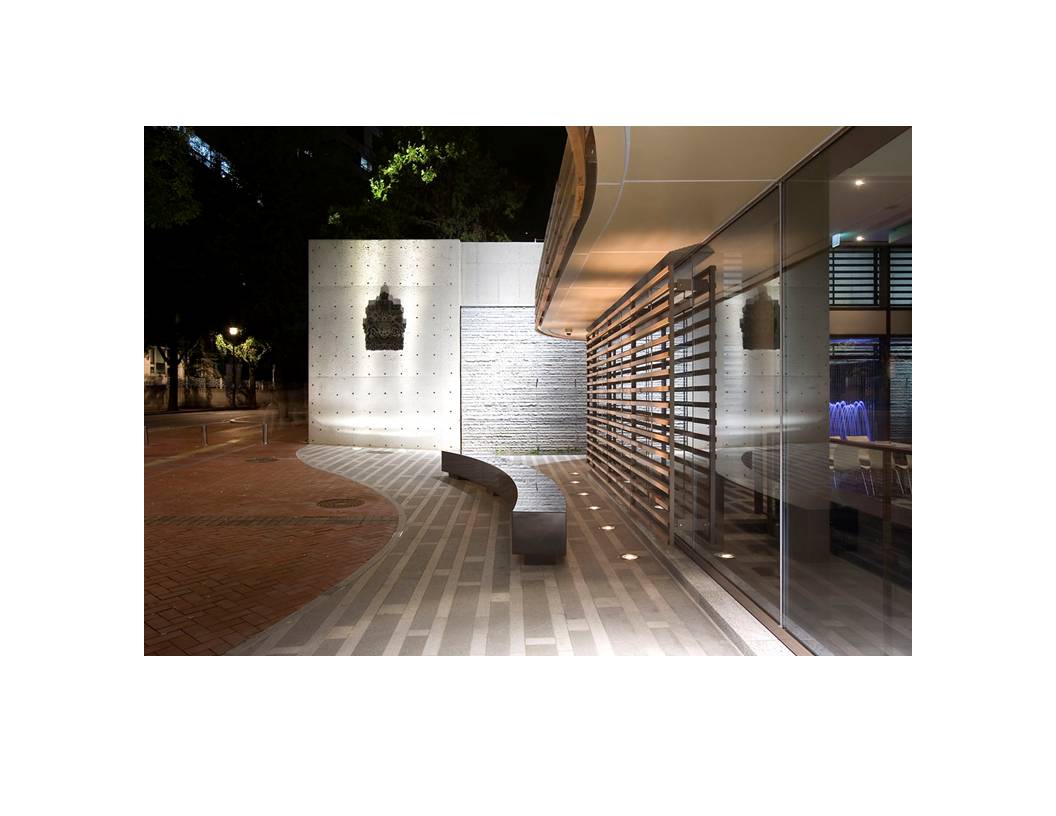
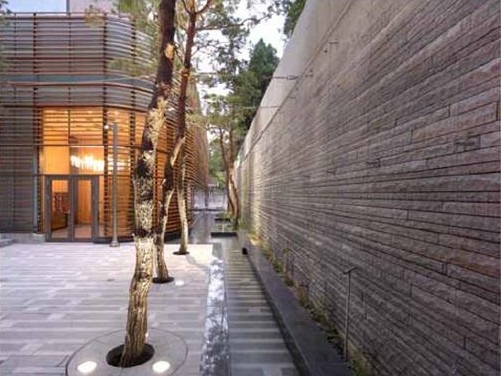
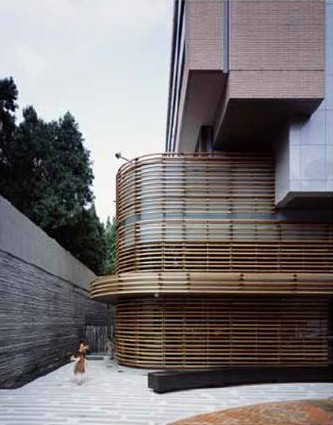
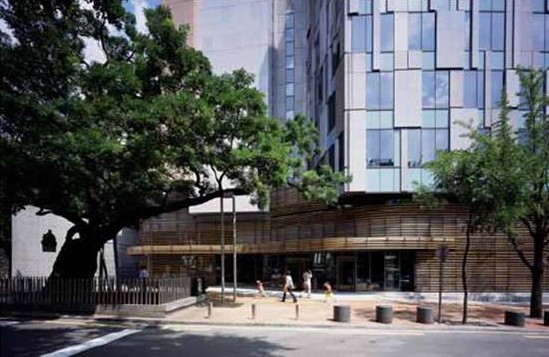
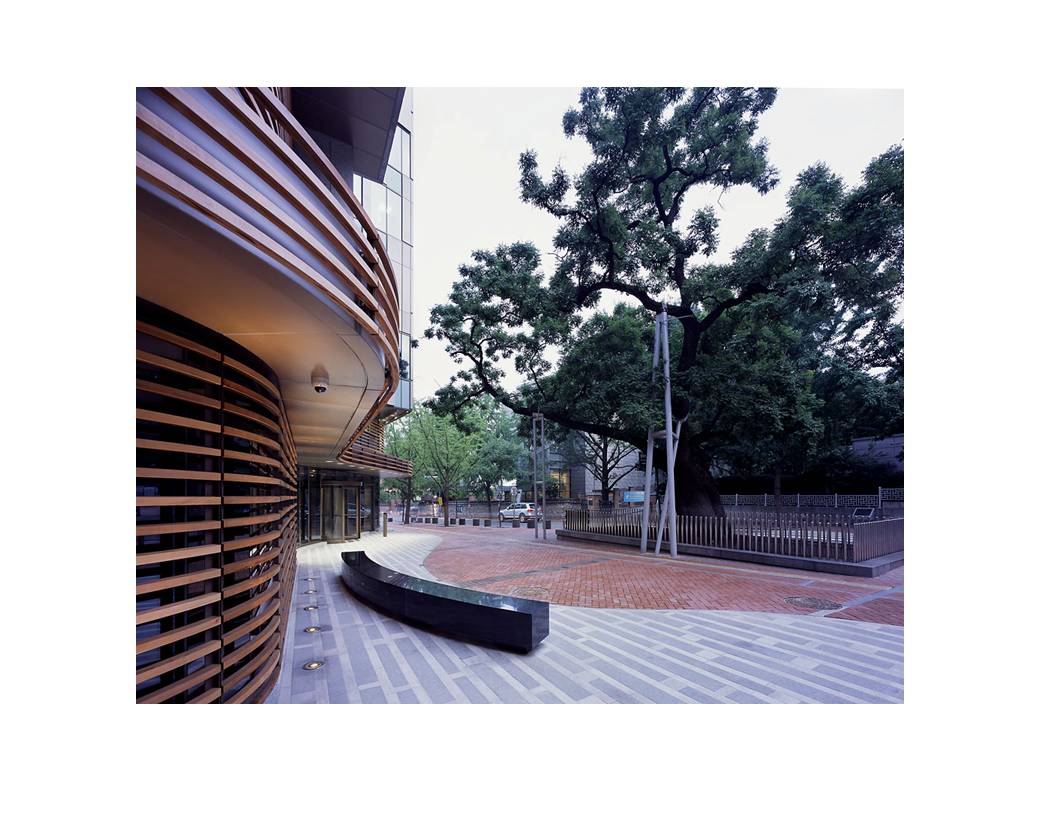
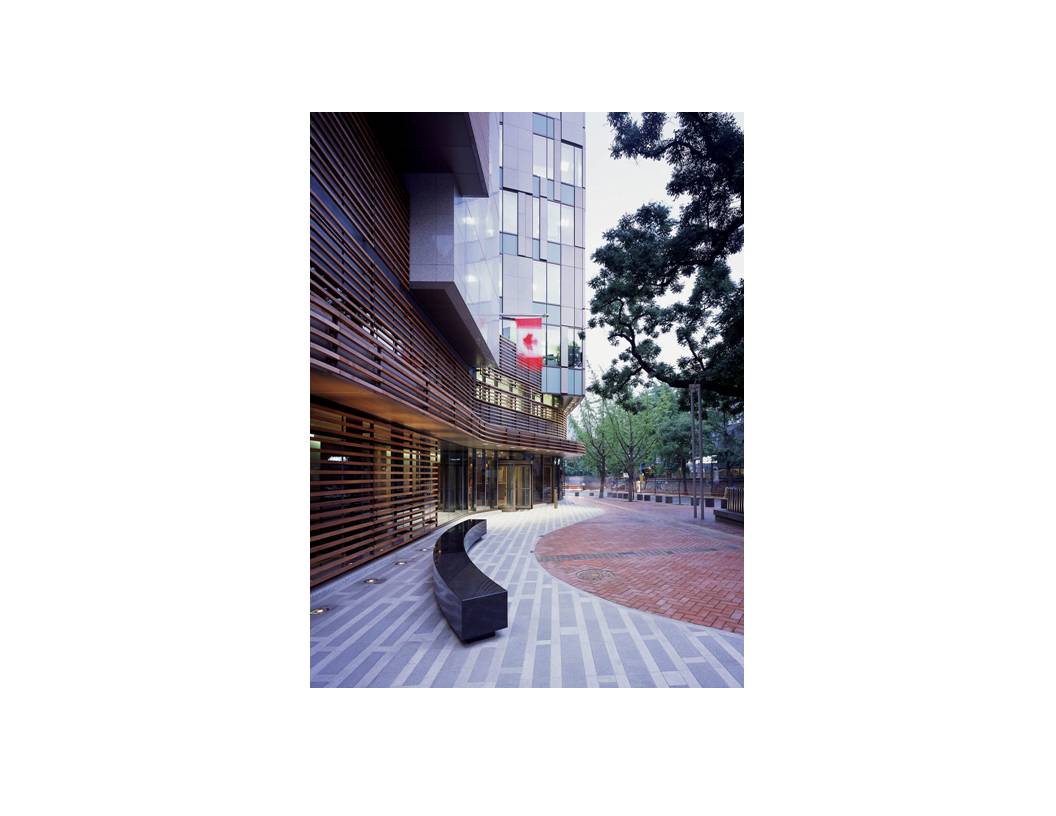
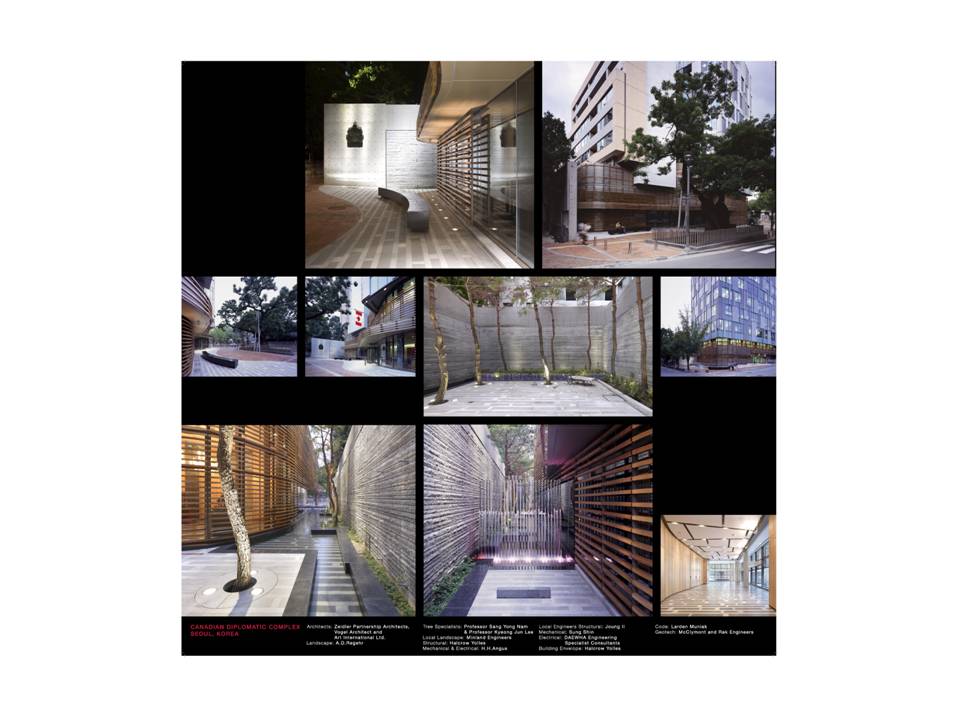
The design of the Canadian Embassy in Seoul creates a dialogue between Korean and Canadian cultures and a shared reverence for nature. This unique site shares a place with a 520-year-old tree, called Hakjasu or scholar tree, in the historic Jeong-dong district near Deoksoo Palace. The composition pulls back and suspends the two masses, creating an entrance plaza and gathering place with this tree at its focal point. The building base ties these two blocks together with a continuous wooden screen of western red cedar whose soft curves frame the public space around the tree.
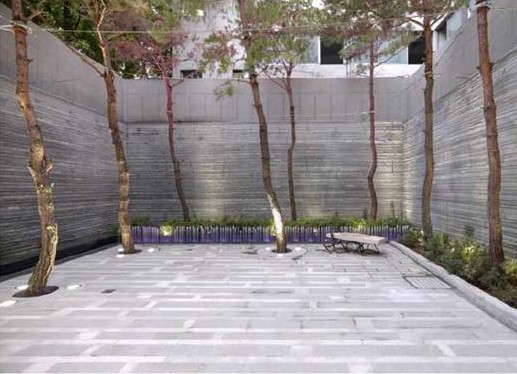
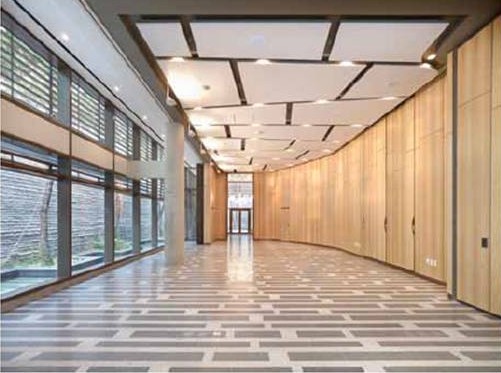
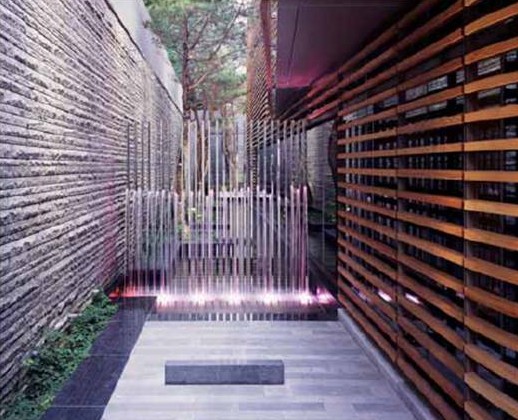
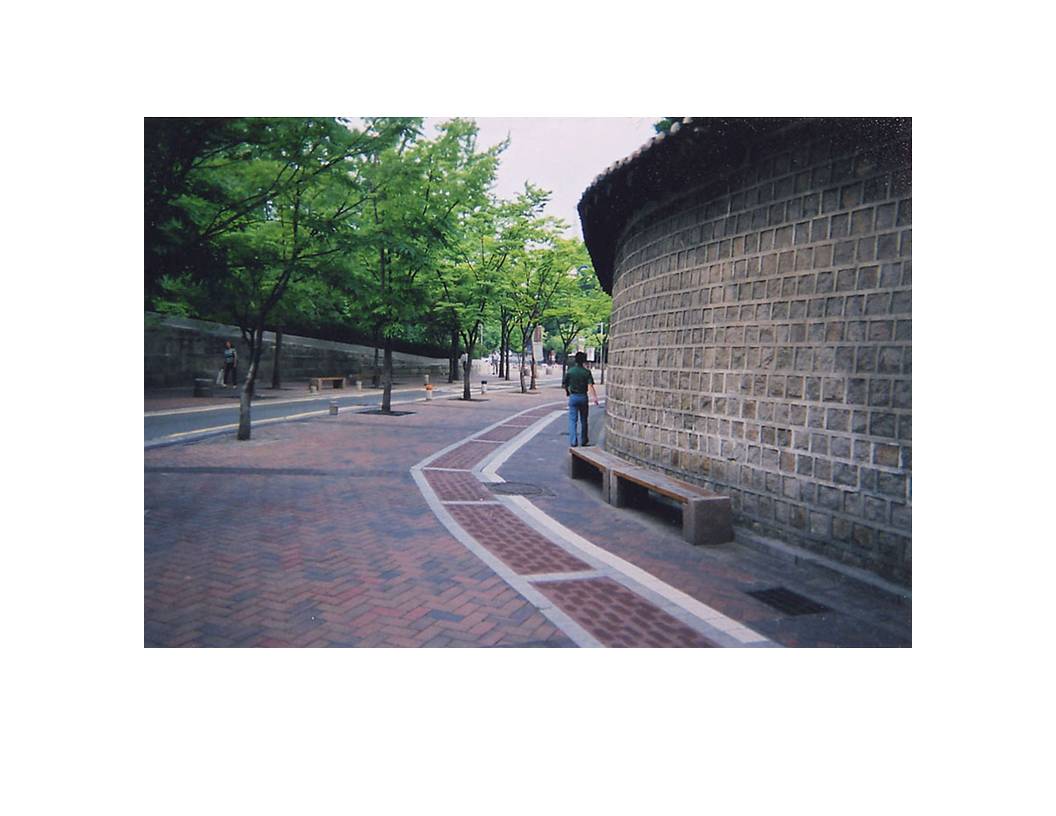
The historic context influenced design decisions such as the building materials, organization of the embassy and site design. Materials harmonize with Jeong-dong’s stone, brick and wood in grey to red hues, while extending the undulating palace wall and pedestrian walk. A curved dark grey granite bench invites pedestrians to pause under the tree. At the edge of the plaza, the sound of water draws visitors and pedestrians to the vertical screen fountain that offer glimpses of the walled garden beyond. Technical challenges such as a protecting the ancient tree, security requirements and sustainability disappear and the impression of the project is a sense of welcome around the central tree and a serene oasis within the walled garden. The design also takes inspiration from the Canadian landscape. The architecture reflects Group of Seven paintings: Tom Thomson’s Evening Canoe Lake and Lawren S. Harris’s Mount Robinson. Canadian red western cedar slats, large glass panels and sensitive hardscape engage the chancery with the neighbourhood while communicating a dignified diplomatic presence.