


QUICK FACTS:
Name
Wascana Centre
Type of Landscape
Urban Park System
Location
Regina, Saskatchewan
GPS 440 38’34”N; 630 34’56”W
Owner
Province of Saskatchewan, administered by the Saskatchewan Provincial Capital Commission (Until 2017, managed by the Wascana Centre Authority)
Legacy
Master Planning for a century;
Urban Park Design and Evolution

Introduction
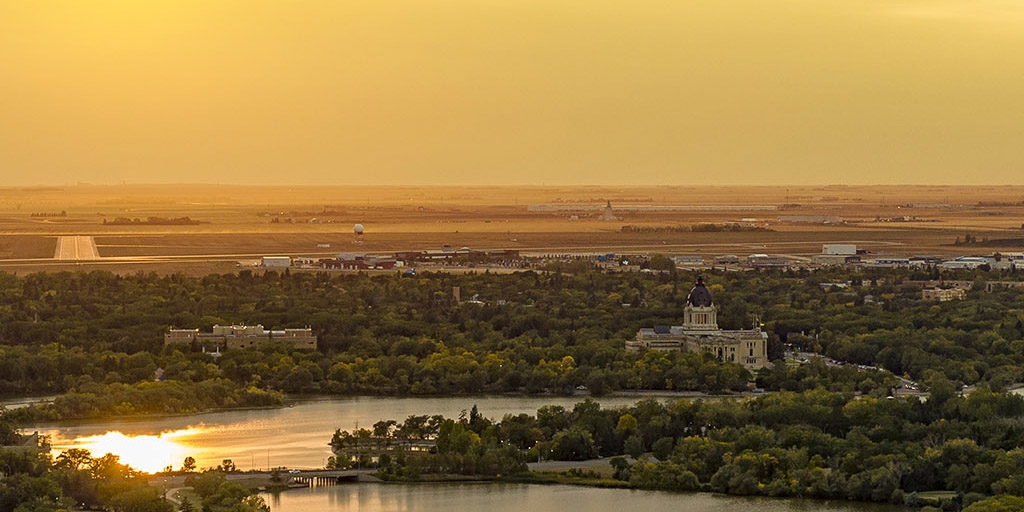
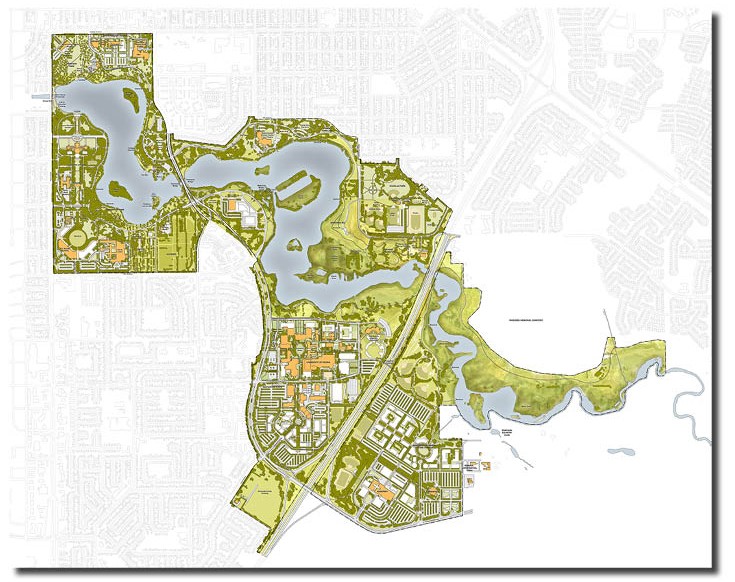
The Wascana Centre is a 9 km2 urban park which, decade after decade, has reflected the evolving story of a remarkable prairie landscape and the city that took root on its grounds.
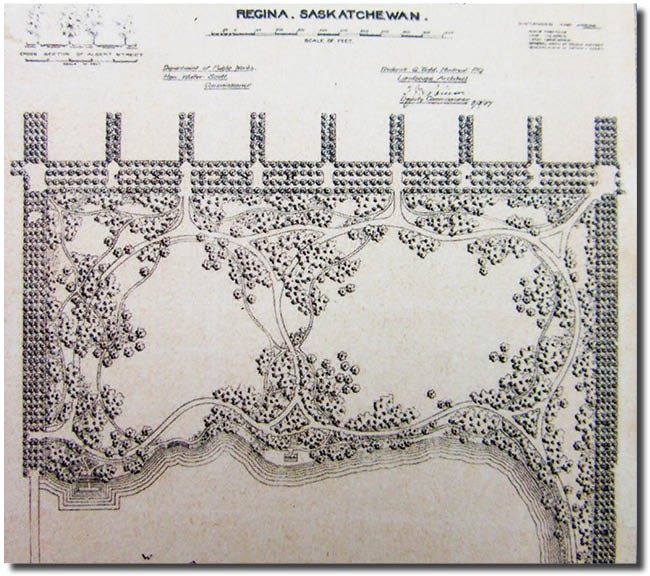
In 1907, the newly-founded city of Regina invited Frederick Todd, Canada’s first Landscape Architect, to design its first park on the shores of Wascana Lake. Wascana Park was a poem to the prairies, capturing the promise of the prairie city.
The equally vigorous designer, Thomas Mawson, expanded that promise. By stretching Todd’s boundaries to include the provincial legislative grounds, he effectively invited the city into the park.
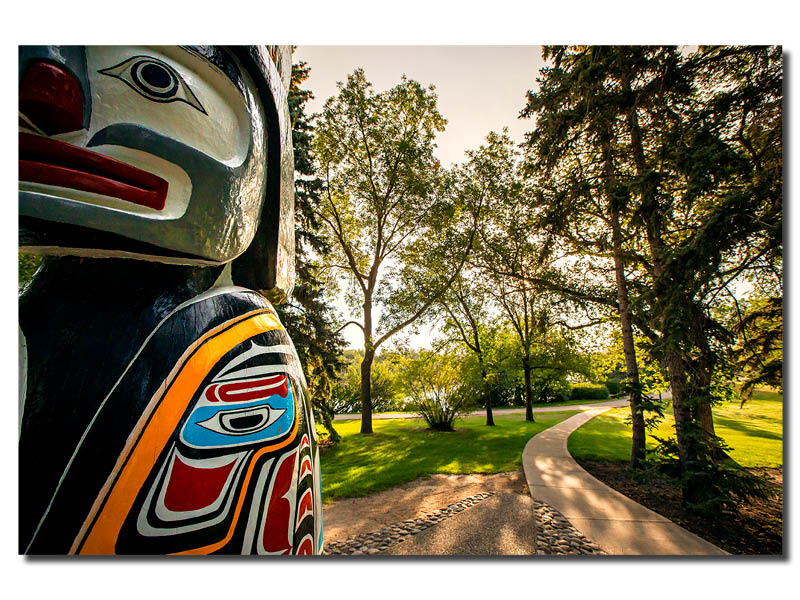
As Regina grew, the parklands evolved in tandem, creating today’s complex urban park. Wascana Centre is a place for all seasons. It harbours many of the city’s architectural gems: its Beaux Arts legislature, its science centre, its performance venues, its campuses and galleries. More than 50,000 students frequent the grounds, yet the landscapes’ prairie character remains remarkably intact. Its wooded groves, meandering trails and open landscapes thrive. A waterfowl reserve occupies the lake’s eastern wetlands.
From the earliest years, the park landscape mirrored the fluid shape of its lake, its broader prairie and the geometry of its rural farmlands and adjacent city. Its diversity grew, and by the early 1960s, the province, the city and the University of Regina recognized its future potential.
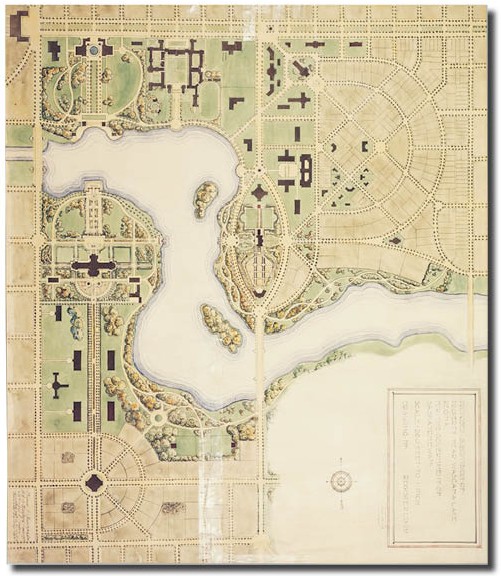
With an act of Parliament, the province created a new and novel entity, the Wascana Centre Authority. It was unique in Canada and perhaps the world. An ambitious masterplan took shape … a plan with a 100-year timeline. The masterplan would guide opportunities for arts and culture, recreation and conservation, over the course of a century.
Some 65 years later, the visionary plan is in its 11th iteration. With the Saskatchewan Provincial Capital Commission (PCC) at its helm since 2017, the masterplan continues to lead the intelligent evolution of the prized prairie landscape and its urban park.
| 
|
| 
|
The Making of an Urban Park
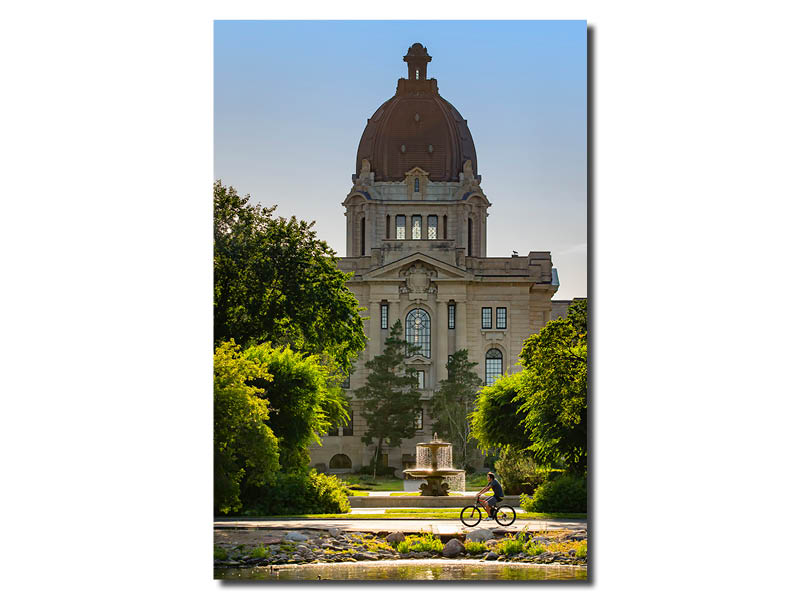
Wascana has always been one of Canada’s great landscapes. Its rich prairie grasslands and its expansive lake, blessed each year with millions of migrating waterfowl, were the homeland of Indigenous peoples, and later, the Metis. With the coming of the railroad, the lands’ prosperous promise attracted European settlers with their farms, towns and cities.
When the fledgling city of Regina took shape, Wascana almost immediately captured the imagination of Canada’s finest early designers. The visionary Frederick Todd left his indelible legacy in Wascana Park: a picturesque sequence of open prairie vistas and meandering pathways, lined with informal trees and shrubs.
The equally illustrious Thomas Mawson, building on Todd’s foundation, vastly expanded the park’s design by incorporating the city’s larger legislative precinct. These early plans, both innovative triumphs of their time, raised the profile of the new city and province on the prairies.
In the older parts of Wascana Centre, the pastoral character of their work still remains. But as the city grew, the lands more fully echoed the idea of the commons: a central landscape of manicured and natural open spaces, housing many of the treasures of the city.
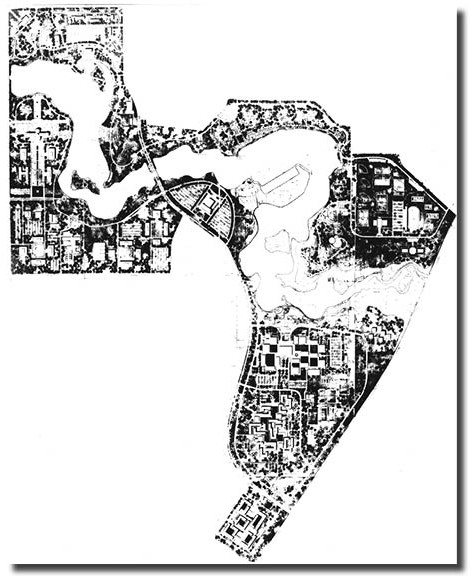
In the early 1960s, the University of Regina joined forces with the province and the city to establish a unique new entity, the Wascana Centre Authority. Thomas D. Church and his collaborator Minoru Yamasaki produced the Centre’s first master plan, a future-looking design meant to guide its land use and development over fully 100 years.
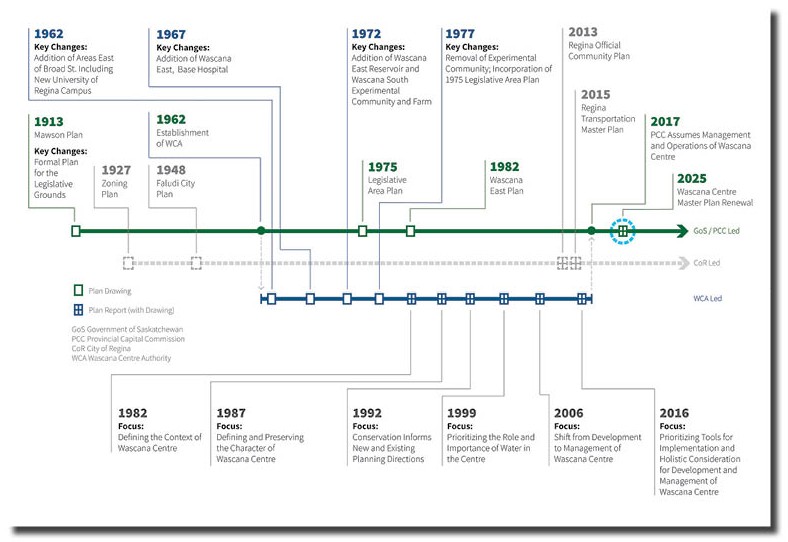
The WCA ushered in a new era for the urban park. To monitor and direct its common direction as the city and its people evolved, the WCA regularly renewed its planning, foreseeing different futures for the park. The WCA became an object lesson in guiding the intelligent evolution of a prized landscape – an enduring story of how people respectfully build upon the character of the landscape on which they live.
Foreseeing Different Futures
The LA approach proved to be exceptionally helpful: think not of what the park is today, but what it can become.
The long term project that is Wascana is now approaching its 120th year since Frederick Todd shaped Regina’s earliest prairie park, and more than six decades since the Wascana Centre Authority (WCA) commissioned its 100-year plan. Over time, The LA approach proved to be exceptionally helpful: think not of what the park is today, but what it can become.
In its early years, the WCA focused on much-needed trails, open space and active programming in the increasingly urban park. Many plan revisions later, in the 1980s, the Centre worked to define and preserve Wascana’s character. Led by Architect Planner Roger duToit and his firm, DTAH, the Centre also introduced a new planning structure, with guiding documents and demonstrations, to better convey fundamental changes to the vision as the Centre and its city matured.
DTAH helped lead interim planning until 2015, as the WCA’s work continued to reflect the evolving priorities of the 21st century. Planners incorporated sustainability goals, finessed program implementation, and focused on cultural healing and repair, building an increasing awareness of the importance of the prairie landscape.”
In 2017, the province dissolved the Wascana Centre Authority, transferring management to the Provincial Capital Commission. In 2025, the first master plan guided by the PCC, was its 11th sequential update over its 65 years. Its immediate concerns reflect a firm focus on sustainability, with elevated efforts to reduce embodied carbon, energy and water in the development and maintenance of the park. The focus is on ecological health alongside human health, making it a place for all life.”
Who’s Who in Wascana design
Scores of landscape architects have contributed to Wascana’s success. Many of those have been recognized for excellence, becoming Fellows of the Canadian Society of Landscape Architects (FCSLA). Of significance are Ken Dockham (FCLSA) who was the Wascana Centre Authority’s Director of Operations for over three decades; Len Novak (FCSLA) who served as the Centre’s landscape advisor for 14 years; Michael Hough (FCSLA) and Hugh Knowles (FCSLA) who both were landscapes advisors in the 1970s; and Robert N. Allsopp (FCSLA) and Peter Fletcher Smith (FCSLA), who both collaborated on many of the DTAH-led works over 40 years.

The Cultural Landscapes Legacy Collection highlights the achievements that have made a lasting impact within the field of landscape architecture and on communities across Canada.