


Quick Facts
Name
Irving Eco-Centre: La Dune de Bouctouche
Type of Landscape
Recreational Shoreline Dune
Location
Highway 475, New Brunswick
GPS 46° 31' 57.3" N 64° 41' 36.5" W
Stewards
J.D. Irving Limited
Landscape Architects
BDA Landscape Architects: James Sackville, Larry Stewart
Legacy
Sustainable Tourism Planning and Design
Planning model: linking protection of a vulnerable vernacular landscape with tourism and economic development

Introduction
In 1994, the Town of Bouctouche engaged BDA Landscape Architects to prepare a tourism plan. In a significant departure from past tourism planning in Atlantic Canada, BDA advocated a wholly new direction for the town’s tourism plan based on the principles of sustainability. The plan would include the natural environment and cultural heritage of the Bouctouche River watershed as the tourism products. Through the protection of the natural environment and celebration of the region’s rich Mi’kmaq and Acadian heritage, the town could build a new economy based on tourism.
During the design process biologists presented an overview of the ecology of the Bouctouche watershed to a community workshop. The slides illustrated the landscape and wildlife of the river watershed including the forested upper reaches, the oyster rich intertidal estuary and the 12 km long dune at the mouth of the river. The reaction was stunned silence at seeing their rich natural surroundings. At this early stage the project was already contributing to community pride and raising environmental awareness. The community had made the important connection between a healthy environment and the success of a tourism economy.
The infrastructure to support tourism included environmental restoration projects to improve water quality, a 30km trail system and conservation corridor along the river and estuary linking the town to the dune and the flagship infrastructure project, Irving Eco Center: La Dune de Bouctouche.
| 
|
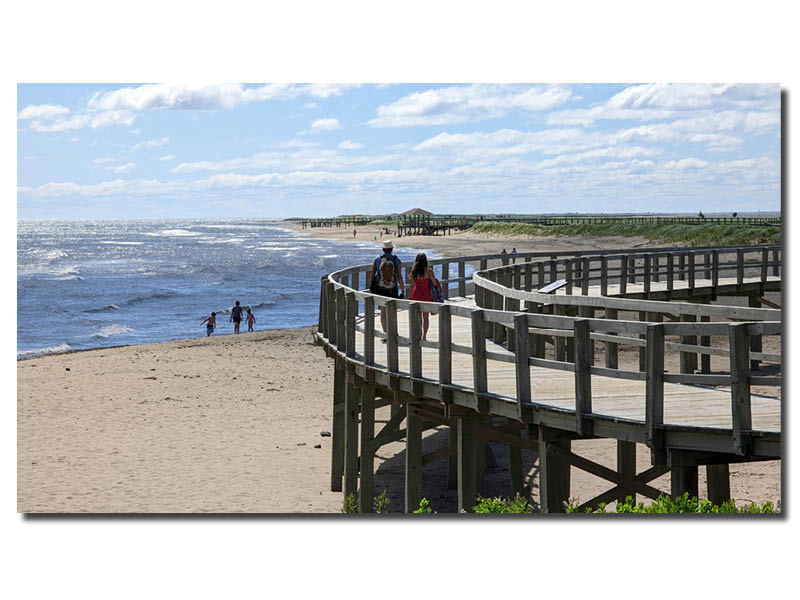
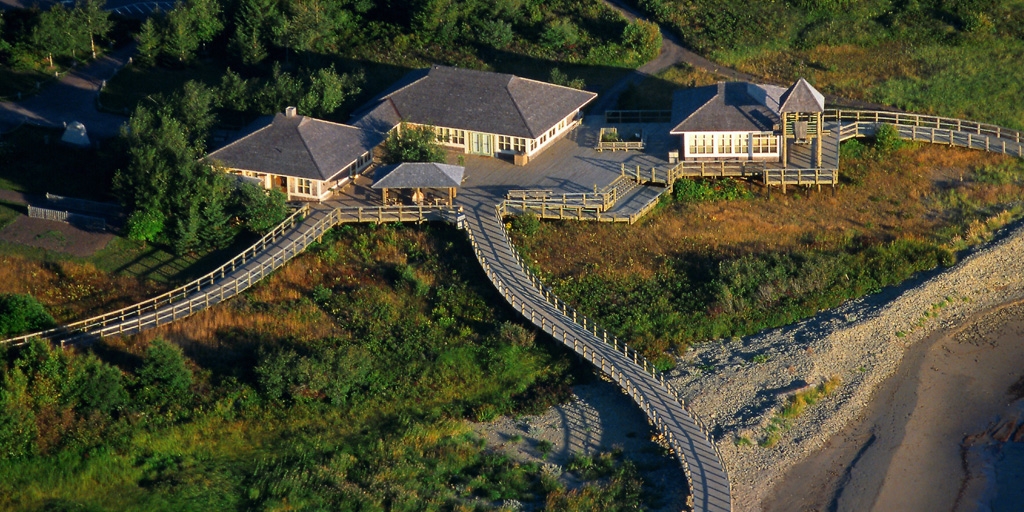
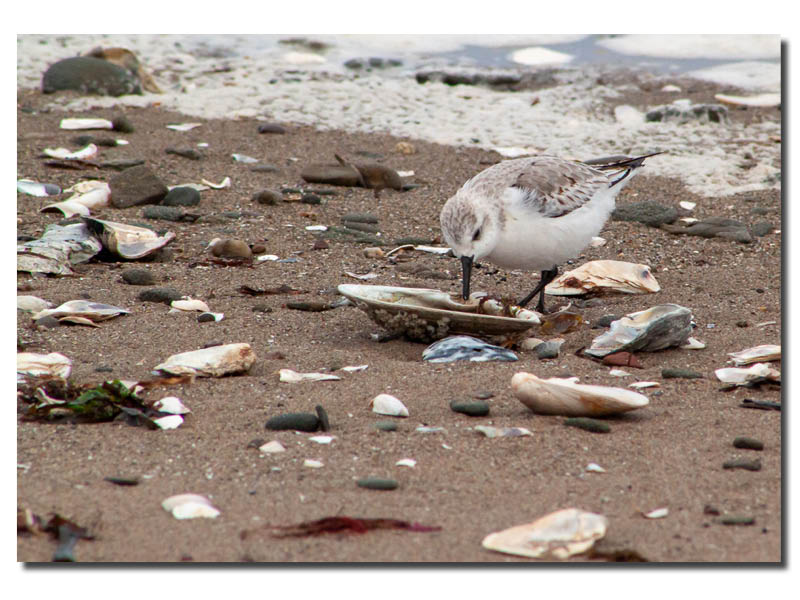
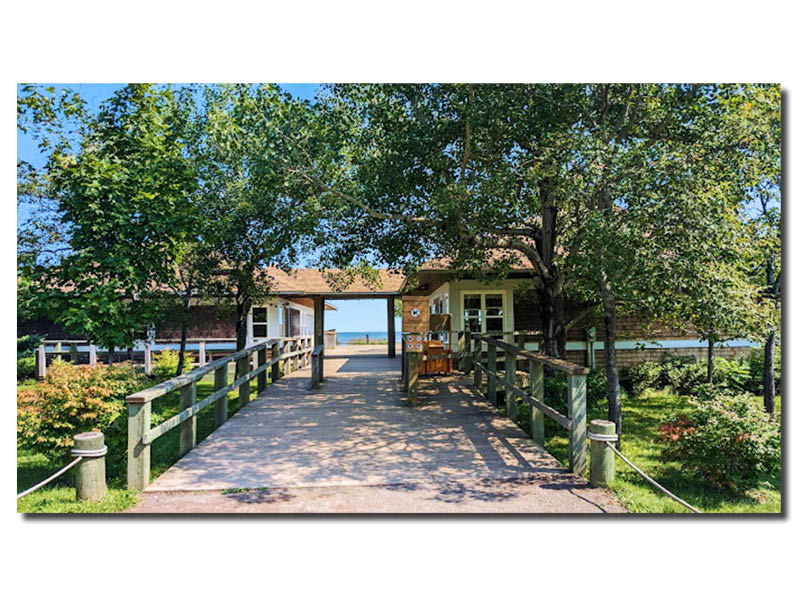
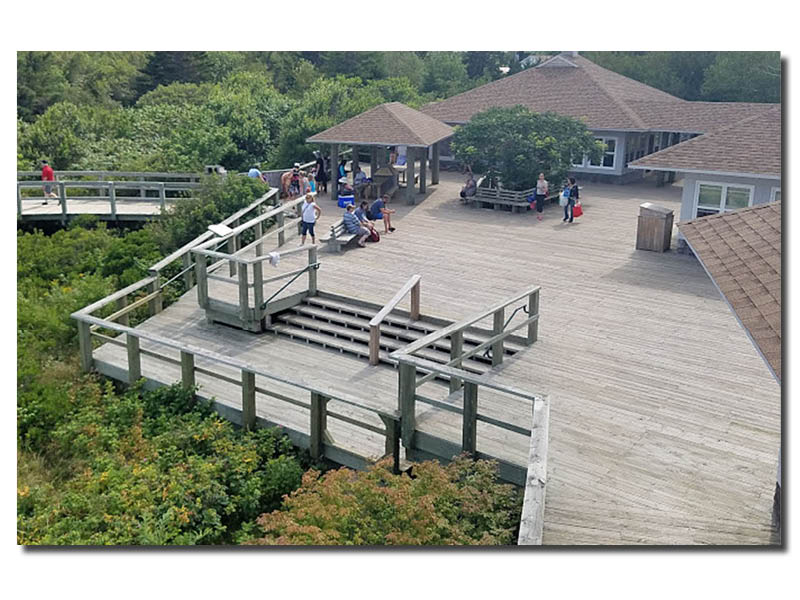
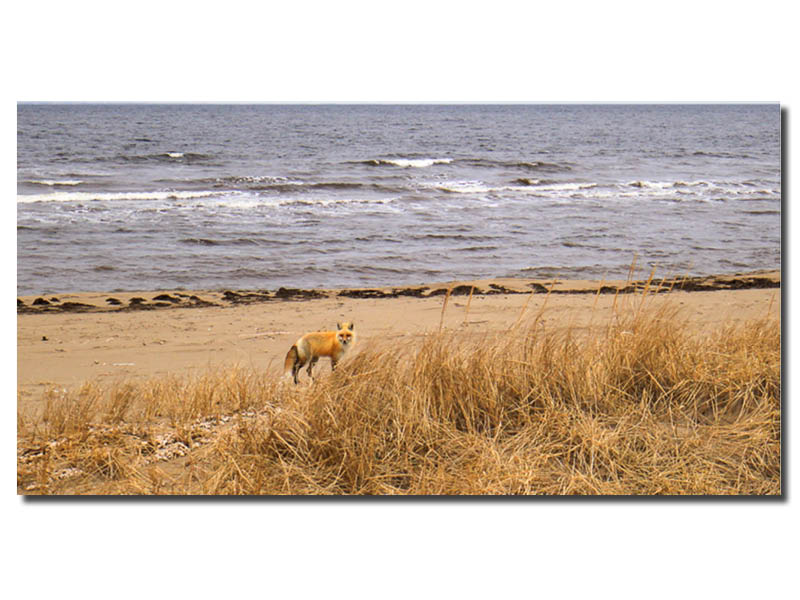
At the mouth of the Bouctouche River lies the magnificent 12 kilometer sand dune, La Dune de Bouctouche. The expansive powder-soft sand formation follows the coast of Bouctouche Bay, jutting its way into Northumberland Strait. It is one of the few remaining great sand dunes on the northeast coastline of North America. From a dramatic raised deck set on a sandstone outcrop overlooking the strait, the view opens to a sweeping panorama that captures the length of the dune. Here, an integrated board walkway begins, following the sand spit for some 800 metres through salt marshes and lagoons, waving beach grasses and sea oats. In summer, countless visitors continue their exploration long past the boardwalk, eager for the beach, the sightings of marine life and the sea birds. The beach is the perfect nesting habitat for the endangered piping plover. The plan earned the dedicated backing of the philanthropic Irving family, and by 1997, the Irving Eco-Centre: La Dune de Bouchtouche opened its doors providing research and educational programs committed to protecting the vulnerable landscape of the entire Bouctouche River watershed.
It was a perfect sustainable design fit. The Eco-Centre’s popularity immediately exceeded the planners’ targets for 5000 annual visits, drawing 40,000 instead. Today, some 100,000 come each year, increasing employment, building respect for vernacular landscapes, and reinforcing cultural heritage.
The Dune Matters
Bouctouche is the ancestral home of New Brunswick’s widely-known Irving industrial family. The family owned their first saw mill on this land, and here, young J.K. Irving (1927-2024) spent his summers. Here, too, he built his summer home.
J.K. took a personal, hands-on interest in the sustainable tourism plans introduced by BDA Landscape Architects. The Irving’s funded the construction of the Eco-Centre, and today, continue to operate and maintain the site, including ongoing conservation and educational programs.
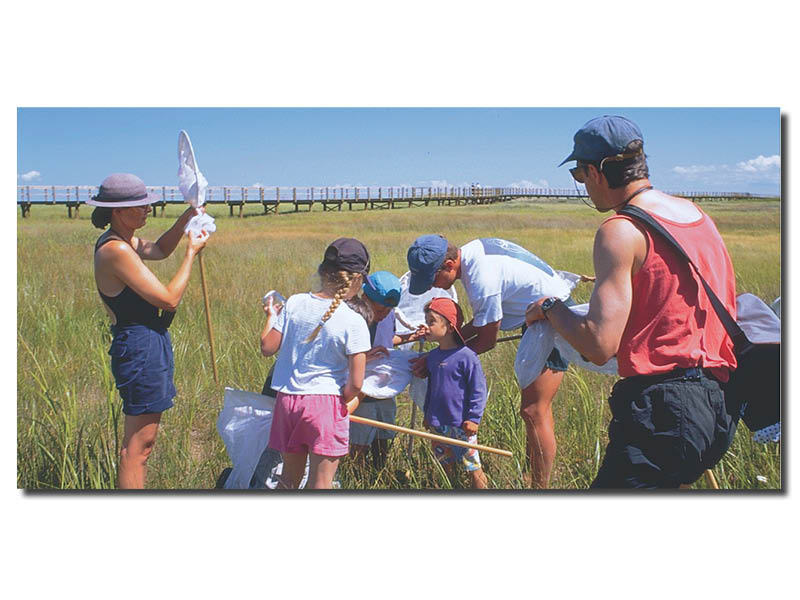
The Centre’s work is done in association with local schools and the University of Moncton. The site itself includes an education and research centre, an interpretive building, and many low-energy, low-impact visitor services. It is a community hub, offering interpretive walks, exhibits, presentations, picnic areas and an outstanding ‘day at the beach’.
The Time was Ripe: Bouctouche meets the eco-revolution
In 1994, the Town of Bouctouche engaged BDA Landscape Architects to develop a tourism plan for the town. It was an auspicious time for the firm’s principals. Both had studied at the University of Guelph in the early 1970s when environmental issues were top of mind. Now, Bouctouche, and indeed the world, was paying attention.
The tourism plan would be developed against the backdrop of key environmental milestones. In 1987, the international game-changer, the Brundtland Report, provoked a major shift in thinking across nations. The Report popularized “sustainable development” practices, strategies that recognized the firm link between long-term economic gain and the earth’s ecological health. A half-decade later, the first Earth Summit issued a convention on climate change and biodiversity.
For BDA, the Dune’s future, and the region’s, lay in developing a sound tourism approach that ensured the health of the Bouctouche River watershed landscape unit -- the first such approach in Atlantic Canada. Community workshops engendered a renewed pride of place in the residents and a strong desire to protect the dune and the region’s vernacular landscapes, steeped in Acadian and Indigenous culture.
Almost immediately, the Bouctouche success set a new benchmark. The townspeople developed numerous low-impact tourism businesses, an extensive trail system, a cultural centre and market. For the Atlantic Canada Opportunities Agency, this was a valuable model to share. BDA delivered a community tourism teaching module based on the Bouctouche experience to 16 communities, resulting in major shifts in tourism planning in the region.
Recognition:
1997 - International British Airway ‘Tourism for Tomorrow’ Award
1997 - Canadian Society of Landscape Architects, National and Regional Honour Award
1999 - Department of Environment Canada- Environmental Citizenship Certificate
1999 - U.N. Commission on Sustainable Development-Canadian Model to Fulfill Canada’s Sustainable Tourism Mission Statement

The Cultural Landscapes Legacy Collection highlights the achievements that have made a lasting impact within the field of landscape architecture and on communities across Canada.