

 Accessibility is not a checklist. Codes and standards set a baseline, but the people who use our public spaces bring a wide range of needs, experiences and preferences. No single approach serves everyone.
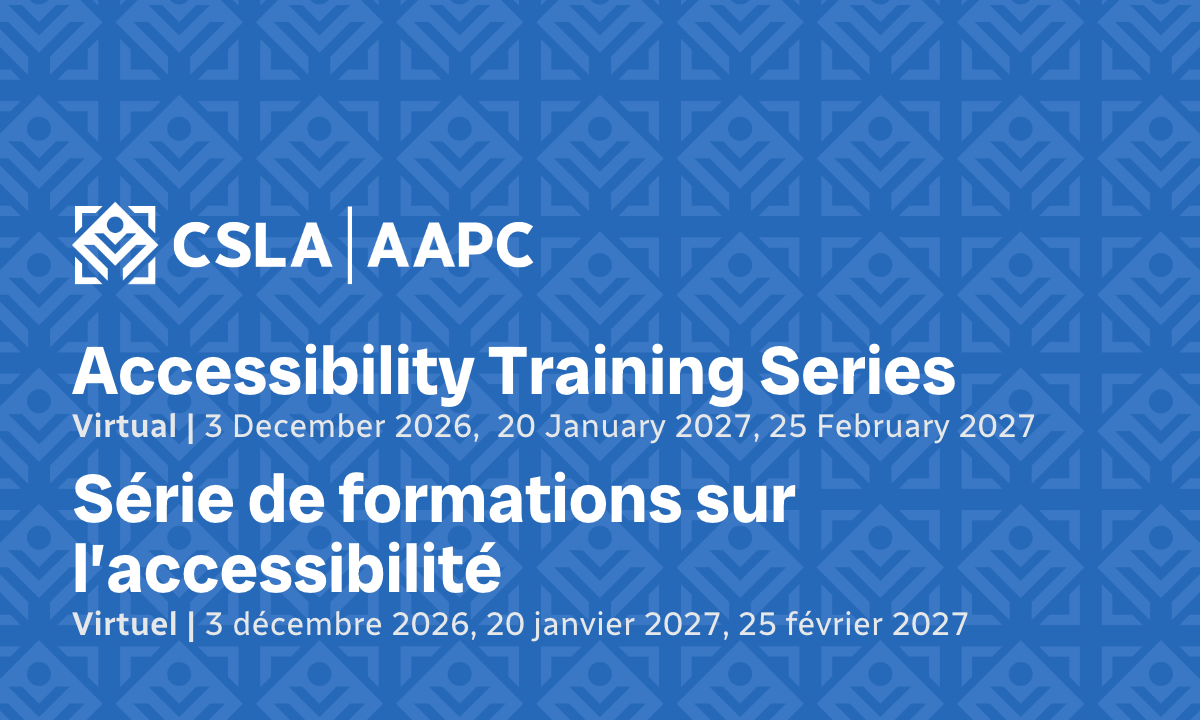
The CSLA is pleased to present the Accessibility Training Series, three online sessions running from December 2026 to February 2027. The series brings together three speakers who approach accessibility from different vantage points, informed by both lived experience and professional practice.
Together, these sessions will offer practical tools, case studies and legislative context to help landscape architects and allied planning and design professionals, move beyond minimum compliance and design with disabled people, not just for them. Each session stands on its own, but we encourage you to attend the full series to get the broadest view of the issues.
This series was developed in response to the feedback received in the Justice, Equity, Diversity and Inclusion (JEDI) Training Survey conducted earlier this year.
All webinars are:
- Offered free of charge (maximum 500 attendees). Register early and log in on time to hold your spot.
- Recorded for those unable to attend live
- Supported by Wordly AI live captions and translation
- Eligible for a certificate of attendance, for your continuing education credits, for those who participate in the live sessions
Learn more and register for each session below:
Design with Disabled People Now: Tools for Designing for the Deaf & Disabled Communities Beyond Compliance | Alexa Vaughn, ASLA, FAAR
December 3, 2026 at 2:00 ET
 In the twenty-first century, the disabled and Deaf communities remain an afterthought in the design of the built environment. So focused are we on achieving baseline compliance to national and state codes, that we forget our agency as designers to craft a radically accessible world that considers individual needs and preferences. How can landscape architects and designers design beyond codes throughout the design process--and even after construction--to create truly inclusive places where disabled people can experience joy? This session will provide a variety of tools, resources, strategies, and case studies for landscape architects and designers to take part in the creation of a more inclusive design process that holistically incorporates disabled lived experiences (rather than reliance on assumption); and guidance on how to design more accessible spaces, utilizing principles of universal design, human-centered design, and DeafSpace to the landscape which can be applied to any project type or scale.
Biography
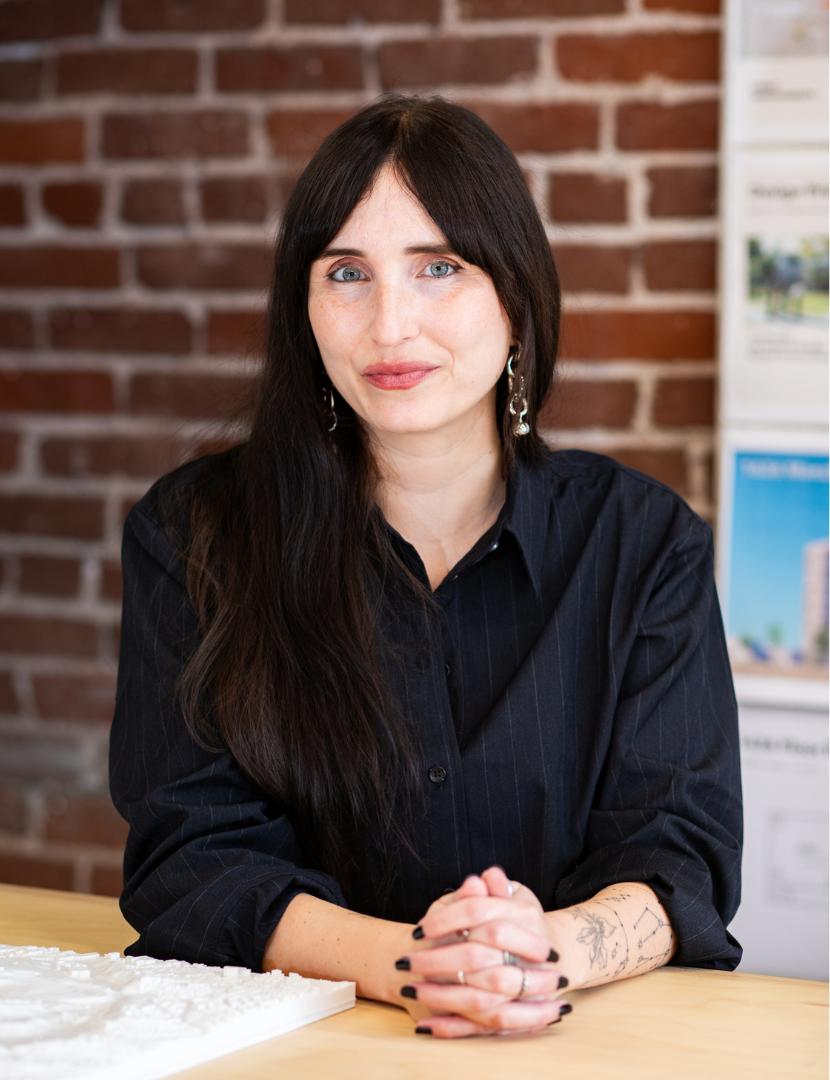
Alexa is a Deaf landscape designer and accessibility specialist at Sasaki, PhD candidate and educator at UCLA, and founder of Design with Disabled People Now. As a scholar-practitioner, she bridges the gap between history, research, and practice in critical disability studies and the built environment. As an expert in designing with and for the Deaf and disabled communities, she works to go beyond minimal compliance across the design process, in a variety of project types and scales. Her work has been published and featured widely and she is the recipient of numerous awards, including the Rome Prize in Landscape Architecture. Much of her practice-based research can be found at www.DesignWithDisabledPeopleNow.com.
Recommended Resources
Everything is Accessibility: Navigating the Intersection of Living Experience, Design and Legislation | Sarah Manteuffel, RPP, MCIP
January 20, 2027 at 2:00 ET
 This webinar will focus on Sarah’s journey as a person with a disability navigating the design, planning, and accessibility fields of practice. Sarah will share first-hand experiences of providing lived experience and an empathetic ear, battling micro-aggressions and being told this work isn’t a priority, and best intentions conflicting with a lack of commitment – all this while continuing to self-advocate in a professional world not always built for disabled bodies.
In contrast to these challenges, Sarah will also share multiple examples of accessibility progress and success in her work at Urban Systems as a Community Planner and Accessibility Advisor. These positive examples include her work with municipal Accessibility Plans under BC’s 2021 Accessibility Legislation, integrating inclusion in projects that aren’t access-focused such as ensuring Active Transportation networks are compliant with accessible design standards, and shifting engagement practices to make sure every voice is at the table. This work is ever evolving, is built from learning and empathy, and requires everyone to be open and willing to face discomfort to make lasting change.
Biography
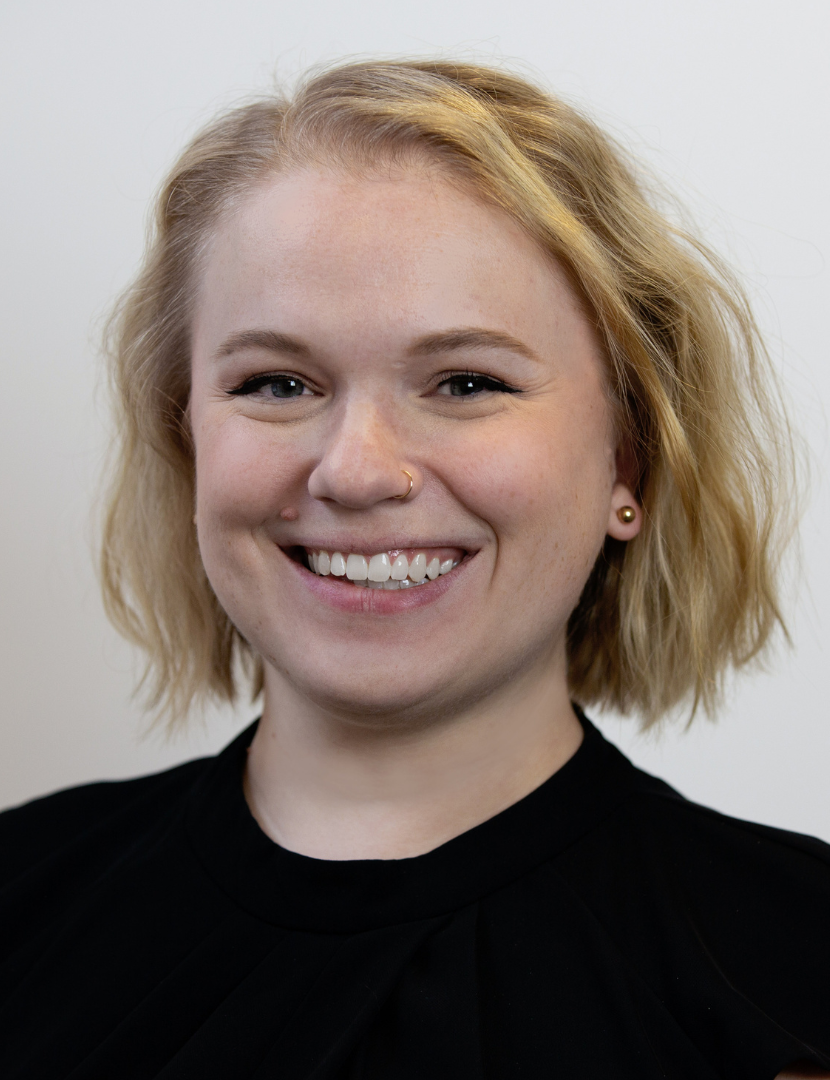
Sarah Manteuffel is a Community Planner and Accessibility Consultant based in Winnipeg. With nearly 5 years in consulting and over 15 years of advocacy experience, including 5 years working as the Coordinator at the OALA, Sarah is an experienced leader and practitioner on planning and inclusion projects. Sarah is proudly disabled, having achondroplasia, a form of dwarfism. She is a passionate advocate for universal accessibility in her personal, work, and academic life. Sarah’s living and work experience brings forward a passion and specialization in interdisciplinary thinking, and she ensures that inclusivity is a part of her entire practice.
Recommended Resources
- Accessible Standards Canada
- Accessible Canada Act
- Manitoba Accessibility Office
- Accessibility for Ontarians with Disabilities Act
- Nova Scotia Accessibility Act
- Accessible BC Act
- New Brunswick Accessibility Act
- Accessible Saskatchewan Act
- Newfoundland and Labrador Accessibility Act
- Québec Loi assurant l’exercice des droits des personnes handicapées en vue de leur intégration scolaire, professionnelle et sociale
What Happens After We Call a Playground Inclusive? Getting there, playing there, staying there | Melody Smale, BCSLA, CSLA
February 25, 2027 at 2:00 ET
 Accessible design is a foundation for inclusive play, but access alone does not tell us what a playground will be like to use. A child may be able to enter the play space but still struggle to find meaningful ways to participate. A family may arrive successfully and still find that supervision, sensory needs, communication, comfort, or other parts of the visit make it difficult to stay.
Drawing on caregiver lived experience, inclusive play research, municipal practice, and the Playground Belonging Project, this webinar asks a complementary post-occupancy question: what is the playground actually like to use across the course of a real family visit?
Using the whole-visit framework Get There, Play There, Stay There, Melody Smale will explore the experience of arrival, meaningful play, participation, supervision, social connection, sensory and comfort needs, staying, and return. Through stories, research, and real playground examples, the session will consider how landscape architects can become better at noticing human variation: the different ways people move, communicate, regulate, perceive risk, seek challenge, offer support, experience comfort, and feel belonging in public space.
The session invites landscape architects to think beyond what a playground provides, and to ask how it is actually experienced. It frames listening as an ongoing part of design: before a place is designed, while decisions are being made, and after a playground opens. The Playground Belonging Project is building on that final step by bringing caregiver experience back into future design decisions and public-space practice.
Framework and source notes:
The Get There, Play There, Stay There framework draws on inclusive play guidance including Everyone Can Play and Creating Inclusive Playgrounds: A Playbook of Considerations and Strategies.
Biography
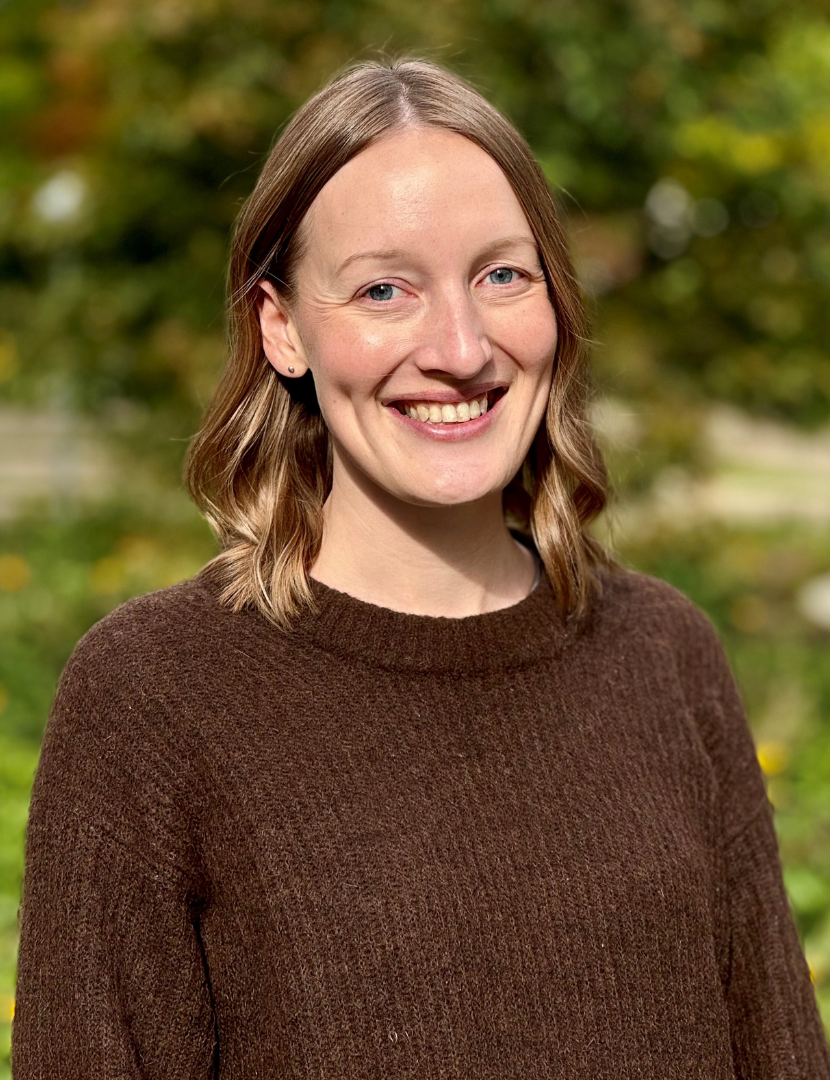
Melody is a landscape architect with the City of Surrey’s Parks Planning, Research and Design team and the founder and project lead of the LACF-supported Playground Belonging Project. Her work connects inclusive public park delivery, accessibility, playground design, and lived experience as the caregiver of a child with a disability. Through municipal practice and caregiver-informed research, she explores how public playgrounds are experienced after they are built, and how landscape architects can better support meaningful participation, comfort, connection, and return visits for children and families with diverse needs. Melody is an MBCSLA, CSLA, RHFAC Professional, and Canadian Certified Playground Inspector.
Recommended Resources
- Playground Belonging Project
- Creating Inclusive Playgrounds: A Playbook of Considerations and Strategies
- Everyone Can Play, NSW Government
- A Guide to Creating Accessible Play Spaces, Rick Hansen Foundation
- Inclusive Play, Anchorage Park Foundation
- A Scoping Review of Evidence-Informed Recommendations for Designing Inclusive Playgrounds